


Here’s a scenario every new gardener knows: you grow a beautiful lettuce plant, pull the whole thing up for one salad, and just like that, your harvest is over. Now here’s the professional secret that changes everything. Learning how to grow lettuce properly means one small planting can feed you salads for months, not one dinner.
The trick is a technique called cut-and-come-again, and it’s built on a simple bit of plant biology: lettuce grows from its center outward. Harvest the outer leaves and leave that growing point untouched, and the plant just keeps producing. Pair that with a little succession sowing and you’ll have crisp, fresh greens from early spring right through fall from a patch of ground the size of a doormat. This guide shows you exactly how.
How Do You Grow Lettuce for a Continuous Harvest?
Sow loose-leaf lettuce seeds shallowly in cool weather, spacing plants 4 to 6 inches apart in rich, moist soil with sun or part shade. Once leaves reach 3 to 4 inches, harvest using the cut-and-come-again method, snipping outer leaves or cutting 1 to 2 inches above the soil while leaving the central crown intact. The plant regrows in 7 to 14 days, giving three or four harvests. Sow a fresh batch every 2 to 3 weeks for greens all season.
The two habits that make lettuce a season-long crop are protecting the crown when you harvest and succession sowing so a new batch is always coming along behind. Master those and you’ll never buy a bag of salad again.
Meet Leaf Lettuce (and Why It’s the Easiest Crop You’ll Grow)
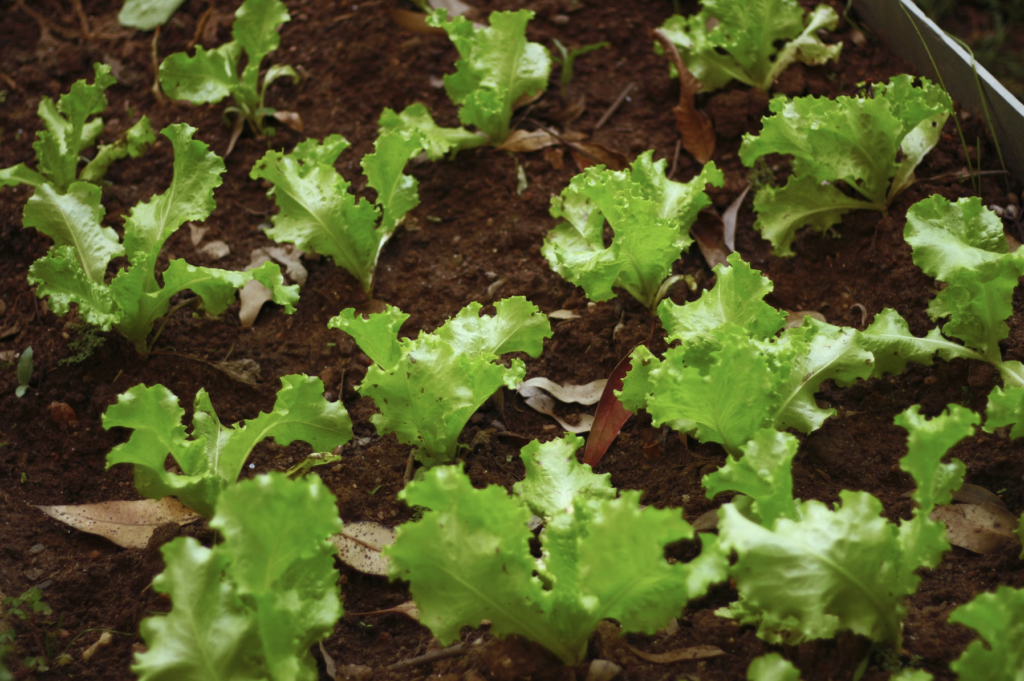
Lettuce (Lactuca sativa) is a fast, cool-season crop, and loose-leaf types are the friendliest of the family. Unlike iceberg or other heading lettuces that form a tight ball, loose-leaf varieties grow as an open rosette of leaves, which is exactly what makes them so generous.
That open habit brings real advantages:
- You can plant them close together. 4 to 6 inches apart, with no thinning required, so a tiny space produces a lot.
- Every leaf is edible from the start. There’s no waiting for a head to form; lettuce is delicious at any size, even as microgreens.
- It’s fast. Seeds sprout in about three days and you can be picking baby leaves within a couple of weeks, with a first full harvest around four weeks.
- It tolerates partial shade. Lettuce is one of the very few vegetables that grows well without full sun, making it perfect for shadier balconies and yards.
Here’s a bonus most gardeners don’t realize: you can harvest leaf-style from any type of lettuce. Even a romaine or butterhead will happily give you outer leaves while its heart keeps developing. Cut-and-come-again isn’t limited to one kind of plant, it’s a technique, not a variety.
Choosing Varieties for Continuous Harvest
While the technique works broadly, some varieties are true champions of regrowth. Loose-leaf types are the gold standard because they have no tight central core to disturb.
| Variety | Type | Why Grow It |
|---|---|---|
| Black Seeded Simpson | Loose-leaf | Classic, fast, bounces back quickly after a trim |
| Red Sails | Loose-leaf | Beautiful bronze-red leaves; slow to turn bitter |
| Oakleaf | Loose-leaf | Tender lobed leaves; hardy and reliable |
| Parris Island Cos | Romaine | Pick outer leaves while the heart keeps developing |
| Jericho | Romaine | Bred in Israel for heat — excellent slow-bolt choice |
| Nevada | Summer crisp | Heat-tolerant and resists bolting |
| Mesclun mixes | Blend | Multiple colors, flavors, textures from one sowing |
A smart strategy: grow a mix. Different varieties mature at slightly different rates, so even after you harvest one section heavily, another is ready creating a seamless supply of greens. In warm weather, lean on slow-bolt varieties like ‘Jericho’ and ‘Nevada’.
Many experienced gardeners actually grow lettuce two ways at once: a few full-size romaine or butterhead plants left to mature into proper heads, alongside a couple of densely sown rows of cut-and-come-again baby greens on constant rotation. It’s the best of both worlds, crisp whole heads for wedges and wraps, plus a permanent supply of tender leaves for everyday salads. The same technique also works beautifully on arugula, mizuna, mustard greens, and even young kale, so a single “salad bed” can deliver endless variety.
How to Grow Lettuce: Step-by-Step
- Step 1: Sow in Cool Weather
Lettuce is a cool-season crop that thrives at roughly 55–65°F, so sow in early spring and again in late summer for a fall crop. Heat is lettuce’s enemy, it triggers bolting. So plan around the cool ends of the year. Our guide to what to plant in early spring helps with timing, and what to plant in late summer covers the fall round.
- Step 2: Barely Cover the Seeds
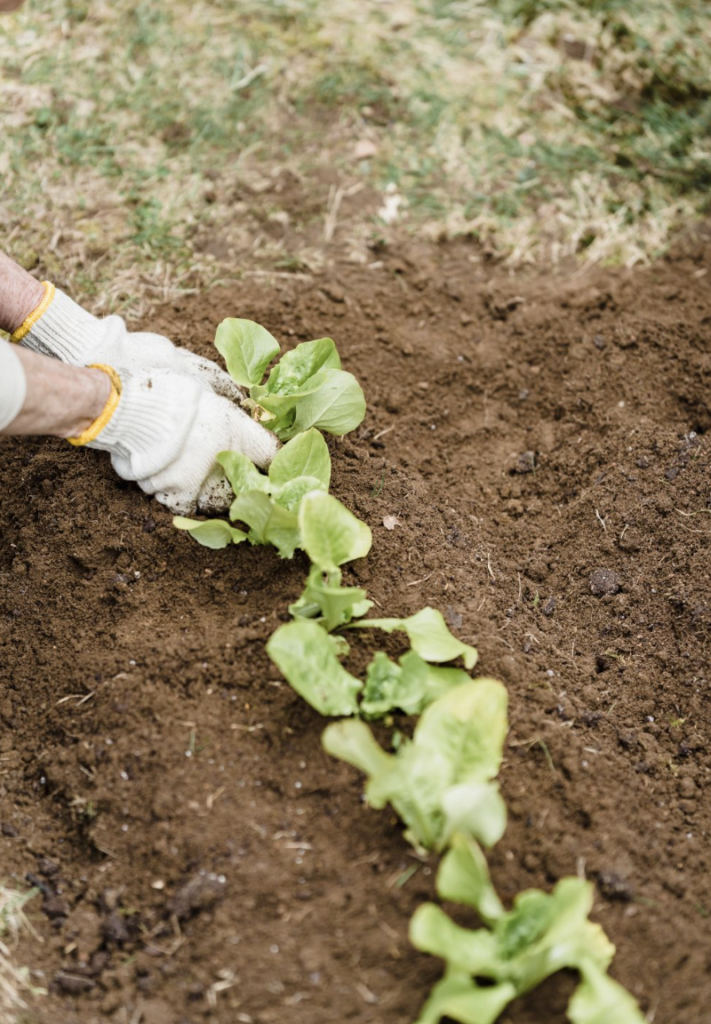
Lettuce seeds need light to germinate, so don’t bury them. Sprinkle them on the soil surface and press gently, or cover with the barest dusting of fine soil. Water gently and they’ll sprout in about three days. For full-size plants, space them 4 to 6 inches apart; for a baby-greens “salad bar,” scatter seeds thickly (think 40 seeds per foot in a two-inch-wide band) and skip thinning entirely.
- Step 3: Enrich With Compost, Not Synthetic Nitrogen
Lettuce loves rich, moisture-retentive soil. Work in a generous helping of compost before sowing. Here’s a subtle but important point: compost releases nitrogen slowly and steadily, whereas synthetic high-nitrogen fertilizers cause growth surges that can actually trigger early bolting. Gentle, steady feeding is what keeps lettuce sweet, our guide to making your own organic fertilizer has low-waste options.
- Step 4: Water Consistently
Dry soil is one of the fastest ways to send lettuce bolting and turn it bitter. Keep the soil evenly moist — never bone dry, never waterlogged. Shallow-rooted lettuce dries out quickly, especially in containers, so check often. Planting densely helps too: the leaves shade the soil and keep the roots cool.
- Step 5: Succession Sow Every 2 to 3 Weeks
This is the habit that turns lettuce into a season-long crop. Rather than sowing everything at once, plant a small batch every two to three weeks from early spring onward. As one planting starts to tire or bolt, the next is hitting its first harvest window. Our guide to succession planting covers the whole approach.
The Cut-and-Come-Again Method (The Heart of It All)
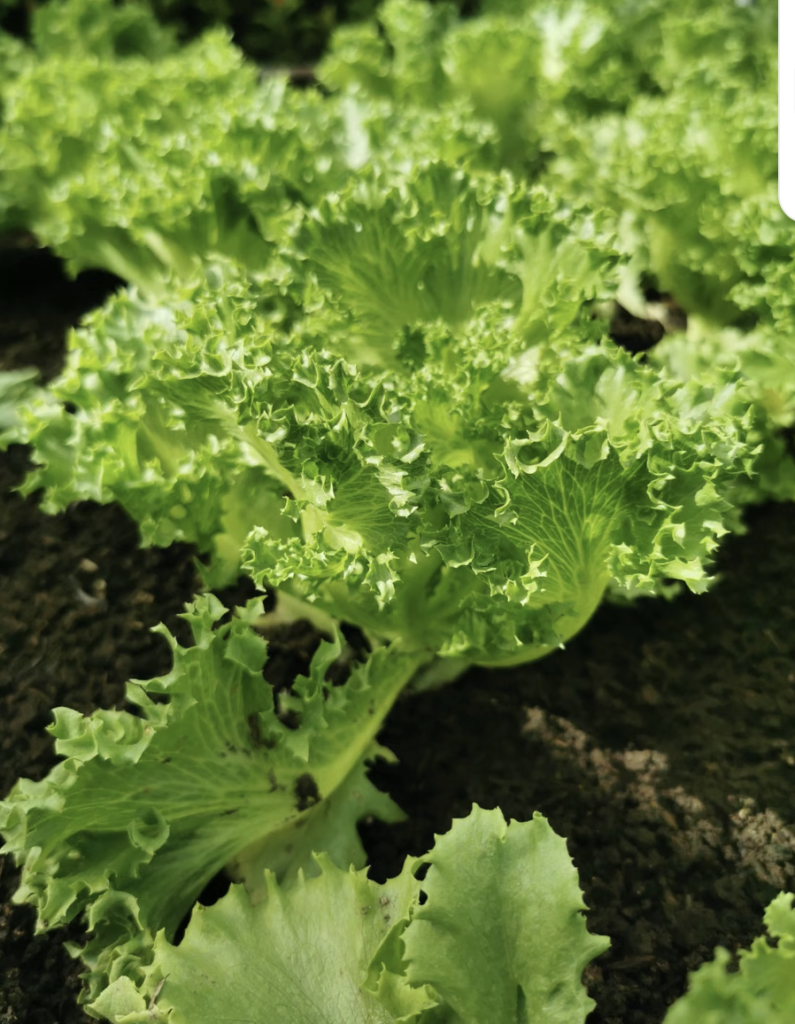
This is the technique that transforms one planting into a season-long feast, and it hinges on protecting a single part of the plant: the crown.
The crown is the central growing point at the plant’s base, where all new leaves emerge. Lettuce grows from the center outward, so as long as the crown is intact and has sun and water, it keeps producing. Cut it off and the plant is finished. Think of the crown as the plant’s beating heart, many beginners accidentally “scalp” their lettuce and end the growing cycle prematurely.
Here are the three harvesting methods, each with its place:
- Leaf-by-leaf (gentlest, most productive). Circle the plant and snip the three or four largest, lowest outer leaves with micro-tip snips or sharp scissors. The plant continues its normal growth pattern from the center, barely noticing. Perfect for grabbing enough for a single salad, and it typically yields three to four harvests per plant over a season. It’s also good housekeeping, remove any yellowing leaves or ones touching the soil while you’re there, since those invite slugs and fungal problems.
- The “ponytail chop” (faster, bigger harvests). Gather a handful of leaves as if making a ponytail, and cut below your hand with clean scissors about two to three inches above the crown. You get more leaves per trip and still leave the growing point intact. Expect two to three harvests this way.
- The “mow” (for densely sown baby greens). If you carpet-sowed for a spring-mix bed, simply cut a horizontal swath across the tops with shears when greens are about four inches tall, staying an inch or two above soil level. New leaves push up for another harvest in around two weeks, usually giving two to three cuts.
Always use sharp, clean tools. A crisp cut heals far faster than a jagged tear, which leaves more open surface for pathogens and pests to enter. Micro-tip pruning shears or floral snips are ideal.
In our experience, the single moment that decides whether lettuce becomes a season-long crop or a one-salad novelty is that first harvest. Beginners almost always cut too low, the instinct is to take the whole plant, because that’s what a head of lettuce looks like at the store. Gardeners who train themselves to leave a stubby two inches of stem behind, even though it looks unfinished, are the ones still picking from those same plants six weeks later. Keep your cuts high, err on the side of taking too little, and lettuce will keep rewarding you.
How Fast Does Lettuce Regrow?
Regrowth speed depends almost entirely on temperature:
- Cool spring conditions (55–65°F): rapid regrowth, return to the same plant in 7 to 10 days.
- Warm early-summer weather: slower, but still a harvest roughly every 10 to 14 days.
- First full harvest: about four weeks from sowing, then every two to three weeks thereafter.
Keep harvesting from each plant until it becomes tired or the leaves turn bitter, then pull it and let your next succession batch take over. If you have multiple rows at different stages, rotate which row you pick from, giving each one time to bounce back. This rotation is the quiet engine behind a truly continuous supply: while one row is regrowing, another is at its peak, and a third is just germinating.
There’s also a simple test for whether a tiring plant is still worth eating. Cut a leaf and look at the stem, if it oozes a milky white sap and tastes bitter, the plant has turned and it’s time to pull it. If the sap is minimal and the leaf still tastes sweet, keep harvesting.
Beating the Bolt: Keeping Lettuce Sweet
Bolting is lettuce’s one real drama. When the plant gets stressed, usually by heat, but also by drought or general neglect, it stops making leaves and shoots up a thick central flower stalk to set seed. Once that happens, the leaves turn bitter and the party’s over.
Spot it early. The tell is a plant growing taller instead of fuller, with leaves spacing out as a central stem rises. Leaves may also turn dull instead of glossy. Catch that and harvest immediately you can usually get one last good picking before the flavor turns.
Prevent it. Bolting resistance comes down to a few simple habits:
- Plant in the cool seasons. Spring and fall are lettuce’s happy places.
- Never let the soil dry out. Drought stress is a bolting trigger.
- Space densely. Closely planted leaves shade the soil and keep roots cool.
- Feed with compost, not nitrogen surges.
- Use shade. Row covers or shade cloth slow bolting in warm weather noticeably.
- Choose slow-bolt varieties like ‘Jericho’ or ‘Nevada’ for late plantings.
If your lettuce bolts anyway, it’s simply too warm, that’s not a failure, it’s a signal. Wait for cooler weather and sow a fall crop. And there’s a silver lining: a bolted plant will produce seed you can dry and save for next year’s sowings.
Extending the Season Even Further
Lettuce doesn’t have to stop when the weather turns. Because it’s so cold-tolerant, a little protection stretches your harvest dramatically. A cold frame or low tunnel will carry fresh greens well into winter, and row covers do double duty, shading lettuce in summer heat and buffering frost in fall.
Lettuce is also one of the very best crops for indoor growing. A sunny windowsill or a simple grow light setup will keep a shallow tray of leaf lettuce producing through the dead of winter. Choose a small, fast variety, sow thickly, and mow for baby greens.
Growing Lettuce in Containers
Lettuce is practically made for pots. Its roots are shallow, so a container just 6 to 8 inches deep is plenty, a window box, a shallow bowl, even a repurposed storage tub with drainage holes. Fill with quality potting mix, scatter seeds thickly, and set it somewhere with morning sun and afternoon shade.
The catch with containers is moisture: shallow soil dries fast, and dry lettuce bolts. Check daily in warm weather. The upside is portability. as summer heats up, simply move the pot into the shade to extend your harvest by weeks. Our container gardening guide for beginners covers the basics, and lettuce makes an excellent companion for a windowsill herb garden.
Harvesting and Storing for Best Flavor
One small detail makes a big difference: harvest early in the morning. Overnight, lettuce absorbs water and its leaves become fully turgid and sweet, before sun and heat begin to wilt them. Morning-picked lettuce is noticeably crisper and better-tasting than the same leaves cut at noon.
To store it, wash the leaves, dry them thoroughly (a salad spinner is ideal), wrap them loosely in a dry paper towel, and seal them in a container in the fridge. The towel absorbs excess moisture and keeps leaves crisp for up to a week. That said, lettuce loses freshness and nutrition the longer it sits. one of the quiet joys of growing your own is harvesting exactly what you need, minutes before it hits the bowl. It’s zero-waste eating at its simplest.
Common Problems and How to Fix Them
| Problem | Likely Cause | The Fix |
|---|---|---|
| Bitter leaves, tall center stalk | Bolting from heat, drought, or age | Harvest immediately; sow slow-bolt types; use shade |
| Plant died after harvesting | Crown was cut off (“scalped”) | Always cut 1–2 inches above the crown |
| Seeds never germinated | Buried too deep — lettuce needs light | Surface-sow and barely cover |
| Wilting, slow growth | Dry soil; shallow roots drying out | Water consistently; mulch or plant densely |
| Ragged holes in leaves | Slugs and snails | Remove low/yellowing leaves; use barriers or traps |
| Leaves rotting at the base | Overcrowding, poor airflow, wet foliage | Thin slightly; water at the soil line |
| Sticky leaves, curling tips | Aphids | Rinse off; encourage ladybugs and lacewings |
For slugs and aphids especially, inviting beneficial insects does much of the work for you, see our guide to beneficial insects every gardener should know.
Is Growing Lettuce Worth It?
Enormously. Lettuce may be the highest-return crop in the entire vegetable garden: it’s cheap, it sprouts in days, it grows in shade and containers, and with cut-and-come-again, a single sowing keeps giving for months. Add succession sowing and a bit of shade, and you can eat homegrown salad most of the year while never buying another plastic clamshell of greens. A single seed packet costing a couple of dollars can genuinely replace a season’s worth of supermarket salad, with far better flavor and none of the packaging.
Ready to round out your salad garden? Lettuce pairs beautifully with other cool-season crops, try growing kale in cool weather or spinach year-round, both of which respond to the very same cut-and-come-again technique. For warm-season company, see tomatoes in containers. Explore the full Vegetables collection, part of the broader EcoGardenHub Plant Library.
Scatter a few seeds this week, protect that crown when you harvest, and sow again in a fortnight, before long you’ll be walking out with a bowl and coming back with dinner. There’s no fresher salad on earth than one that was still growing five minutes ago.
Frequently Asked Questions
- What is the cut-and-come-again method? It’s a harvesting technique where you take only the outer leaves or cut the plant 1 to 2 inches above soil, while leaving the central crown intact. Because lettuce grows from the center outward, the plant regrows and can be harvested three or four times.
- How do I harvest lettuce so it keeps growing? Never cut the crown. Snip outer leaves individually with clean scissors, or gather a handful and cut two to three inches above the base. Leave that central growing point untouched and new leaves will keep emerging.
- How often can you harvest cut-and-come-again lettuce? In cool weather (55–65°F), plants regrow in 7 to 10 days; in warmer weather, expect a harvest every 10 to 14 days. Most plants give three or four good harvests before turning bitter.
- Why is my lettuce bitter? Bitterness means the plant is bolting, sending up a flower stalk in response to heat, drought, or age. Harvest immediately for one last picking, water consistently, use shade cloth, and choose slow-bolt varieties like ‘Jericho’ or ‘Nevada’.
- How do you stop lettuce from bolting? Grow it in cool seasons, keep soil consistently moist, plant densely to shade the soil, feed with compost rather than high-nitrogen fertilizer, and use shade cloth or row covers in warm weather.
- Can you grow lettuce in the shade? Yes. Lettuce is one of the few vegetables that grows well in partial shade, which actually helps in warm weather by slowing bolting. Morning sun with afternoon shade is close to ideal.
- When is the best time of day to harvest lettuce? Early morning. Lettuce absorbs water overnight, so leaves are at their crispest and sweetest before the sun and heat begin to wilt them.