


There’s nothing quite like a sun-warmed, homegrown tomato and you don’t need a sprawling garden to grow one. A single pot on a sunny patio, balcony, or doorstep can produce pounds of juicy, flavor-packed fruit. Learning how to grow tomatoes in containers is one of the most satisfying and beginner-friendly ways to start growing your own food, and it comes with some surprising perks: better pest control, fresh soil every season, and the freedom to chase the sun.
The secret to thriving container tomatoes really comes down to a few key choices: the right variety, a big enough pot, and consistent watering. Get those right and even a first-time gardener can harvest baskets of tomatoes from a container. This complete guide walks you through every step, from picking your plant to slicing into your first ripe tomato.
Can You Grow Tomatoes in Pots?
Yes, tomatoes grow beautifully in containers, and it’s one of the best crops for pots. Choose a compact or determinate variety for the easiest results, plant it in a 5-gallon (or larger) container filled with quality potting mix, give it at least 6 to 8 hours of full sun, water consistently, and feed regularly. Add a stake or cage at planting time, and you’ll be harvesting patio tomatoes all season.
The two biggest keys to success are choosing the right variety for your space and giving the plant a large enough container with steady moisture. Tomatoes have big, thirsty root systems, so the more soil volume you give them, the easier they are to keep happy.
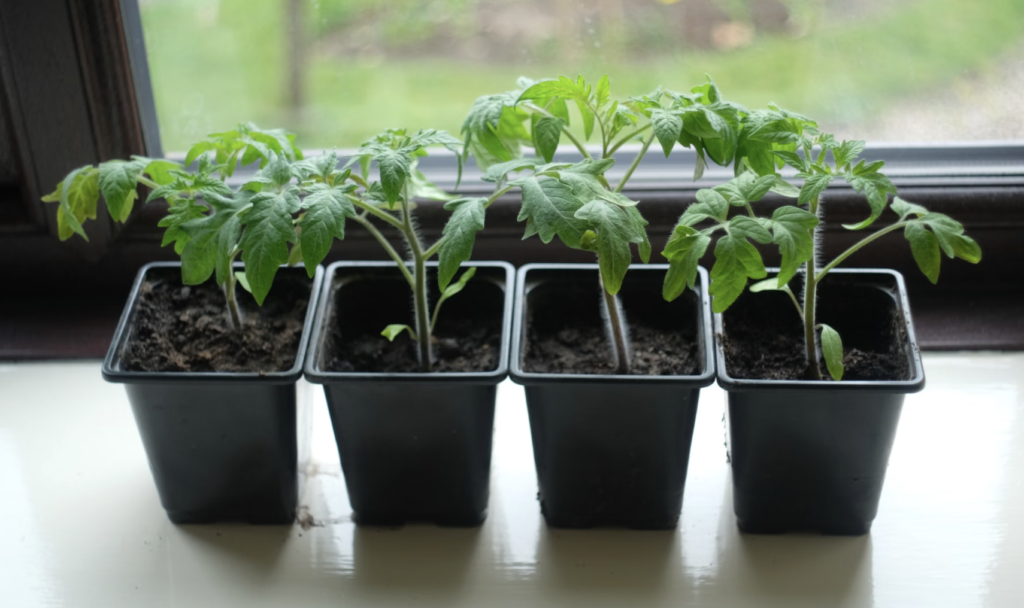
Why Grow Tomatoes in Containers?
Even gardeners with plenty of ground space often choose pots for their tomatoes, and for good reason:
- Grow anywhere. A patio, balcony, deck, driveway, or sunny doorstep becomes a productive tomato garden no yard required.
- Chase the sun. Because containers are movable, you can shift plants to the sunniest spot as the season changes, or roll them out of harsh weather.
- Fresh, controlled soil. You start each season with clean potting mix, sidestepping the soil-borne diseases that build up in garden beds.
- Fewer pests and diseases. Raised off the ground and easy to inspect, container tomatoes are simpler to keep healthy.
- Convenience. Keeping plants near the kitchen door makes watering, tending, and harvesting effortless.
For beginners especially, containers make tomato growing more forgiving and far less intimidating than committing to a full garden bed.
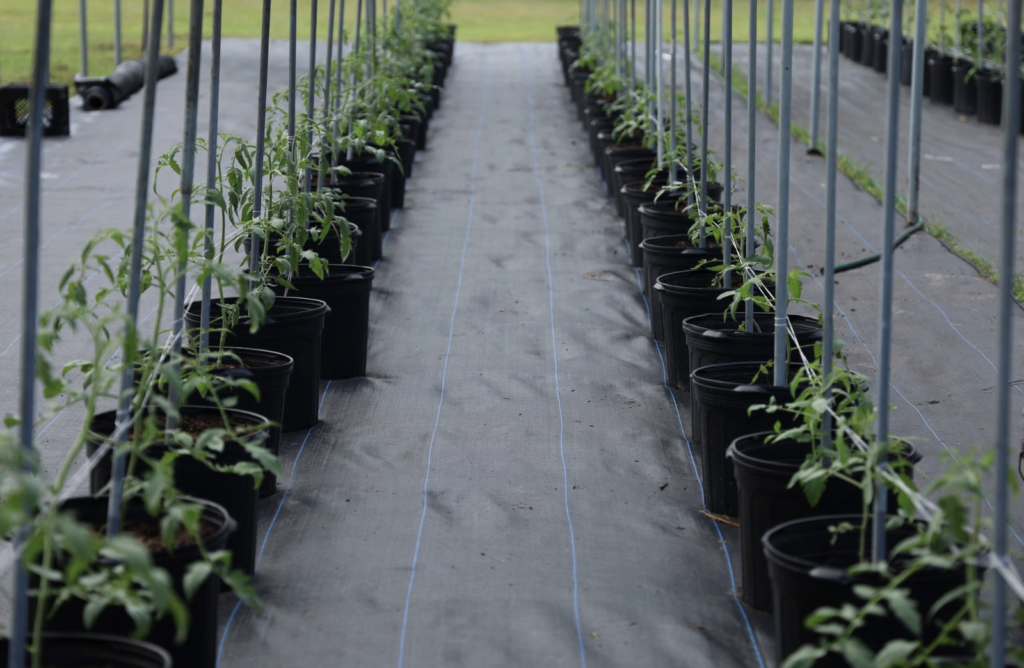
Determinate vs Indeterminate: Choose the Right Tomato
Before you buy a single plant, understand this one distinction, it’s the most important decision you’ll make for container success. Tomatoes come in two growth habits:
- Determinate (bush) tomatoes grow to a compact, predetermined size, then set most of their fruit in one big flush. Often labeled “bush,” “patio,” or “dwarf,” these are the easiest choice for containers because they stay manageable and need little pruning.
- Indeterminate (vining) tomatoes keep growing and fruiting all season long, reaching 6 to 8 feet or more. They can be grown in pots, but they need a very large container, sturdy support, and regular pruning and watering. more work, but a longer harvest.
For your first container tomato or any small space start with a determinate or dwarf variety. Cherry and grape tomatoes (which are usually compact bush types) are especially forgiving and productive. Great container picks include ‘Patio’, ‘Bush Early Girl’, ‘Tiny Tim’, ‘Tumbling Tom’ (lovely in hanging baskets), and reliable cherries like ‘Sweet 100’. For a deeper look at your options, see our guide to the best tomato varieties for home gardens.
Seedling or seed? The quickest, easiest route is to buy a healthy young transplant from a garden center in spring perfect for beginners and anyone short on time. If you’d like a much wider choice of compact and dwarf varieties, though, starting from seed indoors six to eight weeks before your last frost opens up hundreds of options you’ll never find as transplants. Our seed starting guide for beginners walks you through it step by step.
Choosing the Right Container
When it comes to container tomatoes, bigger is almost always better. A cramped pot restricts roots, dries out fast, and cuts your harvest, so err on the generous side. Here’s a quick sizing guide:
| Tomato Type | Minimum Container Size |
|---|---|
| Miniature / micro-dwarf | 1–2 gallons (8–10 inch pot) |
| Cherry / patio / determinate | 5 gallons |
| Dwarf with full-size fruit | 5–7 gallons |
| Indeterminate / vining | 15–25 gallons (bigger is better) |
Material matters too. Plastic pots are cheap and light but hold heat and moisture (watch for root rot). Fabric grow bags breathe beautifully and “air-prune” roots for a healthier system, but they drain fast, so you’ll water and feed a bit more. Wooden containers work well, just use untreated rot-resistant wood like cedar. A self-watering container, with its built-in water reservoir, is a fantastic option for thirsty tomatoes, since it buffers the plant against the inconsistent watering that causes so many problems you can even build a self-watering planter yourself. Whatever you choose, make sure it has good drainage holes (fabric bags excepted), and raise it off the ground on pot feet so roots don’t bake on hot paving and water can drain freely. Grow just one tomato plant per container for the best airflow and yields. If you’re new to pots in general, our container gardening guide for beginners covers the fundamentals.
The Best Soil for Container Tomatoes
Never fill a container with garden soil or straight compost, both compact and drain poorly in pots. Instead, use a loose, well-draining potting mix. You can buy a quality potting mix or make your own by blending equal parts coco coir (or peat), compost, and perlite or vermiculite for drainage and moisture retention. Tomatoes prefer slightly acidic soil, around pH 5.5 to 6.5. Mixing a little slow-release fertilizer or extra compost into the mix at planting gives your plant a strong start. Many gardeners also add a handful of crushed eggshells or a calcium supplement to the planting hole, since a steady calcium supply together with even watering helps ward off blossom end rot. For a homemade, low-waste feeding approach, our guide to making your own organic fertilizer is a great companion.
How to Plant Tomatoes in Containers: Step-by-Step
With variety, pot, and soil sorted, planting is quick and easy.
- Step 1: Pick a Big Container and a Full-Sun Spot
Choose your appropriately sized container with good drainage, and place it where it will get at least six to eight hours of direct sun, more is better. A bonus of containers is portability: position them to catch the sun and, ideally, somewhat sheltered from strong wind. On timing, wait until all danger of frost has passed and nights are reliably warm (above about 50°F) before setting tomatoes outside, they’re warm-season plants that sulk or stall in the cold. If you started or bought plants early, harden them off by moving them outdoors for gradually longer periods over a week before planting. Knowing your local last frost date makes this timing easy.
- Step 2: Fill With Quality Potting Mix
Fill the container most of the way with your well-draining potting mix, leaving room for the root ball. Moisten the mix so it’s evenly damp before planting.
- Step 3: Plant Deep
Here’s a tomato-specific trick that makes a real difference: plant deep. Pinch off the lower leaves and bury up to two-thirds of the stem, leaving just the top cluster of leaves above the soil. Tomatoes grow new roots all along any buried stem, so deep planting creates a much stronger, more drought-resistant root system.
- Step 4: Add Support Now
Install your stake, cage, or trellis at planting time, not later adding it once the plant is established risks damaging the roots. A determinate plant is happy with a standard cage or stake; an indeterminate one needs a tall, sturdy support, ideally anchored to a wall or railing so a top-heavy plant can’t tip the pot over late in the season.
- Step 5: Water In and Mulch
Water thoroughly until it runs from the drainage holes to settle the soil around the roots. Then add a couple of inches of mulch straw, shredded leaves, or bark on the surface to conserve moisture and keep roots cool. Our guide to types of mulch can help you pick.
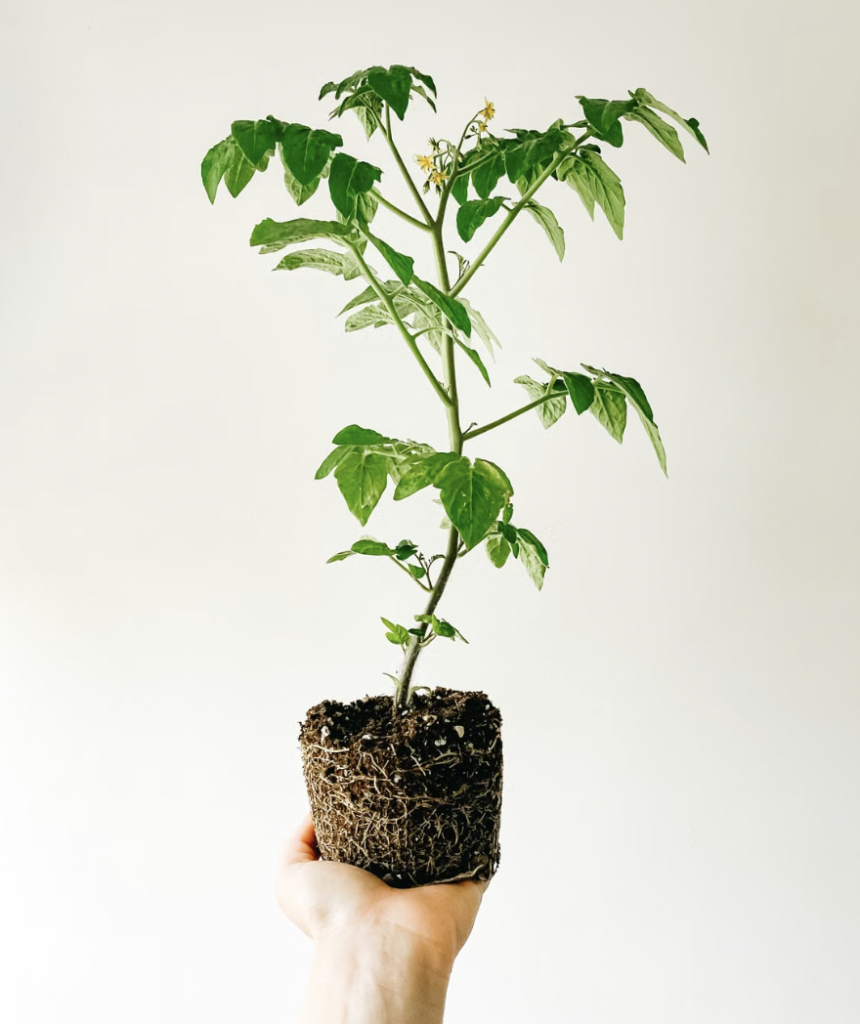
Tomato Care: Watering, Feeding and Support
Consistent, attentive care is what separates a struggling pot tomato from a thriving one. Good tomato care in containers comes down to three things.
- Watering. This is the single most important task. Containers dry out far faster than garden beds, so check daily and water whenever the top inch of soil feels dry in hot summer weather, large plants may need water once or even twice a day. Water deeply at the soil line until it drains from the bottom, and try to keep the leaves dry to discourage disease. Above all, be consistent: erratic watering is the direct cause of the two classic container-tomato problems, blossom end rot and fruit cracking. A DIY drip irrigation system or a self-watering planter takes the guesswork out.
In our experience, watering is where nearly every disappointing container tomato goes wrong and it’s almost always inconsistency rather than the total amount. A plant that’s parched on Monday and flooded on Thursday will drop blossoms, split its fruit, and develop that frustrating dark patch of blossom end rot, even in perfect soil with plenty of feed. The gardeners who succeed are simply the ones who water little and often enough to keep the soil evenly, steadily moist. If your schedule makes daily watering unrealistic, invest in a self-watering container or a simple drip timer before you invest in anything else, it will do more for your harvest than any fertilizer.
- Feeding. Tomatoes are heavy feeders, and container plants need more feeding than garden ones because there’s less soil to draw from. Start with a balanced fertilizer (like 10-10-10) about four to six weeks after planting, then switch to one higher in phosphorus and potassium once flowering begins to encourage fruit. Feed roughly every couple of weeks, or use a slow-release feed monthly (and about 25% more often for fast-draining fabric bags). Our guides to understanding NPK ratios and how and when to fertilize tomatoes explain the details.
- Support. As the plant grows, loosely tie the main stems to your stake or guide them up the cage. Keeping foliage and fruit off the soil improves airflow, reduces disease, and makes harvesting easy.
Pruning and Training Your Tomatoes
How much you prune depends on your tomato type. Determinate (bush) tomatoes need very little pruning, in fact, heavy pruning reduces their single main harvest, so just remove any yellowing lower leaves.
Indeterminate (vining) tomatoes, on the other hand, benefit from regular pruning. Pinch out the “suckers”, the small shoots that form in the crook between the main stem and a branch to keep the plant to one or two main stems. This channels energy into fruit rather than endless foliage, improves airflow, and keeps a vigorous vine from overwhelming its container. Pinch suckers when they’re small and do it regularly through the season.
Whatever type you grow, it’s good practice to remove the lowest leaves once the plant is established, especially any that touch the soil. Soil can splash fungal spores up onto low foliage when you water, so keeping the bottom few inches of stem bare is a simple, effective way to prevent many common leaf diseases. Good airflow around and through the plant is one of your best defenses against the fungal problems that thrive in damp, crowded foliage.
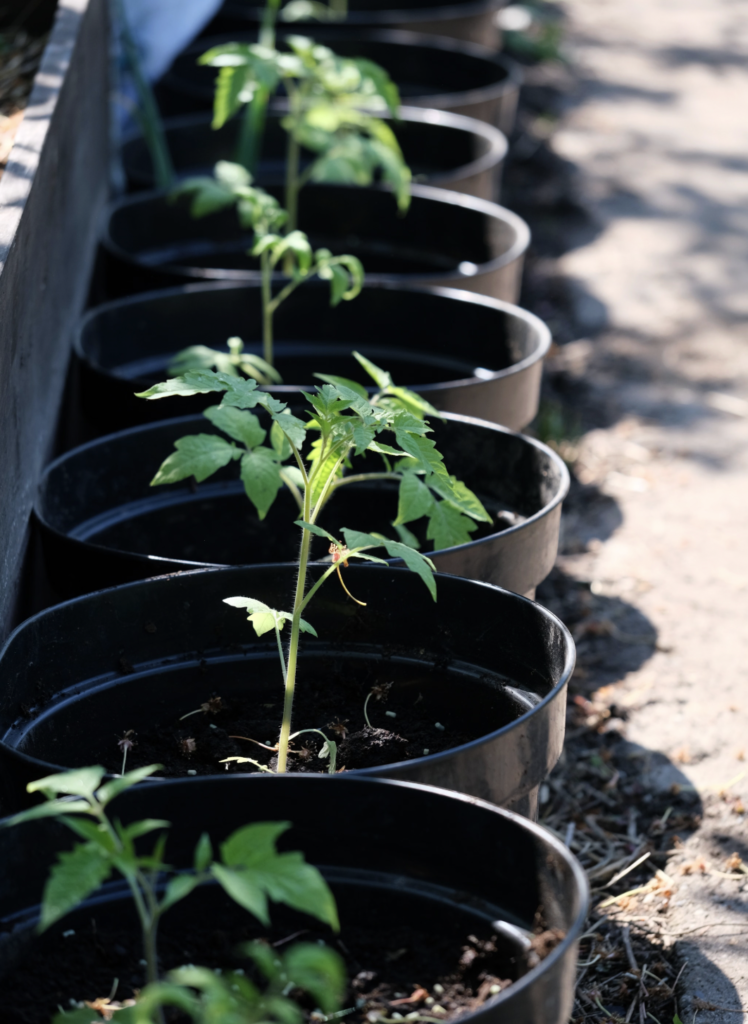
Preventing Common Container Tomato Problems
Most container tomato troubles are easy to prevent once you know the cause.
| Problem | Likely Cause | The Fix |
|---|---|---|
| Blossom end rot (dark sunken base) | Inconsistent watering; calcium uptake issues | Water evenly and consistently; don’t let soil dry out |
| Cracked or split fruit | Irregular watering, especially after dry spells | Keep soil evenly moist; mulch to buffer moisture |
| Flowers or fruit dropping | Heat stress, dryness, or erratic watering | Water consistently; provide some afternoon shade in extreme heat |
| Few fruits, lots of leaves | Too much nitrogen; not enough sun | Switch to a higher-phosphorus feed; ensure full sun |
| Yellow-orange fruit in heat | Temperatures above 90°F block red pigment | Normal in heat; provide light afternoon shade |
| Pale, leggy plants | Not enough light | Move to a sunnier spot |
Happily, container tomatoes often suffer fewer soil-borne diseases than garden plants, since you start each season with fresh, sterile potting mix. Birds and squirrels can nibble ripening fruit, so drape netting over plants if critters are a problem.
Harvesting Container Tomatoes
The best part! Let tomatoes ripen fully on the plant for the sweetest, richest flavor, they’re ready when the fruit is a uniform, mature color (red, yellow, orange, depending on variety) and gives slightly to a gentle squeeze. Harvest by gently twisting the fruit from the vine or snipping the stem with clean scissors.
Pick regularly, since frequent harvesting encourages the plant to keep producing. If cracking, pests, or birds threaten your ripening fruit, you can pick tomatoes when they’re just beginning to color and let them finish ripening on the kitchen counter, they’ll develop excellent flavor indoors. And if a frost threatens at season’s end, harvest all the mature green tomatoes and ripen them inside, so nothing goes to waste.
A quick tip on storage: never refrigerate fresh tomatoes if you can help it, as cold temperatures dull their flavor and turn the texture mealy. Keep them on the counter, stem-side down, out of direct sun. When your plants hit their summer stride and you have more tomatoes than you can eat fresh, they freeze, roast, and cook into sauce beautifully. a single productive container plant can keep a small household in salads, sandwiches, and homemade sauce for weeks, which is exactly the kind of low-waste, homegrown abundance that makes container gardening so rewarding. And because you can grow container tomatoes right outside the kitchen door, you get to harvest each one at the exact peak of ripeness, something no grocery store can ever match.
Is Growing Tomatoes in Containers Worth It?
Absolutely. Few things reward a little effort as generously as a container tomato, pounds of sun-ripened fruit from a single pot, no garden plot required, and the pure joy of eating a tomato you grew yourself. Container growing also puts you in control: fresh soil, easy pest monitoring, and the flexibility to garden on a balcony, patio, or fire escape. It’s also the perfect gateway crop, master a pot of tomatoes and you’ll have learned the core skills of container gardening that carry over to almost every other vegetable you might want to grow. why grow Tomato?
Ready to fill out your container garden? Tomatoes pair perfectly with other easy container crops. Try growing bell peppers from seed, cucumbers grown vertically, or a pot of leaf lettuce for continuous harvest. For more ideas, see our roundup of the best vegetables for container gardening, explore the full Vegetables collection, or browse the broader EcoGardenHub Plant Library. Planting companions nearby? Our companion planting guide for vegetables shows which plants love growing together.
Grab a big pot, a compact tomato, and your sunniest corner, and get growing. Your first homegrown tomato is closer than you think. Once you’ve tasted the difference between a store-bought tomato and one still warm from your own patio, there’s no going back.
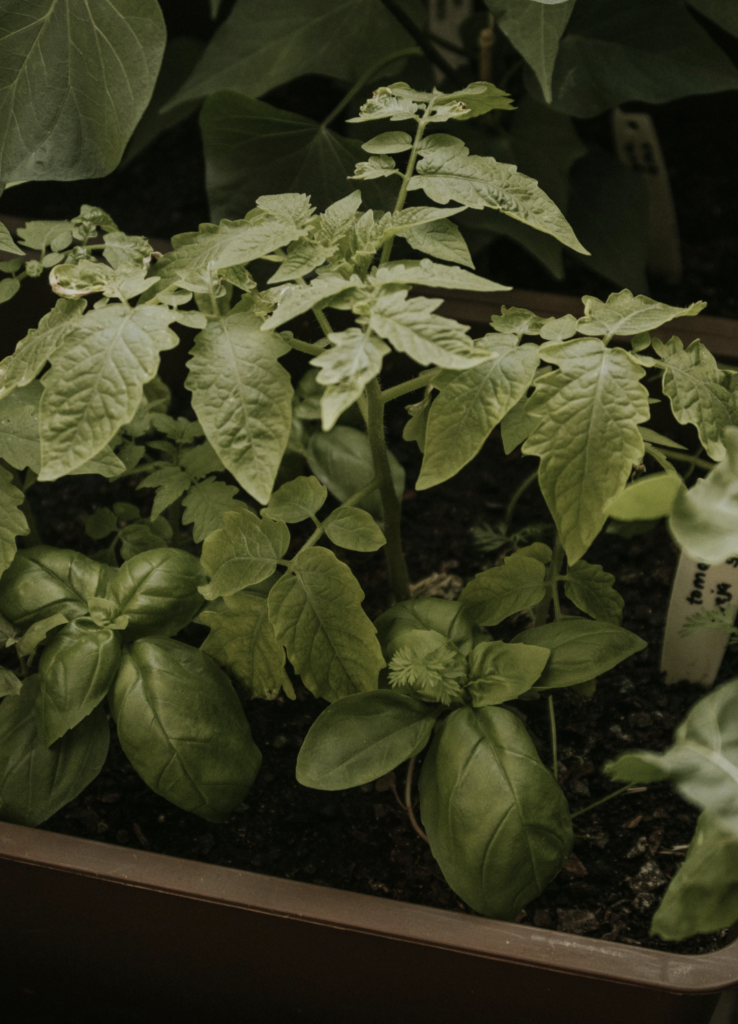
Frequently Asked Questions
- What size container do I need to grow tomatoes? Use at least a 5-gallon container for most tomatoes; cherry and mini varieties can manage in 2 gallons, while large indeterminate types need 15 to 25 gallons. In general, the bigger the pot, the healthier and more productive the plant.
- Which tomatoes are best for containers? Compact determinate, bush, patio, and dwarf varieties are easiest for containers, along with cherry and grape tomatoes. Good picks include ‘Patio’, ‘Tiny Tim’, ‘Tumbling Tom’, and ‘Sweet 100’. Indeterminate types work too but need bigger pots and more support.
- How often should I water container tomatoes? Check daily and water whenever the top inch of soil is dry, often once a day, and up to twice a day in hot weather, since containers dry out quickly. Consistent moisture is key to preventing blossom end rot and cracking.
- Do container tomatoes need fertilizer? Yes. Container tomatoes are heavy feeders with limited soil, so feed every couple of weeks with a balanced fertilizer, switching to a higher-phosphorus feed once flowering starts. Fabric grow bags need feeding a bit more often.
- Should I plant tomatoes deep in a container? Yes. Remove the lower leaves and bury up to two-thirds of the stem. Tomatoes grow roots all along the buried stem, creating a stronger, more drought-resistant root system and a sturdier plant.
- Do tomatoes in pots need a cage or stake? Most do. Add a cage, stake, or trellis at planting time to avoid disturbing roots later. Determinate plants need modest support, while tall indeterminate vines need a sturdy, anchored structure to keep the pot from tipping.
- How much sun do container tomatoes need? Tomatoes need at least six to eight hours of direct sun daily for strong growth and good fruiting. A big advantage of containers is that you can move them to catch the sunniest spot around your home.