Author: Eddy Green

  • How to Grow and Care for Hass Avocado (Persea americana ‘Hass’): 2026 Complete Guide

    How to Grow and Care for Hass Avocado (Persea americana ‘Hass’): 2026 Complete Guide

    Welcome to your ultimate guide on nurturing the famed Hass Avocado! Whether you’re a home gardener dreaming of plucking your produce or someone looking to amplify their orchard with this global heavyweight, you’re about to embark on a fruitful journey. The Hass avocado is cherished across continents, dominantly leading both commercial markets and home gardens due to its unique flavor, texture, and resilience. Let’s delve into the essentials to ensure your Hass avocado journey from seedling to a bountiful harvest!

    Understanding the Hass Avocado

    What Makes Hass Different from Other Avocado Varieties

    The Hass avocado is a standout with its notably pebbly skin, high oil content, and rich, nutty flavor. These traits make it a premium choice compared to other popular varieties such as Fuerte, Bacon, or Reed. The myriad of characteristics that set the Hass apart include its relatively thick skin, which is easier to peel and has greater resistance to pests and diseases. Notably, the Hass avocado tree is appreciated for its consistent production and adaptability, rendering it the dominant choice for avocado aficionados around the globe.

    Botanical Classification and Plant Biology Basics

    Diving into the scientific realm, the Hass avocado belongs to the Lauraceae family and the Persea genus, with its botanical zeitgeist attracting both botanists and horticulturalists. Understanding the plant structure of the avocado tree is integral: the roots establish a robust foundation while the trunk and branching create the leafy canopy that aids in sun absorption. The Hass avocado is monogenic and displays “perfect” flowers  having both male and female organs, supporting a fascinating mechanism of alternate “A” and “B” flowering types that enhance pollination and fruit production.

    As the flowering phases unfold, Hass avocados undergo a mesmerizing transformation from blossom to full-fledged fruit. Each stage must be carefully nurtured to assure robust and luscious fruit output come harvest time.

    A Brief Botanical and Commercial History of Hass

    Rewind to the 1920s in California, and you’ll find the origin story beginning with Rudolph Hass who stumbled onto a unique seedling that would change the avocado landscape forever. Originally sourced as an intriguing anomaly, the Hass avocado quickly replaced other predominant varieties due to its superior commercial qualities and unmatched fruit standards. Its genetic makeup is such that it’s almost always grafted, as growing from seed won’t yield a true Hass tree. Grafting also leverages the opportunity for consistent yield and quality, making it a more viable choice for both home and commercial growers.

     Choosing and Sourcing Hass Avocado Trees

     Hass vs. “Hass-like” Cultivars (Lamb Hass, Gem, Carmen, etc.)

    When choosing to grow Hass, it’s essential to distinguish between the true Hass and “Hass-like” cultivars such as Lamb Hass, Gem, and Carmen. The true Hass cultivar offers stability and reliability due to its established profile. However, for those considering newer varieties, some Hass-like types can offer benefits like increased cold tolerance or alternate bearing seasons which might align better with regional climates or personal preference.

    Grafted Tree vs. Seed-Grown: Which to Choose and Why

    Opting between a grafted tree and a seed-grown tree is fundamental. Hass avocados from seeds rarely grow true to type, meaning the predictability of fruit quality and yield can be drastically varied. Grafted nursery trees, on the other hand, provide earlier bearing and predictable fruit production. When selecting grafted trees, look for a solid graft union, healthy trunk, and robust root system crucial indicators of a tree’s future success.

    Selecting the Right Rootstock for Your Climate and Soil

    Rootstock selection is yet another pivotal choice impacting your avocado’s performance, particularly regarding climate resilience and soil compatibility. Popular rootstocks are known for their characteristics, such as salt tolerance and disease resistance, which are crucial in matching rootstock types with your region’s conditions. If your garden has heavy clay soil, certain rootstocks might be preferable, whereas sandy soils could call for entirely different compatibility. Understanding these nuances and asking pointed questions at the nursery can significantly optimize your tree’s potential.
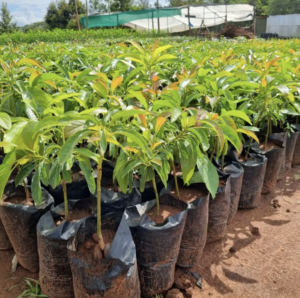
    Hass Avocado Nusery | Vicman Organics |
    Hass Avocado Nusery | Vicman Organics 

    Site Selection and Climate Requirements

    Ideal Climate Zones for Hass Avocado

    Hass avocados thrive in certain climates, specifically USDA Hardiness Zones 9 through 11, where temperatures allow for optimal growth without the adversity of frost or overwhelming heat. These zones typically feature milder winters and warm but not excessive summer heats, conditions the Hass cultivar favors for flourishing. Within these parameters, the coolness of coastal zones contrasts with the warmth of inland, granting certain nuances to consider for specific microclimate needs.

     Sunlight, Wind, and Microclimate Considerations

    Ensuring your Hass avocado receives ample sunlight is a non-negotiable factor for healthy growth, as it demands full sun exposure. Furthermore, wind poses its own challenges the Hass cultivar isn’t that fond of arid gusts that can lead to leaf burn, fruit drop, or broken branches. Adequate shelter via companion planting or strategic placement against structures can mitigate these issues and cultivate a protective microclimate for your precious tree.

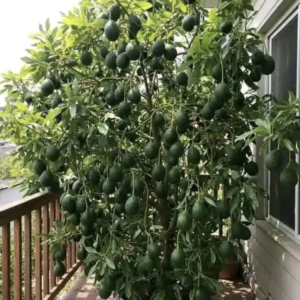
    Hass avocado must receives ample sunlight
    Hass avocado must receives ample sunlight

    Frost, Heat, and Humidity Tolerance

    Protecting your Hass avocado involves understanding how it reacts to extreme temperatures. Frost can critically damage leaves, flowers, and fruits, while excessive heat can lead to scorch and affect fruit quality. Similarly, high humidity might spike disease susceptibility, whereas too dry a climate might challenge hydration and overall health. Striking the right environmental balance is key to managing the external factors that compromise vitality and yield.

    Soil Chemistry and Preparation for Hass Avocado

    Ideal Soil Structure and Drainage

    One absolute must for Hass avocado cultivation is soil with excellent drainage. Preferably, aim for loam or sandy loam, which allows for proper water infiltration without stagnation that could rot the roots. Conducting simple drainage tests at home by observing water absorption rates can help assess what amendments might be necessary.

    Optimal pH Range and Its Impact on Nutrient Uptake

    The soil’s pH plays an unseen yet crucial role, with Hass avocados preferring a slightly acidic to neutral pH range of 6.0 to 7.0. Adequate pH helps maintain the availability of essential nutrients such as iron, zinc, manganese, and phosphorus, key to healthy growth. Many regions face pH challenges from alkaline calcareous soils to overly acidic environments all requiring different corrective actions for optimal nutrient uptake.

     Managing Soil Organic Matter and Microbial Life

    Building a rich soil organic matter presence enriches the environment for your Hass avocado. It increases moisture retention and provides a robust nutrient foundation. Encouraging a lively microbial life, with helpful organisms like mycorrhizal fungi, plays a pivotal role in root health and nutrient assimilation. Incorporating compost and mulches should be done carefully to prevent root suffocation, essential for maintaining a balanced and thriving root zone.

    By covering these essential foundations, you pave the way for your Hass avocado to not just survive, but truly thrive in its new home. In the steps that follow, you will ensure that from the soil to sky, your gardening practice cultivates an environment of optimal growth and bounty.

    Hass Avocado Tree Care: Optimizing Irrigation, Fertilization, and Pruning for Maximum Yield

    When it comes to Hass avocado tree care, providing appropriate water, nutrients, and pruning is vital to ensure vigorous growth and bountiful fruit production. In this section, we will explore detailed irrigation schedules, recommended fertilizer N-P-K ratios, and essential pruning techniques tailored to the unique needs of Hass avocado trees. These practices are particularly important for gardeners interested in growing avocados from seed or through  avocado grafting, as young trees have specific requirements that lay the foundation for future productivity.
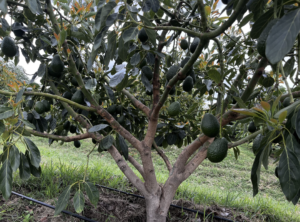
    Hass Avocado Tree Care: Optimization
    Hass Avocado Tree Care: Optimization

    Irrigation Schedules for Hass Avocado Trees

    Proper watering is critical in avocado cultivation, as both under- and over-irrigation can negatively impact tree health and fruit yields. The right irrigation schedule also depends on soil type, climate, and the tree’s age or stage.

    General Guidelines for Watering Hass Avocado Trees

    • Young Trees (0-3 Years): Newly planted avocado trees, including those propagated by **avocado grafting** or from seed, require frequent, light watering to establish roots. Water deeply 2-3 times per week, allowing moisture to penetrate the root zone about 12 to 18 inches deep, but avoid waterlogging.
    • Mature Trees (3+ Years): Mature Hass avocado trees develop extensive root systems and have greater water demands, especially during flowering and fruit development phases. Water deeply once or twice weekly depending on rainfall, temperature, and avocado soil pH which affects nutrient availability and water uptake.
    • Seasonal Considerations: Increase watering during hot, dry summer months to prevent drought stress. In cooler seasons or rainy conditions, reduce frequency to avoid root diseases from excess moisture.

    Tips for Efficient Irrigation

    • Use drip irrigation or microsprinklers to deliver water directly to the root zone while minimizing evaporation.
    • Mulch around the base with organic materials like wood chips or compost to improve water retention and moderate soil temperature.
    • Always check soil moisture by probing the root zone before watering to avoid over-irrigation.

    Fertilizer N-P-K Ratios for Hass Avocado Tree Care

    Fertilization tailored to the nutritional demands of Hass avocado trees significantly influences tree vigor, flowering, and fruit set. The ideal fertilizer regime balances nitrogen (N), phosphorus (P), and potassium (K) in appropriate proportions.

    Recommended N-P-K Ratios by Growth Stage
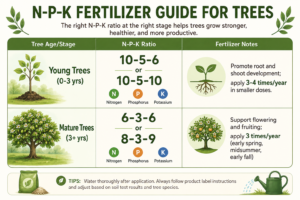
    Recommended N-P-K Ratios by Growth Stage
    Recommended N-P-K Ratios by Growth Stage

    Nitrogen is crucial during early growth for leaf and shoot development, but in mature trees, moderate nitrogen with balanced phosphorus and potassium ensures healthy flowering and high-quality fruits. Potassium particularly enhances fruit size, taste, and skin quality.

    Micronutrient Considerations

    Zinc (Zn), iron (Fe), and manganese (Mn) deficiencies are common in avocado cultivation. Incorporate micronutrient foliar sprays or soil amendments as recommended based on soil test results to avoid leaf chlorosis and poor fruit set.

     Fertilizer Application Tips

    – Split fertilizer doses to avoid nutrient leaching and improve uptake.
    – Apply fertilizers evenly around the tree drip line, avoiding contact with the trunk.
    – Irrigate after fertilizing to help nutrients penetrate the root zone.

    Pruning Techniques for Maximum Fruit Production

    Strategic pruning improves canopy structure, light penetration, air circulation, and overall fruit yield and quality in Hass avocado trees. Proper pruning also facilitates easier management of irrigation and  avocado grafting  sites.
    Hass avocado Pruning Techniques for Maximum Production
    Hass avocado Pruning Techniques for Maximum Production

    Why Prune Hass Avocado Trees?

    – Remove dead or diseased branches to maintain tree vigor.
    – Control tree size for easier harvesting and maintenance.
    – Enhance sunlight exposure within the canopy, which encourages more flowering and fruiting.
    – Stimulate growth of fruiting wood by balancing vegetative and reproductive development.

    Pruning Methods

    1. Structural Pruning (Young Trees)

    Focus on developing a strong framework with 3-4 main scaffold branches spaced evenly around the trunk.

    – Prune to establish a central leader or open vase shape during the first 2-3 years.
    – Remove low branches below 24 inches from the ground to create clearance.
    – Cut back competing leaders and weak shoots to encourage robust scaffold branches.

    2. Maintenance Pruning (Mature Trees)

    – Annually remove any dead, broken, or crossing branches.
    – Thin dense canopy areas to improve air circulation and sunlight penetration. Remove crowded, inward-growing branches.
    – Shorten overly long branches to encourage lateral shoots that will bear fruit in the next season.
    – Avoid severe heading cuts as avocados can respond with excessive vegetative growth at the expense of fruiting.

     Timing of Pruning

    The best time to prune is late winter to early spring before the onset of active growth and flowering, although light pruning after harvest is also possible. Avoid heavy pruning during flowering or fruiting as this can reduce yield.

    Integrating Hass Avocado Tree Care Practices

    Successfully growing Hass avocado trees, whether by  growing avocados from seed or using  avocado grafting techniques, depends on combining these irrigation, fertilization, and pruning strategies with attention to  avocado soil pH ideally around 6.0 to 6.5—to optimize nutrient availability. Remember:

    • Monitor soil moisture through regular checks and adjust irrigation schedules accordingly.
    • Apply fertilizers with the appropriate N-P-K ratios based on age and growth stage for balanced nutrition.
    • Prune judiciously to maintain tree health and maximize fruit production without causing undue stress.

    Careful attention to these parameters will help home gardeners achieve a thriving Hass avocado orchard with superior fruit quality and abundance.

    Some Critical Questions Asked About Growing Hass Avocado

    1. How long does it take for a grafted Hass avocado tree to bear fruit?  Hass avocado are fast-growing, usually between 3-4 years for grafted trees vs. 10+ for seeds.

    2. Do I need two trees for pollination? Hass is “Type A” and self-pollinating, but many gardeners don’t know that planting a “Type B” nearby can significantly increase crop yield.

    3. How do I protect my tree from “Sunscald”?  Young avocado trees have sensitive bark that can burn in high heat; many experts recommend whitewashing the trunk with diluted white latex paint.

    4. How can I tell exactly when a Hass avocado is ready to harvest?  Avocados do not ripen on the tree; beginners need to know how to pick a “test fruit” and check for skin color changes or stem shriveling.

    5. What is the “Mound Planting” technique?  For gardeners with poor drainage or heavy rain, planting on a 1-2 foot mound of soil is a pro-tip that prevents root rot better than flat planting).

    6. How much sunlight does a Hass avocado tree need daily?   6 to 8 hours of direct full sun.
    7. What is the maximum height a Hass avocado tree can reach?  Typically 15–30 feet, though they can grow taller.

    8. How often should I water my avocado tree during dry spells?   Deeply once a week, adjusting for soil moisture.

    9. What are the temperature limits for Hass avocados?  They thrive between 60°F and 85°F and are sensitive to frost.

    10. Can I grow a Hass avocado tree in a pot?   Yes, provided it has enough sunlight, water, and nutrients.

    11. What type of fertilizer should I use and when? Balanced fruit tree fertilizer in early spring and late summer.

    12. How do I prevent root rot in my avocado tree?  Avoid dense clay soils and ensure the soil is well-drained; do not overwater.

    13. When is the best time to prune my tree?   Conduct annual pruning to remove dead wood and improve air circulation.

    14. What are the most common pests to watch out for?   Spider mites, aphids, and avocado borers.
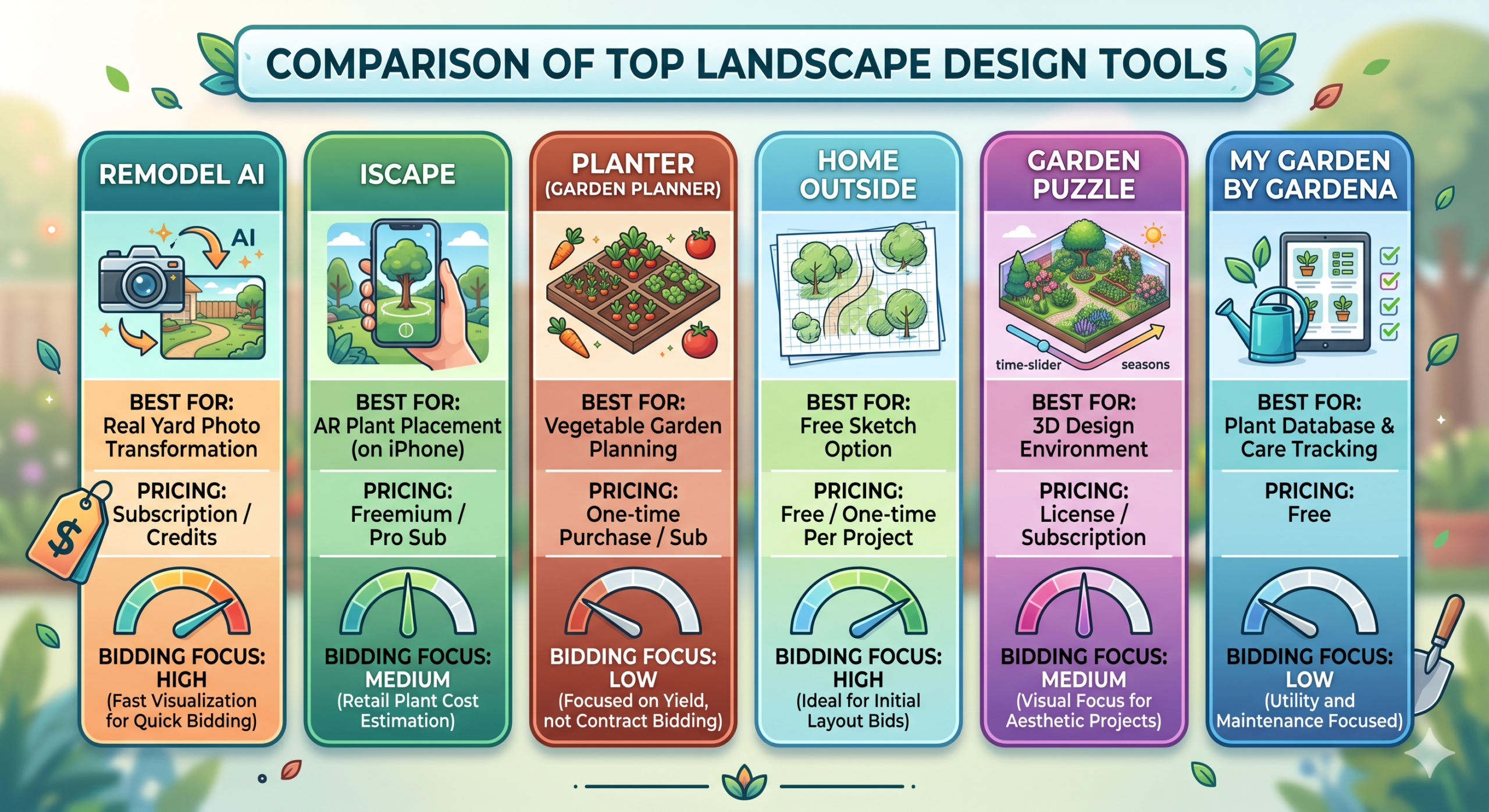
  • The Best Landscaping AI Tools of 2026

    The Best Landscaping AI Tools of 2026

    In the world of landscaping, AI technology has heralded a new era of efficiency and creativity. By 2026, these tools have not only enhanced garden design but also transformed how professionals manage and maintain gardens, ultimately optimizing the core processes of landscape management.

    What Are the Best Landscape Design Apps of 2026?

    The best landscape design apps of 2026 incorporate advanced AI technologies, photorealistic 3D garden renders, and climate-aware plant selection to offer unmatched precision and efficiency. These apps help design, plan, and visualize gardens in ways previously unimaginable. Integrated AI tools provide real-time feedback and suggestions, reducing design errors significantly.

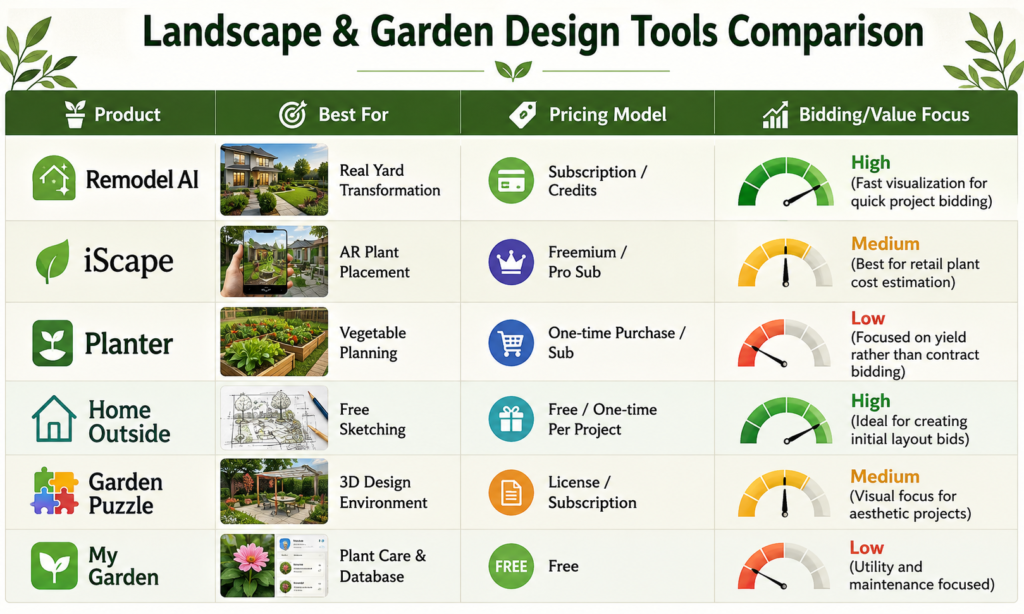
    Best Landscape Tools Comparison
    Best Landscape Tools Comparison 2026 Update

    Photorealistic 3D garden renders allow designers to visualize the final look seamlessly before starting the actual work. AI hardscape planning tools facilitate the optimal arrangement of elements like paths, walls, and water features, ensuring both aesthetics and functionality are optimized.

    • Remodel AI

      Remodel AI is a powerful tool designed for homeowners who want to see the immediate potential of their outdoor space through high-fidelity photo transformation. By utilizing advanced artificial intelligence, the app allows users to upload a clear photo of their existing yard and apply various architectural and landscaping styles to see a photorealistic reimagining of the property. It excels at maintaining the structural integrity of your home while intelligently swapping out old grass, dated pavers, or overgrown shrubbery for modern alternatives. This makes it an essential choice for those who struggle to visualize professional blueprints and prefer a “before and after” experience that feels tangible and immediate.

    Remodel AI generated Outdoor Landscape
    Remodel AI generated Outdoor Landscape
    • iScape

      Designed specifically for the mobile user, iScape is the industry leader for augmented reality (AR) landscaping, offering a seamless way to “try before you buy.” The app utilizes the iPhone’s sophisticated camera sensors to overlay 2D and 3D plant models, hardscapes, and outdoor furniture onto your actual environment in real-time. This spatial awareness allows you to walk around your yard and see exactly how a Japanese Maple or a new stone walkway would fit within the existing dimensions of your lawn. It is particularly effective for DIY enthusiasts who want to avoid the costly mistake of purchasing plants that are either too large for their designated space or visually clashing with the home’s exterior.

    iScape Landscape Design App generated image before/after
    iScape Landscape Design App generated image before/after
    • Planter Garden Planner

      Planter Garden Planner is a specialized utility tailored for the edible gardener, focusing on the logistical and biological needs of a productive vegetable patch. Unlike general aesthetic tools, this app provides a grid-based layout system that integrates deep horticultural knowledge, such as companion planting data and frost date calculations. Users can drag and drop specific vegetables into their virtual beds, and the app will automatically notify them if certain plants should not be placed next to each other or if they require more spacing. It is the gold standard for those looking to maximize their harvest and manage a complex rotation of crops throughout the growing season.

    Download Planter Garden Planner Ai Tool
    Download Planter Garden Planner Ai Tool
    • Home Outside

      Home Outside offers a professional-grade design experience through a simplified, user-friendly interface that excels in digital sketching. Created by landscape architects, the app provides a massive library of hand-drawn elements—including trees, patios, and fire pits—that allow users to create stylized, “top-down” bird’s-eye view plans of their entire property. While it offers premium tiers, the free sketch options are remarkably robust, giving users the ability to draft clean, artistic layouts that can be shared with contractors or used as a foundational roadmap for long-term projects. It bridges the gap between a rough pencil drawing and a complex CAD file.

    How Home Outside App works
    How Home Outside App works
    • Garden Puzzle

      Garden Puzzle provides a comprehensive 3D design environment that focuses on the visual composition and layering of a landscape. The software allows users to work with high-resolution graphics to build a virtual garden from the ground up, emphasizing how different textures, colors, and plant heights interact across the four seasons. It features a sophisticated “time-slider” tool that lets you see how your garden will look in spring versus winter, or how a young sapling will eventually fill out the space over several years. This makes it a premier choice for hobbyists who are focused on the long-term aesthetic harmony and structural balance of their outdoor “rooms.”

    Picture Generated by Garden Puzzle App image
    Picture Generated by Garden Puzzle App
    • My Garden by Gardena

      My Garden by Gardena is a web-based planning tool that shines through its integration with a massive plant database and automated care tracking systems. The platform allows you to draw out your garden area and then populates it with specific species, providing detailed maintenance requirements for every item in your design. Because it is backed by one of the world’s leading garden equipment manufacturers, the tool is exceptionally precise regarding irrigation needs, often suggesting optimal sprinkler placements. It is the ideal solution for the data-driven gardener who wants a beautiful design backed by a rigorous schedule for watering, pruning, and long-term plant health.

    My Garden by Gardena generated Template
    My Garden by Gardena generated Template

    How Do AI Tools Enhance Landscape Bidding Efficiency?

    AI tools for professional landscapers are game-changers in reducing landscape bidding time. Features like computer vision for site takeoffs and estimating software provide accurate and swift property assessments, letting professionals make informed decisions faster. This advancement streamlines the bidding process, leading to more competitive and precise job quotes.

    Adopting these tools drastically minimizes human error, ensuring that bids are based on the most current and accurate data, ultimately benefiting both service providers and clients. The use of Sitemap satellite tracing further improves the precision of digital site models.

    How Is Smart Irrigation Telemetry Revolutionizing Garden Maintenance?

    Smart irrigation telemetry is revolutionizing garden maintenance by offering real-time data and management insights that optimize water usage. This technological advancement supports environmental sustainability while ensuring that plants receive precise water levels necessary for their growth. By integrating AI, systems can adjust irrigation schedules based on weather data and soil moisture levels.

    Such systems are crucial in climate-aware plant selection, guiding gardeners on which plants are best suited for specific climates, thereby ensuring sustainable gardening practices. The inclusion of hardiness zone-specific AI enhances localized plant care routines.

    What Are Digital Twins for Outdoor Spaces?

    Digital twins for outdoor spaces are digital replicas of physical gardens used to simulate and test various landscaping ideas before physical implementation. This concept allows for experimentation with a virtual yard makeover AI, predicting outcomes of design changes without risking real-world assets. These digital models give accurate foresight and enable smarter planning.

    This approach minimizes unforeseen issues and enhances the decision-making process by providing clear visual representations of proposed changes. It is beneficial for both small residential gardens and large commercial landscapes.

    What Role Does AI Play in Hardiness Zone-Specific Landscaping?

    AI plays a crucial role in hardiness zone-specific landscaping by processing large datasets to offer tailored plant selection advice. This ensures plants thrive in their respective zones, reducing the risk of mismatched plantings. AI-driven insights ensure optimal growth environments, significantly improving plant health and garden sustainability.

    By leveraging AI, landscapers and gardeners can make informed decisions based on local climate conditions, enhancing both the beauty and resilience of their gardens.

    How Does AI Impact Smart Yard ROI by 2026?

    Smart yard ROI by 2026 is greatly enhanced by AI through improved resource allocation, maintenance efficiency, and landscape design precision. AI tools optimize resource usage, reducing costs and waste. Automated systems enhance garden maintenance while data analytics ensure continuous improvement of yard management strategies.

    Such advancements ensure that both amateur gardeners and professional landscapers achieve more with less, transforming efforts into tangible, cost-effective results over time.

    What Are AI’s Applications in Professional Landscaping?

    AI applications in professional landscaping include AI tools for design, maintenance, estimating, and sustainability management. These technologies allow for more accurate designs, smarter irrigation management, and improved sustainability practices, all while reducing the time and cost of project bidding and implementation.

    AI also assists in analyzing large volumes of data to optimize garden aesthetics and functions, making AI an indispensable tool for forward-thinking landscape professionals.

    Why Is Computer Vision Important in Site Takeoffs?

    Computer vision for site takeoffs is important because it reduces the human error often associated with manual measurements. By automating data gathering and analysis, computers can provide more accurate and detailed site assessments crucial for effective planning and execution. This innovation increases efficiency and accuracy, ultimately refining the design and installation process.

    These advancements not only save time but also significantly decrease the chances of costly errors, further benefiting professionals in the landscaping industry.

    Computer Vision in Landscape Design
    Computer Vision in Landscape Design

    What Are the Most Prominent Benefits of Virtual Yard Makeover AI?

    Virtual yard makeover AI allows users to explore various design possibilities through immersive simulations before committing to physical changes. This capability saves time and resources by forecasting potential issues and identifying optimal design solutions. The ability to visualize changes instantly streamlines decision-making and enhances creative freedom.

    As a result, the planning phase becomes more dynamic and informed, providing end-users with a higher degree of satisfaction with their landscaping projects.

    Some FAQ about common AI Tools

    1. Can AI actually measure my yard accurately from a photo?

    Yes, but with a caveat. In 2026, AI tools like SiteRecon and QuoteIQ use high-resolution satellite data and “computer vision” to measure areas with up to 98% accuracy. However, for precise construction (like building a retaining wall), pros still rely on LiDAR scans from an iPad or drone to account for slopes and elevation changes that flat photos can’t see.

    2. Will an AI-designed garden actually survive in my local climate?

    Early AI tools often suggested “hallucinated” plants that looked pretty but wouldn’t grow in your zone. Modern 2026 tools now feature “Location-Aware Steering.” By inputting your ZIP code, the AI cross-references local hardiness zones and soil data to ensure the plants suggested are actually available at your local nursery and suited for your weather.

    3. Can AI help me solve drainage and slope issues?

    AI is excellent at identifying potential problem areas through topographic mapping, but it cannot replace a drainage engineer. It can suggest where a French drain or permeable pavers might go, but it can’t “feel” soil compaction or detect underground utility lines. Use AI for the concept, but always have a human verify the physics.

    4. How much time does AI actually save a professional contractor?

    On average, landscaping businesses using AI for quoting and routing report saving 15 to 20 hours per week on administrative tasks. What used to take 3 days (visiting a site, measuring, and emailing a quote) can now be done in under 15 minutes using automated satellite takeoffs.

    5. Is there a free AI tool for DIY yard design?

    Tools like Neighborbrite or Microsoft Copilot offer free versions that allow you to upload a photo and “reskin” your yard with different styles (e.g., Modern, Tropical, or Xeriscape). They are perfect for brainstorming, though they lack the technical “blueprints” found in paid professional software.

    6. Can AI tell me how my garden will look in 5 or 10 years?

    Yes. One of the best features of 2026 design AI is “Growth Simulation.” You can toggle a slider to see how a small sapling will look as a mature tree, ensuring you don’t over-plant or block your windows’ sunlight a few years down the line.

    7. Does AI take “Smart Home” integration into account?

    Absolutely. Many tools now design with “Smart Irrigation” and “Robotic Mowing” in mind. The AI can map out the best zones for subterranean sensors and ensure your hardscape layout is “robot-friendly” with no trapped corners or inaccessible grass strips.

    8. Can AI generate a full “Bill of Materials” (BOM)?

    Professional-grade AI tools now convert a 3D render into a shopping list. It can calculate exactly how many pallets of pavers, cubic yards of mulch, and specific plant counts you need, significantly reducing material waste and over-ordering.

    9. How does AI help with “Sustainable” or “Eco-friendly” landscaping?

    AI algorithms can now optimize for “Microclimate Performance.” The software analyzes sun patterns and wind to suggest “Natural Cooling” (placing trees to shade the house) or “Pollinator Corridors” (grouping native plants that support local bees and birds).

    10. Will AI replace landscape architects?

    The consensus in 2026 is no. AI is a “planning accelerator,” not a replacement for human creativity and site-specific intuition. AI can draw a thousand patios in a minute, but a human architect understands the emotional flow of a space and the complex legal requirements for local building permits.

  • Why the Tasmanian Devil Is Endangered: 2026 Facts & Tracking the Survival of an Icon

    Why the Tasmanian Devil Is Endangered: 2026 Facts & Tracking the Survival of an Icon

    As we navigate the ecological landscape of 2026, the Tasmanian devil (Sarcophilus harrisii) remains at a critical crossroads. Once the apex predator of the entire Australian mainland, this iconic marsupial is now restricted almost exclusively to the island state of Tasmania. The question of why the Tasmanian devil is endangered is not answered by a single factor, but rather a complex interplay of genetic isolation, anthropogenic pressure, and a biological anomaly that has baffled scientists for decades.

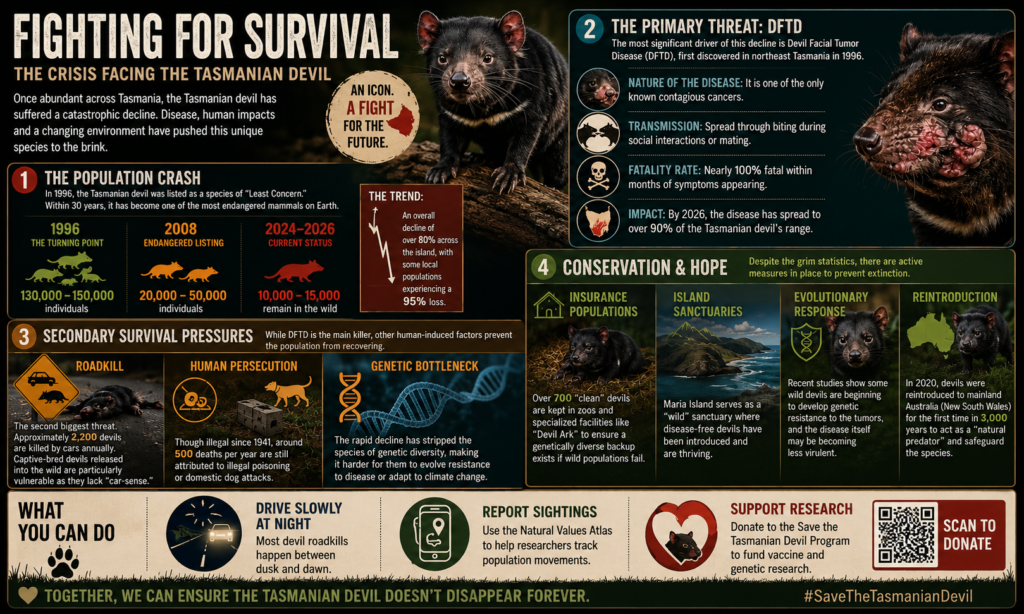
    In 1996, the Tasmanian devil was listed as a species of “Least Concern.” Within 30 years, it has become one of the most endangered mammals on Earth.

    • 1996 (The Turning Point): 130,000 – 150,000 individuals.

    • 2008 (Endangered Listing): Population dropped to approx. 20,000–50,000.

    • 2024–2026 (Current Status): Estimates suggest as few as 10,000–15,000 remain in the wild.

    • The Trend: An overall decline of over 80% across the island, with some local populations experiencing a 95% loss.

    Infographic about the Tasmanian Devil Endangered specie History and statistics
    Infographic about the Tasmanian Devil endangered species’ history and statistics

    Some Major Threats to the Tasmanian Devils

    The Tasmanian Devil is endangered primarily due to Devil Facial Tumour Disease (DFTD), a rare, contagious cancer that spread through biting. Since its discovery in 1996, DFTD has reduced wild populations by over 80%. Some Other contributing factors include habitat loss, road accidents, and competition with invasive species like feral cats and foxes.

    • Devil Facial Tumour Disease

    The cancer cells themselves are the infectious agent. Because Tasmanian devils have remarkably low genetic diversity, their immune systems fail to recognize the foreign cancer cells from another devil as “non-self.” This allows the tumors to grow unchecked, typically appearing around the mouth and neck, eventually leading to organ failure or starvation within six months of clinical onset.

    • Nature of the Disease: It is one of the only known contagious cancers.

    • Transmission: Spread through biting during social interactions or mating.

    • Fatality Rate: Nearly 100% fatal within months of symptoms appearing.

    • Secondary Survival Pressures

    While DFTD is the main killer, other human-induced factors prevent the population from recovering:

    • Roadkill: The second biggest threat. Approximately 2,200 devils are killed by cars annually. Captive-bred devils released into the wild are particularly vulnerable as they lack “car-sense.”

    • Human Persecution: Though illegal since 1941, around 500 deaths per year are still attributed to illegal poisoning or domestic dog attacks.

    • Genetic Bottleneck: The rapid decline has stripped the species of genetic diversity, making it harder for them to evolve resistance to disease or adapt to climate change.

    • Climate Change: Increasing aridity reduces prey availability, further stressing small, isolated populations.

    “DFTD has wiped out over 90% of the population in some high-density areas. The
    emergence of a second strain, DFT2, in 2014 has further complicated recovery efforts,
    requiring a multi-faceted immunological response from researchers.”

    Apex Scavenger | Where Do Tasmanian Devils Live?
    Apex Scavenger | Where Do Tasmanian Devils Live?

    Where Do Tasmanian Devils Live? Habitat Mapping & Range

    For decades, the mention of a “Tasmanian devil” brought to mind a singular, rugged island at the edge of the world. However, as of 2026, the geography of this iconic marsupial is shifting. From the dense rainforests of the Tarkine to experimental safe havens on the Australian mainland, understanding where these creatures live is key to ensuring they don’t follow the Thylacine into the history books.

    In Tasmania, their range is surprisingly broad. You won’t find them in the highest alpine peaks or heavily urbanized centers like Hobart’s CBD, but they occupy almost every other niche:

    • Coastal Heath & Rangelands: These are “high-density” zones. Devils love the mix of open grazing land and scrub, which provides ample carrion (dead animals) and easy travel paths.

    • Dry Sclerophyll Forests: The classic Australian “bush” is their preferred neighborhood. The open understory allows them to use their keen sense of smell to track food over long distances.

    • Rainforest Borders: While they venture into the fringes of Tasmania’s wet forests, they generally avoid the deep, lightless interior where hunting is more difficult.

    The New Frontiers: Beyond the Island

    As of 2026, the map of “Devil Territory” includes crucial new dots:

    1. Mainland Australia: Thanks to the pioneering work of projects like Aussie Ark, small populations of devils now live in large, fenced sanctuaries in New South Wales (Barrington Tops). These “rewilding” sites act as an insurance policy against total extinction.

    2. Maria Island: This offshore “fortress” remains a disease-free sanctuary where a healthy population thrives in the wild, separated from the DFTD-stricken mainland of Tasmania.

    3. The Far Northwest: Home to some of the most genetically diverse and DFTD-resistant
      populations.

    The Ecological Ripple Effect: Why Their Survival Matters to You

    When we think of the Tasmanian devil, we often focus on its fierce reputation or its struggle against disease. But the survival of this apex predator isn’t just about saving a unique species; it is about protecting the stability of the entire Australian ecosystem. Because devils are a “keystone species,” their presence—or absence—creates a ripple effect that touches everything from the health of our forests to the safety of our suburbs.

    Controlling Pests and Preventing “Carrion Overload”

    The Tasmanian devil is nature’s ultimate cleanup crew. As the world’s largest carnivorous marsupial, their diet consists primarily of carrion (dead animals). While this might sound gruesome, it is an essential public health service. By consuming carcasses quickly, devils prevent the buildup of rotting organic matter that would otherwise become a breeding ground for blowflies and bacterial pathogens. Without them, we face a “carrion overload” that can lead to disease outbreaks in both livestock and wild animal populations.

    Beyond cleaning, devils act as a vital check on invasive species. On the Australian mainland, the absence of devils has allowed feral cats and European red foxes to hunt native wildlife into near-extinction. In Tasmania, however, the devil’s presence creates a “landscape of fear” that limits the activity of these invasive predators. By protecting the devil, we are indirectly protecting dozens of smaller, vulnerable species like the Eastern barred bandicoot and various ground-nesting birds.
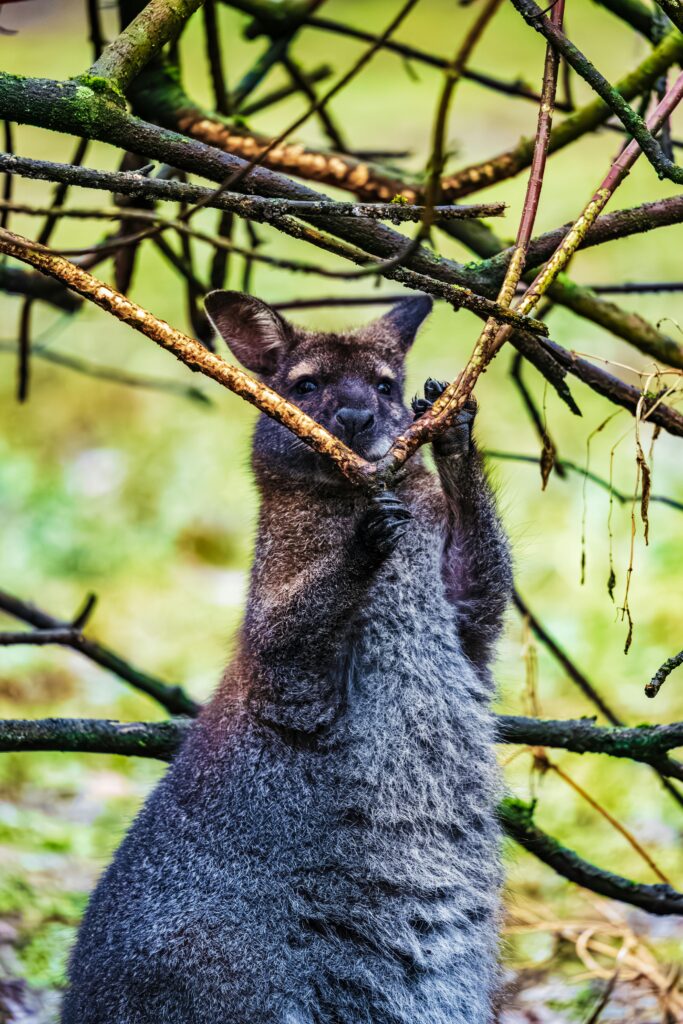
    Conservation Success Stories: Hope on the Horizon

    While the narrative surrounding the devil has been grim for years, 2026 marks a period of genuine optimism. Intensive intervention is finally yielding results that suggest the species can win its fight for survival.
    The Mainland Reintroduction Project

    In 2020, devils were released into a sanctuary in New South Wales, the first time they have been on the Australian mainland in 3,000 years. One of the most ambitious conservation projects in history reached a milestone this year. The reintroduction of Tasmanian devils to the Australian mainland specifically within the fenced wild sanctuaries of New South Wales has proven that these animals can adapt and thrive in their ancestral territory. These “mainland devils” serve as a crucial genetic insurance policy. If the wild Tasmanian population were to collapse, these healthy, disease-free individuals ensure the species survives and can eventually be used to repopulate the island.

    Is Immunity Evolving?

    Perhaps the most incredible news comes from the wild populations themselves. For years, Devil Facial Tumor Disease (DFTD) was a 100% fatal death sentence. However, recent genetic monitoring has shown that some wild devils are fighting back. Researchers have identified “evolution in real-time,” where certain individuals are developing a natural immune response to the tumors. We are seeing a shift where the disease is becoming more like a chronic condition rather than a rapid killer, giving the species the window it needs to coexist with the virus.

    Insurance Populations:

    Over 700 healthy devils are housed in bio-secure mainland facilities to ensure the species survives if wild populations collapse. Trowunna Wildlife Sanctuary has been successfully breeding Tasmanian Devils every year since 1983 – helping protect this iconic and endangered species.

    Living only in Tasmania, Devils face many challenges. Every day, we share our love for these amazing animals through interactive tours, educating visitors about their conservation
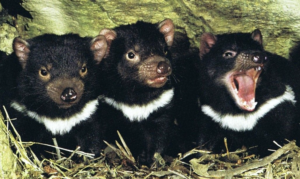
    successfully breeding Tasmanian Devils babies at tasmani Zoo
    Breeding Tasmanian Devils | Tasmaniazoo.com.au

     How to Support Tasmanian Devil Conservation: Top 5 Charities

    For thoseready to take action, supporting established organizations is the most effective way to help. These groups fund vaccine research, manage insurance populations, and build “devil-proof” fencing.

    1. Save the Tasmanian Devil Appeal
    The official fundraising entity for the state government’s response. They focus heavily on DFTD vaccine research and wild population monitoring.

    2. Aussie Ark
    A leader in mainland rewilding. Aussie Ark manages a “Devil Ark” sanctuary in NSW, maintaining a genetically diverse population away from the disease-ravaged island.

    3. Wildcare Tasmania
    A grassroots organization that supports volunteer efforts to rehabilitate injured devils and maintain habitat integrity.

    Some FAQ about Tasmanian Devils 

    1. Why are they called “Devils” if they aren’t actually dangerous?

    Early European settlers in Tasmania were terrified by the unearthly, rasping screams and growls coming from the bush at night. When they saw a black animal with red ears and powerful jaws scavenging in the shadows, they dubbed it a “Devil.” Despite the name and the noise, they are shy, solitary creatures that prefer to avoid human contact.

    2. Are Tasmanian devils dangerous to humans or pets?

    Generally, no. Tasmanian devils are not aggressive toward humans and will typically flee if encountered. While they have one of the most powerful bites in the animal kingdom, they only use it for scavenging or defending themselves when cornered. As discussed in our safety guide, the contagious cancer (DFTD) affecting them cannot be transmitted to humans or domestic pets.

    3. How did the Devil Facial Tumour Disease (DFTD) actually start?

    Scientific research suggests the disease originated from a single devil’s nerve cells (Schwann cells) in the late 1990s. Because Tasmanian devils have very low genetic diversity, their immune systems don’t recognize these “foreign” cancer cells as a threat when they are bitten by an infected individual, allowing the cancer to grow and spread like a virus.

    4. Is there a “cure” for the facial tumor disease?

    There is no “cure” in the traditional sense, but there is immense hope. Scientists have developed an experimental vaccine, and more importantly, researchers have observed “rapid evolution” in wild populations. Some devils are developing a natural immune response to the tumours, suggesting the species is fighting back on a genomic level.

    5. Why do Tasmanian devils scream so loudly?

    The “screaming” is actually a complex system of communication used during communal feedings. Since devils are scavengers, they often gather around the same carcass. The vocalizations are a way of establishing a “pecking order” to reduce actual physical fighting, which helps minimize the risk of spreading DFTD through biting.

    6. Is it true that Tasmanian devils can eat bone?

    Yes. They are one of the few scavengers capable of consuming an entire carcass, including bones, fur, and gristle. Their jaws are designed for crushing, allowing them to act as “nature’s vacuum cleaners.” By eating every part of a dead animal, they prevent the spread of maggots and diseases like blowfly strike, which is a major benefit to local ecosystems and farmers.

    7. How small are Tasmanian devils when they are born?

    They are incredibly tiny. A mother can give birth to up to 50 “joeys,” each about the size of a grain of rice. However, since the mother only has four teats in her pouch, only the first four to arrive survive. They remain in the pouch for about four months before emerging.

    8. Are they actually being reintroduced to mainland Australia?

    Yes! In a historic conservation move, Tasmanian devils were reintroduced to a protected sanctuary in New South Wales in 2020. This “Aussie Ark” project aims to create an insurance population and restore the ecological balance on the mainland, where devils haven’t lived in the wild for over 3,000 years.

    9. Do Tasmanian devils hunt in packs like wolves?

    No. They are primarily solitary animals. While you may see a group of them together at a large carcass, they do not hunt cooperatively. They are “solitary but social,” meaning they have a well-defined social structure and home ranges that overlap, but they prefer to travel and hunt alone.

    10. What happens to the environment if the Tasmanian devil goes extinct?

    The ecological ripple effect (trophic cascade) would be devastating. Without devils to control feral cat and fox populations, small native mammals and ground-nesting birds would likely face extinction. Additionally, the buildup of unconsumed carrion would lead to an increase in pest insects and bacteria in the soil.

    11. How long do Tasmanian devils live?

    In the wild, a healthy Tasmanian devil typically lives for 5 to 6 years. In captivity, where they are protected from disease and road hazards, they can live up to 8 years. Their short lifespan is one reason why the rapid spread of DFTD is so threatening to their long-term survival.

    12. Where is the best place to see Tasmanian devils responsibly?

    While they are endemic to the island of Tasmania, seeing them in the wild is difficult due to their nocturnal nature. The most responsible way to see them is through “unzoo” environments or sanctuaries like Bonorong Wildlife Sanctuary or Devils@Cradle, where entrance fees directly fund DFTD research and conservation efforts.

  • How to Grow Cavendish Banana: The Complete Gardener’s Guide

    How to Grow Cavendish Banana: The Complete Gardener’s Guide

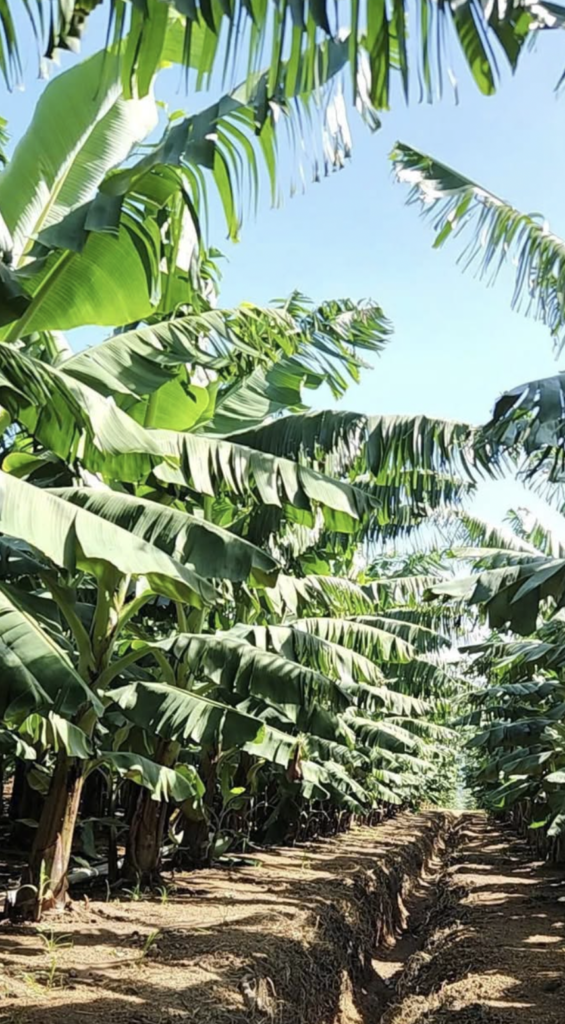
    Welcome to the complete guide on growing Cavendish bananas in your garden. As one of the most favored bananas worldwide, understanding this plant’s unique needs and characteristics will set you on the path to cultivating a thriving banana crop.

    Understanding the Cavendish Banana

    What Is a Cavendish Banana?

    To appreciate the Cavendish banana’s appeal, it’s essential to know what sets it apart from other banana varieties. Part of the dessert banana category, Cavendish bananas differ from plantains, which are starchy and require cooking. The dessert variety offers sweet, soft fruit ideal for fresh consumption. Importantly, Cavendish bananas are seedless and parthenocarpic, meaning they develop fruit without the need for pollination—a significant distinction from their wild counterparts that contain numerous seeds.

    What Is a Cavendish Banana?
    What Is a Cavendish Banana?

    Common cultivars within the Cavendish group include the Dwarf Cavendish, Grand Nain, and Williams bananas. Each variety has its unique traits, but all share the general characteristics that make them popular in global trade.

    Botanical Classification and Plant Anatomy

    The Cavendish banana belongs to the taxonomy of “Musa acuminata“, within the AAA group, highlighting its genetic divergence from other Musa species. Sometimes misunderstood as trees, bananas are actually perennial herbs with a pseudostem made up of tightly packed leaf sheaths a fascinating evolutionary trait!

    Understanding banana plant anatomy is key for successful cultivation. The corm, often referred to as the rhizome, serves as the plant’s energy reservoir, facilitating new growth. Bananas also produce suckers, which can be harvested and replanted for propagation.

    The pseudostem and leaf are marvels on their own. The pseudostem forms from overlapping leaf sheaths, while the leaves include a petiole (stalk) and lamina (blade). As the plant matures, it produces an inflorescence composed of male and female flowers organized into hands and fingers, eventually becoming clusters of bananas.

    A Brief History of Cavendish Bananas

    The Cavendish banana traces its origins to Southeast Asia. It became the leading banana variety on global markets after successfully replacing the Gros Michel variety, which succumbed to Panama disease (Fusarium wilt TR1). This transition marked a significant chapter in agricultural history, as Cavendish bananas were not only more resistant to this disease but also suited to mass cultivation.

    Today, Cavendish bananas are essential in international trade, while also thriving in backyard gardens, thanks to their adaptability and prolific fruiting capacity.

    Climate and Hardiness

    Having a healthy banana plant heavily depends on understanding its climatic preferences, particularly if you’re planning to grow them in the U.S.

     USDA Hardiness Zones 9–11

    The Cavendish banana thrives in warm climates, making USDA Hardiness Zones 9-11 ideal for outdoor growth. These zones represent regions with mild winters and minimal frost, which is crucial for banana plants as they are extremely frost-sensitive. If you live in these zones, you’ll find that bananas can be cultivated year-round with minimal risk of cold damage.

    Cavendish bananas require a temperature range of 60-80°F (15-27°C) for optimal growth. In these zones, the temperature rarely dips below 20°F (-6°C), which makes it feasible for the plant to maintain vegetative health even in cooler months. Protecting your plants with frost cloths or by moving potted plants indoors during colder spells is wise to prevent potential damage, especially in the fringes of Zone 9.

    Influence of Climate on Growth of Banana Cavendish
    Influence of Climate on Growth of Banana Cavendish

    In warm, frost-free climates, Cavendish bananas benefit from long growing seasons, leading to larger fruit bunches and faster maturation. A key consideration is humidity, as bananas appreciate a humid environment. While higher temperatures encourage rapid growth, adequate humidity helps maintain healthy leaf tissue and prevents desiccation.

    In addition to temperature and humidity, wind exposure is a factor in these zones. Being in wind-prone areas can cause damage; thus, providing protection like windbreaks will ensure your banana plants mature without setbacks from environmental stressors.

    Soil Requirements and Chemistry for Cavendish Bananas

    Ideal Soil Texture and Structure

    For Cavendish bananas, soil texture and structure directly influence root health and nutrient uptake. They flourish in deep, well-aerated loams or sandy-loams, which promote healthy root penetration and drainage. Their extensive root systems necessitate soil that doesn’t compact excessively, as this can restrict growth and nutrient uptake, ultimately impacting overall plant vitality.

    Organic matter plays a pivotal role, acting as a natural conditioner that enhances soil water retention and nutrient availability. Aim for a rich mix with ample organic material to buffer nutrient leaching and maintain a conducive environment for beneficial microorganisms.

    Soil Requirements and Chemistry for Cavendish Bananas
    Soil Requirements and Chemistry for Cavendish Bananas

    Soil pH and Cation Exchange Capacity (CEC)

    Cavendish bananas thrive with a soil pH range between 5.5 and 7.0. Maintaining this pH balance ensures that essential nutrients like nitrogen (N), phosphorus (P), and potassium (K) are available in optimal quantities, as extreme pH levels can lead to nutrient lock-up or deficiency.

    Cation Exchange Capacity (CEC) is another vital consideration for banana growers. Soils with high CEC hold on to nutrients more effectively, allowing plants to access essential elements even between fertilization periods. Therefore, understanding and enhancing soil CEC can significantly promote robust growth and yields.

    Optimizing Growing Cavendish Bananas: Irrigation, Fertilizer, and Pruning

    Successfully growing Cavendish bananas requires a harmonious balance of proper irrigation schedules, tailored fertilization, and disciplined pruning techniques. Mastering these key elements of banana plant care is essential to encourage robust growth, healthy foliage, and prolific fruiting. This section provides detailed guidance on watering regimens, the best banana tree fertilizer formulations based on N-P-K ratios, and pruning methods that maximize your banana harvest.

    Irrigation Schedules for Growing Cavendish Bananas

    Cavendish banana plants thrive under consistently moist soil conditions but are highly sensitive to waterlogging. Therefore, a thoughtful irrigation approach is vital to maintain optimum soil moisture levels and prevent root diseases such as rot.

    Watering Frequency and Volume

    • Young Plants and Propagated Suckers:  Newly planted banana pups or tissue-cultured plants require frequent watering to establish roots. Water 3-4 times weekly, applying enough water to reach a depth of 12-18 inches.
    • Mature Banana Plants:  Once established, your banana mat requires deep watering 2-3 times weekly depending on rainfall. During peak summer heat, increase frequency to maintain soil moisture without oversaturating.
    • Seasonal Adjustments:  In the rainy season, reduce supplemental irrigation to prevent soggy soil. In dry or drought periods, extend watering intervals slightly but ensure plants never go beyond two weeks without water.

    Soil Moisture Monitoring

    Regularly check soil moisture levels by inserting your finger or a moisture probe 6 inches deep. The soil should feel moist but not waterlogged. If the soil remains soggy for prolonged periods, reduce watering to avoid root hypoxia.

    Best Practices

    1. Use drip irrigation or soaker hoses to deliver water directly to the root zone, minimizing leaf wetness that can foster fungal diseases.
    2. Mulch heavily around the base with straw, coir, or leaf litter to retain soil moisture and moderate soil temperature fluctuations.

    Banana Tree Fertilizer: Choosing the Ideal N-P-K Ratios

    Nutrient management through banana tree fertilizer application is the cornerstone of fruitful banana plant care. Cavendish bananas have high nutrient demands, especially for nitrogen (N) and potassium (K), which drive vigorous vegetative growth and fruit development, respectively.

    Understanding N-P-K Ratios for Bananas

    1. Nitrogen (N):  Promotes lush leafy growth essential for photosynthesis and energy accumulation.
    2. Phosphorus (P): Supports root development and early plant establishment.
    3. Potassium (K): Critical for fruit size, sweetness, and overall plant resilience.

    Recommended Fertilizer Regimens

    • Young Plants (0-6 months): Apply a balanced fertilizer such as 10-10-10 or one with slightly higher phosphorus like 12-24-12 to encourage root establishment. Use approximately 100 grams per plant monthly.
    • Mature, Fruiting Plants: Use a high-potassium fertilizer with an N-P-K ratio around 8-10-30 during the active growth and fruiting stages. Potassium enhances fruit quality and yield. Apply 300-500 grams per application monthly or biweekly during peak growth.
    • Supplemental Micronutrients:  Cavendish bananas also require micronutrients like magnesium, calcium, and zinc. Consider foliar feeding with micronutrient blends monthly for optimal health.

    Fertilizer Application Tips

    – Split fertilizer doses through the growing season rather than one heavy application to avoid nutrient leaching and toxicity.

    – Apply fertilizers at the root zone but avoid direct contact with the stem to prevent burn.

    – Incorporate organic matter such as well-composted manure or green manure before planting to improve soil fertility and structure.

    Pruning Techniques to Maximize Fruit Production

    Pruning is an often overlooked but highly effective banana plant care practice that improves air circulation, reduces disease incidence, and channels energy towards fruit production.

    Types of Pruning for Cavendish Bananas

    1. Sucker Management:** Cavendish bananas propagate through suckers emerging from the base. Select one or two vigorous suckers to replace the mother plant after fruiting and remove the excess suckers to reduce competition for nutrients.
    2. Dead and Dying Leaves:** Regularly remove yellowing, dead, or diseased leaves to improve airflow and light penetration within the canopy. This reduces fungal disease risks and enhances photosynthetic efficiency.
    3. Fruit Stem Pruning:** After harvesting, cut down the spent fruit stem near the base to allow the sucker to take over vigorously. This protects the plant from harboring pests and redirects energy to new growth.

    Best Practices for Effective Pruning

    • Use clean, sharp pruning tools disinfected with alcohol or bleach solution to prevent spread of pathogens.
    • Prune during the dry season or early morning to minimize stress and susceptibility to infection.
    • Avoid removing too many green leaves at once – leave at least 6-8 healthy leaves per plant as they are essential for carbohydrate production used during the fruiting phase.
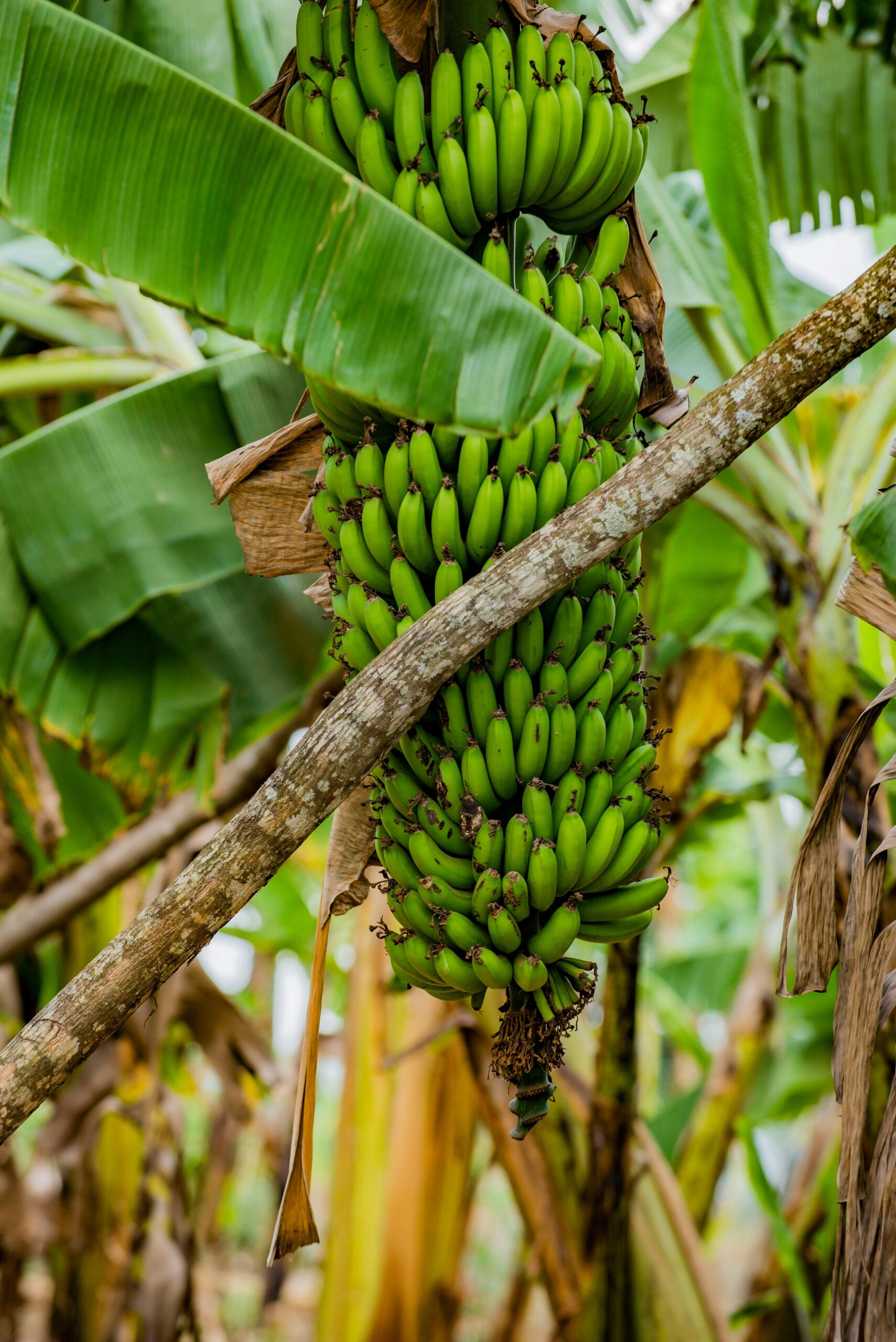
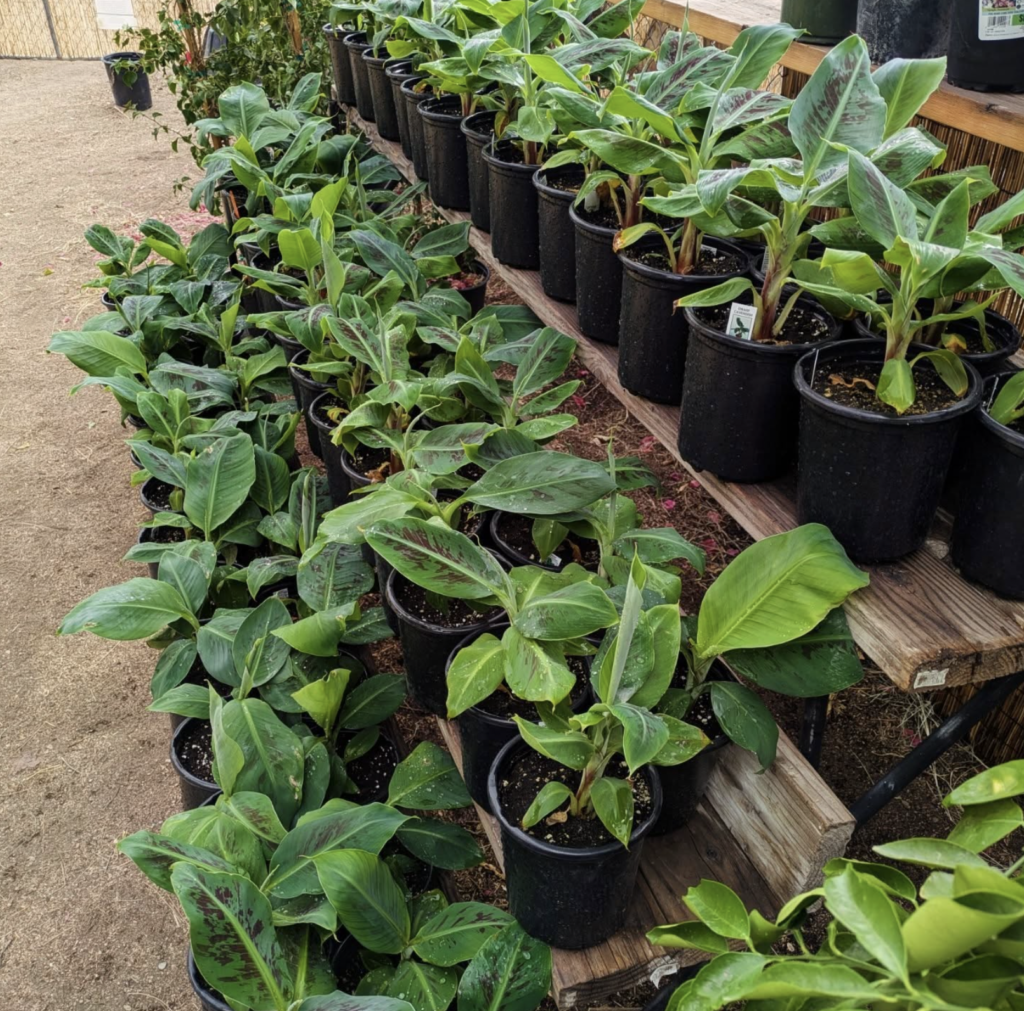
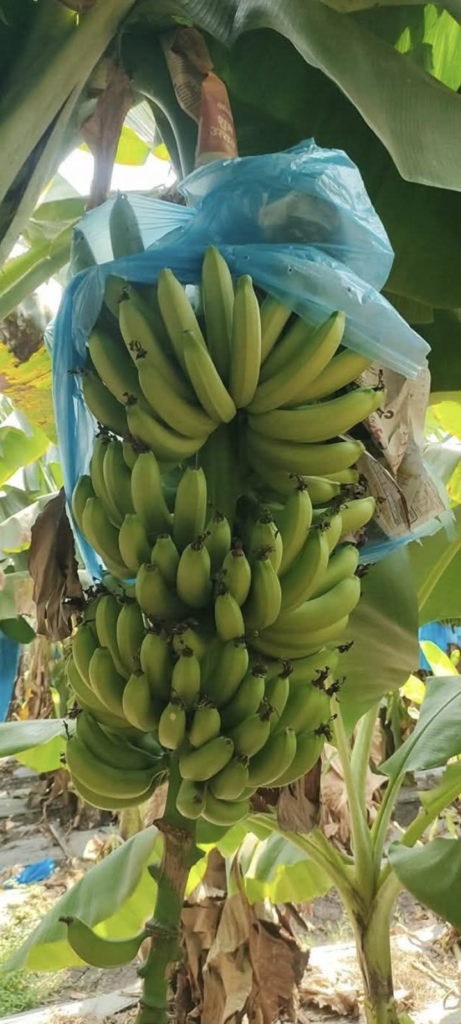
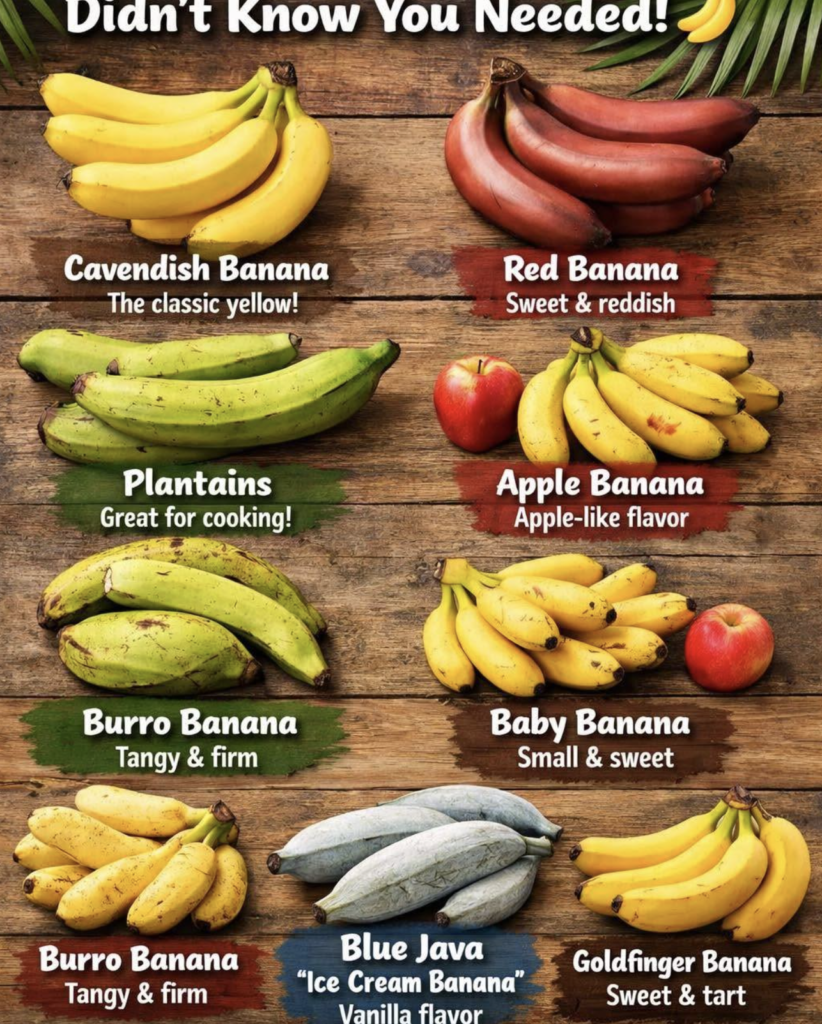
    Various Types f Bananas
    Various Types f Bananas

    Summary

    By following the irrigation schedules outlined above, applying balanced banana tree fertilizer with focus on high potassium content during fruiting, and practicing disciplined pruning and sucker selection, you can optimize growing Cavendish bananas in your home garden. These steps ensure your banana mat remains healthy, vigorous, and productive throughout the growing season.

  • The 20 Fiercest Apex Predators in the World | 2026 List

    The 20 Fiercest Apex Predators in the World | 2026 List

    The 20 fiercest apex predators in the world are the animals that sit at the very top of their food chains with no natural predators of their own and that back up that status with staggering bite force, ruthless hunting efficiency, and sheer physical dominance. From a crocodile that bites down with one of the strongest measured force on Earth to a two-pound cat that kills more often than a lion, this ranked guide brings the hard numbers together in one place so you can see exactly what “fierce” really means.

    Most lists you’ll find simply parade the usual eight animals with a sentence each. This one ranks 20 across land, sea, and air using a transparent, data-driven method and explains why each earns its spot. Let’s get into it.

    What Is an Apex Predator?

    An apex predator is a species that occupies the highest trophic level in its ecosystem and has no natural predators as a healthy adult. The word “apex” comes from the Latin for “peak” or “top,” and in ecology these animals are defined by their position in the transfer of energy through a food web rather than simply by how scary they look.

    Apex predators are frequently also keystone species, animals whose influence on their environment is far larger than their raw numbers would suggest. By controlling prey density and suppressing smaller “mesopredators,” they set off ripple effects that regulate disease, protect vegetation, and preserve biodiversity. When they are removed or introduced, ecologists observe dramatic “trophic cascades” that reshape an entire landscape.

    That ecological weight is what separates a true apex predator from an animal that is merely dangerous. A hippo is deadly, but it’s a herbivore defending itself; a great white shark is an apex predator that hunts to survive at the top of the marine web.

    How We Ranked the Fiercest Apex Predators

    “Fiercest” is not a single number, so we scored each candidate across five dimensions that together capture predatory dominance:

    • Lethality & weaponry: teeth, claws, talons, venom, and the physical tools used to kill.
    • Bite force: measured in pounds per square inch (PSI) where reliable data exists.
    • Hunting success rate: the proportion of hunts that end in a kill, drawn from field studies.
    • Size, strength & speed: the raw physical package.
    • Ecological dominance: how completely the animal rules its environment with no natural predators.

    Where possible we’ve included real figures from peer-reviewed research and reputable science outlets. A quick, important caveat: bite-force and hunting-success numbers vary between studies, populations, and individual animals, so treat them as well-supported estimates rather than fixed constants. With that framework set, here is the ranked list.

    Apex Animals List 2026

    Among the apex animals list 2026 are some of the most captivating and fearsome creatures on the planet. These include iconic species such as the Siberian Tiger, Polar Bear, Great White Shark, and the African Lion. Each plays a unique role in its respective habitat, enforcing the natural order and sustaining its ecosystem.

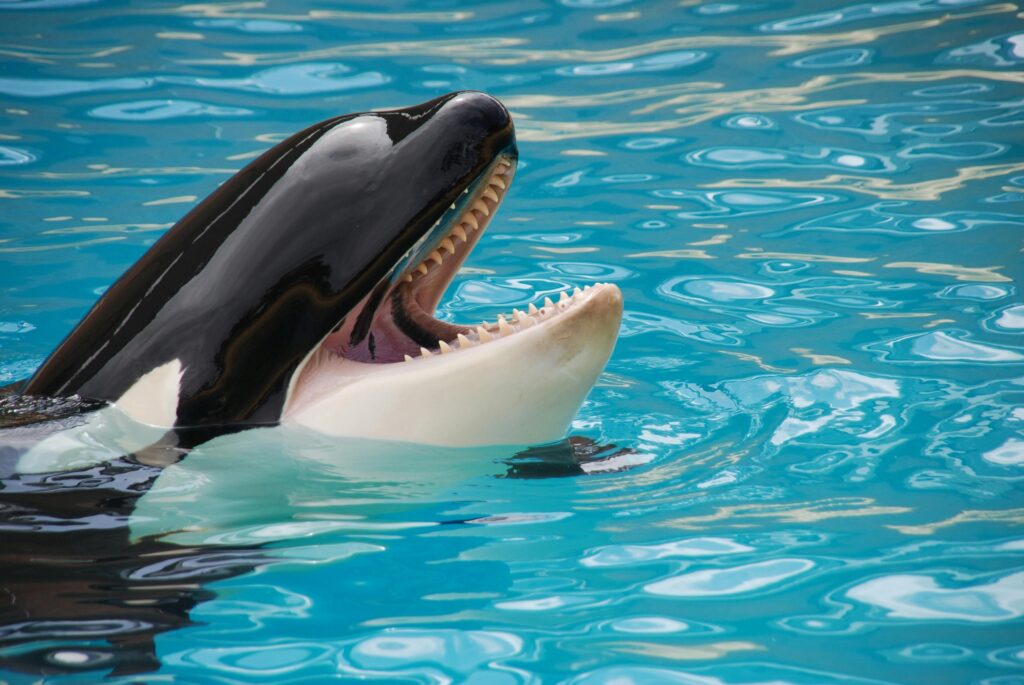
    1. Killer Whale Orca | Orcinus orca

    Biogeography & Evolutionary Provenance: Orcas are the largest members of the dolphin family and have a cosmopolitan distribution. They are currently divided into various “ecotypes” (e.g., Residents, Transients, Offshores) that may eventually be recognized as separate species. In 2026, the “Iberian Orcas” have gained global attention for their coordinated “rudder-striking” behavior on sailing vessels, a cultural trait that has spread through the population. Their evolution is defined by “cultural transmission”—the ability to learn and pass on complex behaviors.

    Killer Whale | Orca (Orcinus orca)
    Killer Whale | Orca (Orcinus orca)

    Trophic Ecology & Social Dynamics: Orcas are the undisputed #1 apex predator, utilizing “pod-specific” hunting techniques like creating waves to wash seals off ice or “surgical” removal of shark livers. They are the only animals known to hunt Great White Sharks and Blue Whales. Their social structure is “matrilineal,” led by post-menopausal females who act as repositories of ecological knowledge.

    No animal is off the menu. Different pods specialize in different prey, fish, seals, penguins, sea turtles, large whales, and even great white sharks, which orcas have been documented killing to eat their nutrient-rich livers. With no natural predator anywhere in the world’s oceans, the orca sits at the very top of the marine food web.


    2. Great White Shark | Carcharodon carcharias

    Biogeography & Evolutionary Provenance: The Great White is the largest extant macropredatory fish, part of a lineage of lamnid sharks that evolved to thrive in temperate coastal waters. Their biogeography is currently undergoing a “climate-driven range shift,” with significant poleward movements observed in both the Northern and Southern Hemispheres. As of 2026, a notable “ecosystem exodus” has been documented in South Africa’s False Bay, as individuals have abandoned historical sites to avoid specialized predation by Orcas. Current strongholds include the Neptune Islands (Australia), Dyer Island (South Africa), and the Farallon Islands (USA).

    Great White Shark | Carcharodon carcharias
    Great White Shark | Carcharodon carcharias

    Trophic Ecology & Social Dynamics: They utilize a high-velocity “ambush-from-below” strategy, often breaching the surface to incapacitate pinniped prey. Their physiology is unique for fish, featuring regional endothermy (warm-bloodedness), which allows for enhanced muscle performance in cold, nutrient-rich hunting grounds. While primarily solitary, they exhibit complex non-aggressive social hierarchies at carcass sites, using pectoral fin displays to settle disputes without physical conflict.

    Great whites detect a single drop of blood in vast volumes of water and sense the faint electrical fields of prey through specialized organs. As one of the sea’s top predators, they help regulate populations of seals, sea lions, and fish across coastal ecosystems worldwide, a role only complicated by the orca that occasionally hunts them.

    3. Saltwater Crocodile | Crocodylus porosus

    Biogeography & Evolutionary Provenance: This species is a living relic of the crocodylian lineage that survived the K-Pg extinction event. Their range spans the Indo-Pacific, from the eastern coast of India to northern Australia. In 2026, Northern Australia is experiencing a population saturation point, leading to increased “exploratory migrations” into urbanized coastal areas. Their evolutionary success is attributed to their specialized “salt glands,” which facilitate long-distance oceanic crossings between river systems, allowing them to colonize remote islands across the South Pacific.

    3. Saltwater Crocodile | Crocodylus porosus
    Saltwater Crocodile | Crocodylus porosus

    Trophic Ecology & Social Dynamics: As the largest living reptile, they possess the highest recorded bite force of any animal (3,700 psi / 25,500 kPa). What makes the saltwater crocodile the fiercest apex predator on this list is the combination of that bite with patience and the infamous “death roll.” It can lie motionless for hours before exploding out of the water to seize water buffalo, sharks, wild boar, and occasionally humans, then spin violently to dismember prey. Found from eastern India through Southeast Asia to northern Australia, it rules every waterway it inhabits.

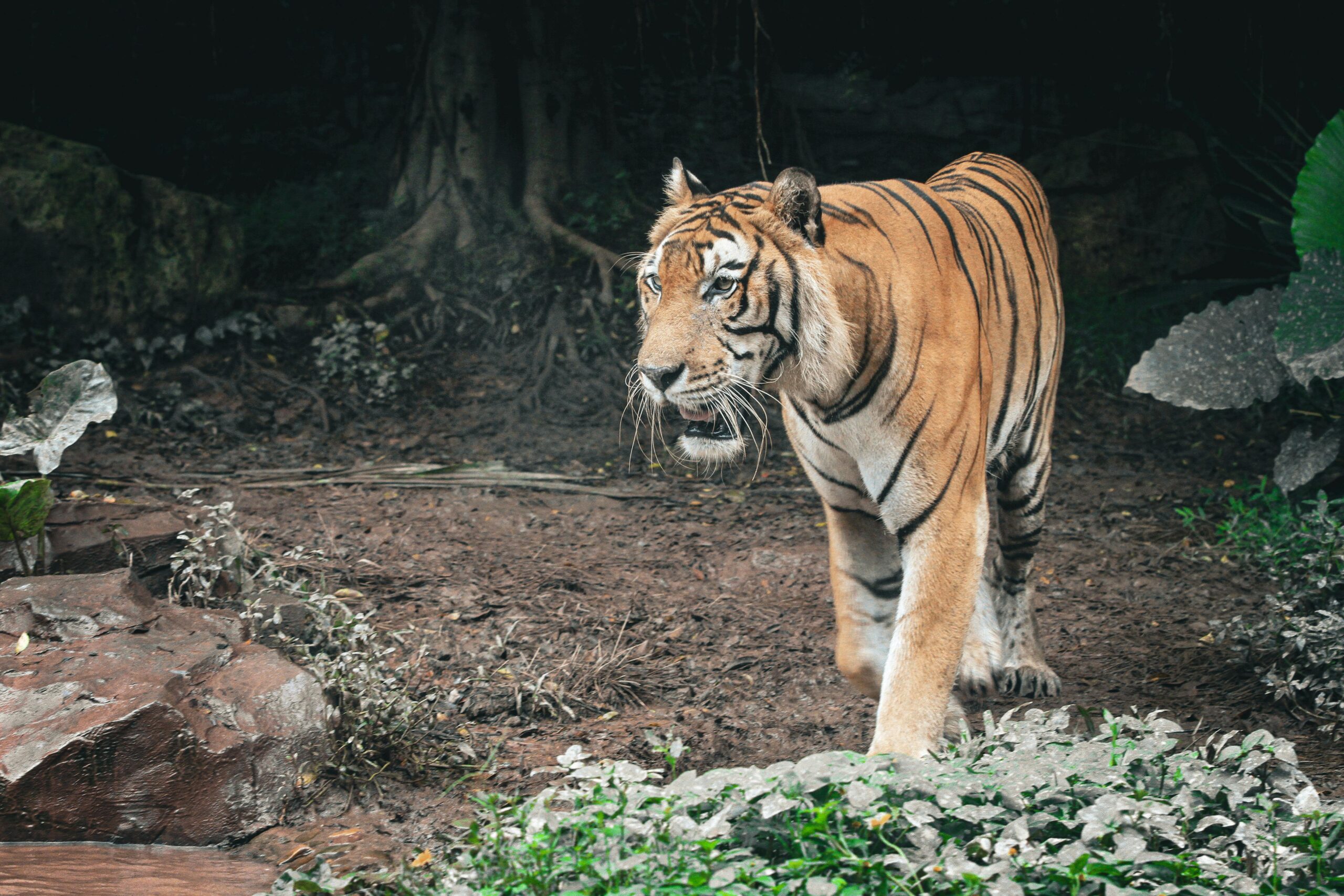
    4. Siberian Tiger | Panthera tigris altaica 

    Biogeography & Evolutionary Provenance: Also known as the Amur tiger, this subspecies is the largest feline on Earth. Their range is restricted to the birch and pine forests of the Russian Far East and Northeast China. A groundbreaking 2026 conservation milestone has been the successful translocation of the first four “foundational” Amur tigers into Kazakhstan’s Ile-Balkhash State Nature Reserve, marking the return of the tiger to Central Asia after seven decades. This reintroduction relies on the genetic proximity of the Amur tiger to the extinct Turan (Caspian) tiger.

    Siberian Tiger | Panthera tigris altaica 
    Pexels | Siberian Tiger | Panthera tigris altaica

    Trophic Ecology & Social Dynamics: They are solitary “ghosts” of the taiga, covering vast home ranges that can exceed 1,000km2. Stalking silently before an explosive rush, a tiger delivers a killing bite to the throat or nape. It hunts deer, wild boar, and even large buffalo, and shows little fear of confronting other predators. Habitats range across India, Bangladesh, Nepal, Russia, and Southeast Asia.

    5. Grizzly Bear | Ursus arctos horribilis

    Biogeography & Evolutionary Provenance: The Grizzly is a North American subspecies of the Brown Bear, having migrated across the Bering Land Bridge during the Pleistocene. In 2026, they are at the center of intense “delisting” debates in the Greater Yellowstone Ecosystem, where populations have recovered to stable levels. However, climate change has decimated high-altitude food sources like whitebark pine seeds, forcing bears into lower elevations. Strongholds persist in Alaska, British Columbia, and the Northern Rockies.

    Grizzly Bear | Ursus arctos horribilis
    Pexels-ganajp | Grizzly Bear | Ursus arctos horribilis

    Trophic Ecology & Social Dynamics: Grizzlies are “ecosystem engineers” that significantly influence nutrient cycling through their foraging for salmon, tubers, and carcasses. Their hunting strategy is highly opportunistic, ranging from excavating ground squirrels to taking down adult elk. Socially, they are loose and hierarchical, with dominance established through size and aggression at high-density feeding sites. A common misconception is that they are naturally aggressive; in reality, most attacks are “defensive” encounters occurring when a bear is surprised at close range or is protecting a food cache or cubs.

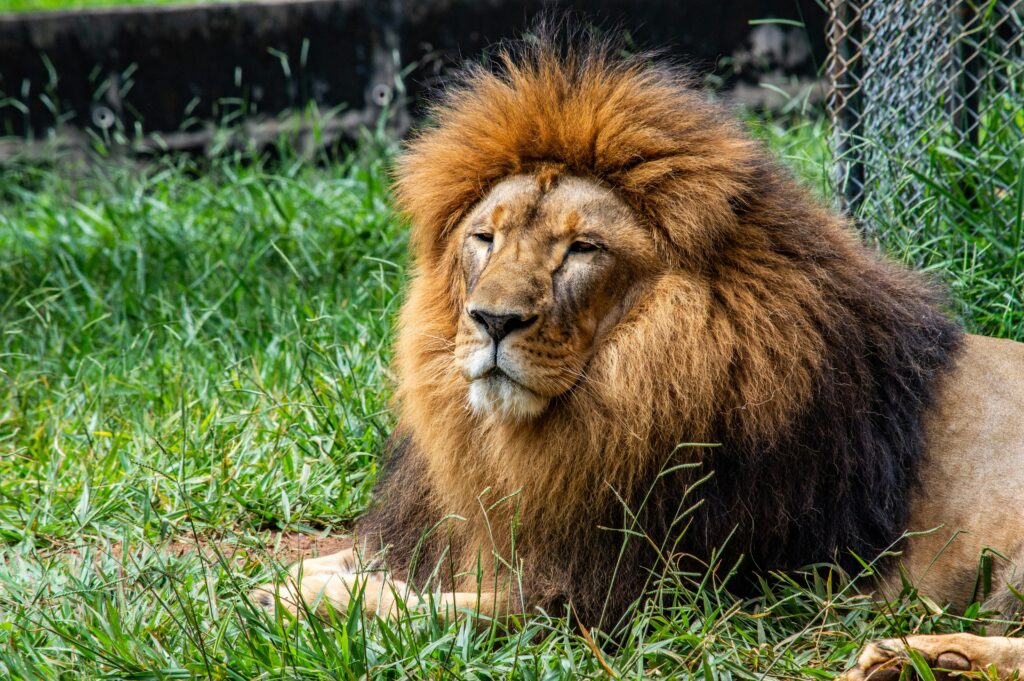
    6. African Lion | Panthera leo

    Biogeography & Evolutionary Provenance: Lions are the only social big cats, once ranging across most of Africa, Europe, and the Middle East. Today, they are confined to fragmented savanna landscapes in sub-Saharan Africa. In 2026, the “fortress conservation” model is being challenged, as fenced reserves prevent necessary genetic exchange between prides. The Serengeti-Mara and the Greater Kruger remain the most significant strongholds, while the Asiatic subspecies (P. l. leo) maintains a tenuous existence in India’s Gir Forest.

    African Lion | Panthera leo
    Pexels-jerson-martins | African Lion | Panthera leo

    Trophic Ecology & Social Dynamics: Lion prides utilize a “cooperative ambush” strategy, with specific individuals assigned roles as “wings” or “centers” to funnel prey. That teamwork lets lions bring down zebra, wildebeest, and buffalo far larger than any single cat could manage. A male’s roar carries for miles, advertising control of territory. Though famously called the “king of the jungle,” lions actually rule the savannas and grasslands of sub-Saharan Africa, with a small population of Asiatic lions in India.

    7. Green Anaconda | Eunectes murinus 

    Biogeography & Evolutionary Provenance: Native to the Orinoco and Amazon basins, this semi-aquatic boid is the heaviest snake in the world. Their lineage is specialized for the murky, low-oxygen environments of tropical swamps. By 2026, the primary threat to their biogeography is the “bioaccumulation” of heavy metals (specifically mercury) from illegal gold mining operations in the Amazon. While their range is extensive, they are increasingly rare in areas where the forest canopy has been breached by agricultural expansion.

    Green Anaconda | Eunectes murinus
    Pexels-daniel-duarte | Green Anaconda | Eunectes murinus

    Trophic Ecology & Social Dynamics: They are ambush constrictors that utilize their weight and the buoyancy of water to overpower prey as large as deer and caimans. They exhibit extreme sexual size dimorphism, with females being significantly larger than males. During the breeding season, they engage in “breeding balls,” where up to a dozen males compete for a single female. A Hollywood-driven misconception is their length; while massive, they rarely exceed 6 meters ($20$ feet), and historical reports of $10+$ meter anacondas remain unsupported by physical evidence.

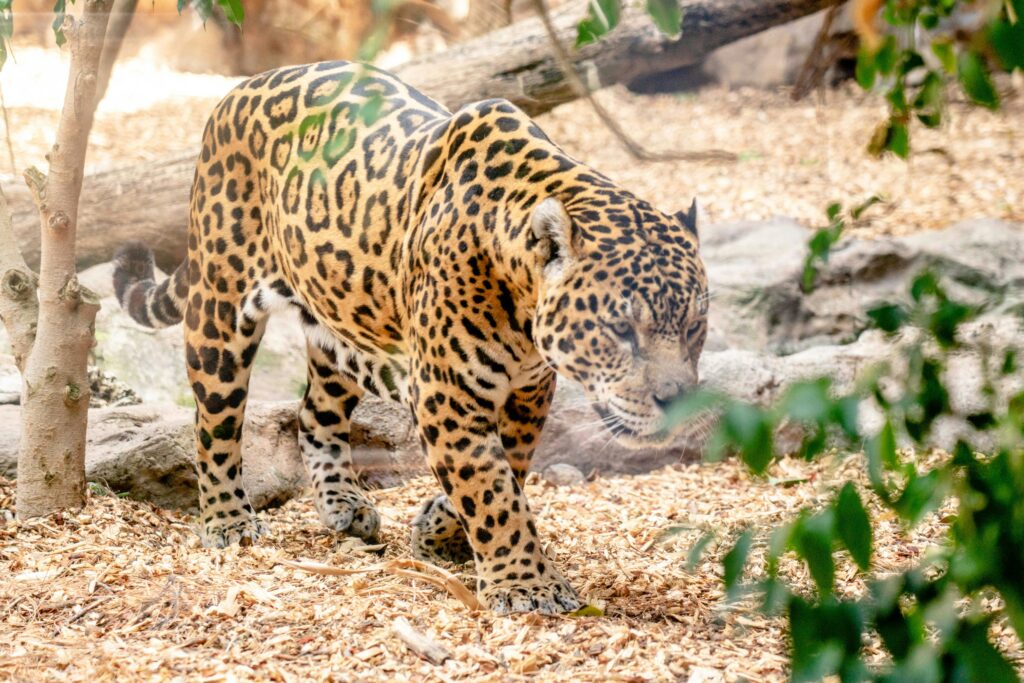
    8. Jaguar | Panthera onca

    Biogeography & Evolutionary Provenance: The Jaguar is the only Panthera species in the Americas, with a range once extending as far north as the southern United States. In 2026, the “Jaguar Corridor Initiative” is the primary focus of Neotropical conservation, aiming to link isolated populations from Mexico to Argentina. The Brazilian Pantanal remains the undisputed stronghold, hosting the highest density of jaguars ever recorded. Their evolution is linked to a wet-habitat specialization, making them the most aquatic of the big cats.

    Pexels | Jaguar (Panthera onca)
    Pexels | Jaguar (Panthera onca)

    Trophic Ecology & Social Dynamics: Jaguars possess a “skull-crushing” bite, the strongest of the felines relative to body size, which allows them to pierce the shells of turtles and the skulls of caimans. The apex predator of the Amazon, the jaguar swims and climbs with ease, hunting caiman, capybara, deer, turtles, and anything else it can ambush. Indigenous peoples and field researchers alike describe its ambushing ability as nearly peerless, a compact powerhouse ruling Central and South American rainforests.

    9. Snow Leopard | Panthera uncia

    Biogeography & Evolutionary Provenance: Known as the “Ghost of the Mountains,” the Snow Leopard is a high-altitude specialist of Central Asia’s alpine biomes. Their lineage diverged from tigers approximately 2 million years ago. As of 2026, they are facing a “climate-induced habitat squeeze,” as the upward shift of the tree line reduces their available alpine tundra. Strongholds include the Altai Mountains of Mongolia and the Himalayas of Nepal, where community-based “guardianship” programs have been highly successful.

    Snow Leopard | Panthera uncia
    Pexels-pixabay | Snow Leopard | Panthera uncia

    Trophic Ecology & Social Dynamics: They are solitary ambushers whose hunting strategy is optimized for steep, vertical terrain. They can leap up to 15 meters (50 feet) to strike prey such as blue sheep (bharal) and ibex. They are the apex regulators of the “Third Pole” ecosystem. A common misconception is their level of aggression; Snow Leopards are famously shy and have never been documented to attack a human in the wild, even when their primary prey is scarce and they are forced into proximity with livestock.

    10. Spotted Hyena | Crocuta crocuta

    Biogeography & Evolutionary Provenance: The Spotted Hyena is the most successful large carnivore in Africa, with an evolutionary history closer to cats than dogs. They thrived across Eurasia during the Pleistocene before being restricted to sub-Saharan Africa. In 2026, they are showing remarkable “anthropogenic resilience,” thriving on the edges of expanding human settlements where other predators have disappeared. Their largest concentrations remain in the Serengeti-Mara and the Okavango Delta.

    Spotted Hyena | Crocuta crocuta
    Pexels-toni | Spotted Hyena | Crocuta crocuta

    Trophic Ecology & Social Dynamics: With bone-crushing jaws capable of 1,100 psi (7,600 kpa), they are specialized to utilize entire carcasses, including marrow and bone. They are highly efficient pack hunters with a complex social structure—a female-dominated “clan” system with a strict hierarchy. A persistent misconception is that they are primarily scavengers; in reality, hyenas hunt for 6090% of their food and are more likely to have their kills stolen by lions than the reverse.

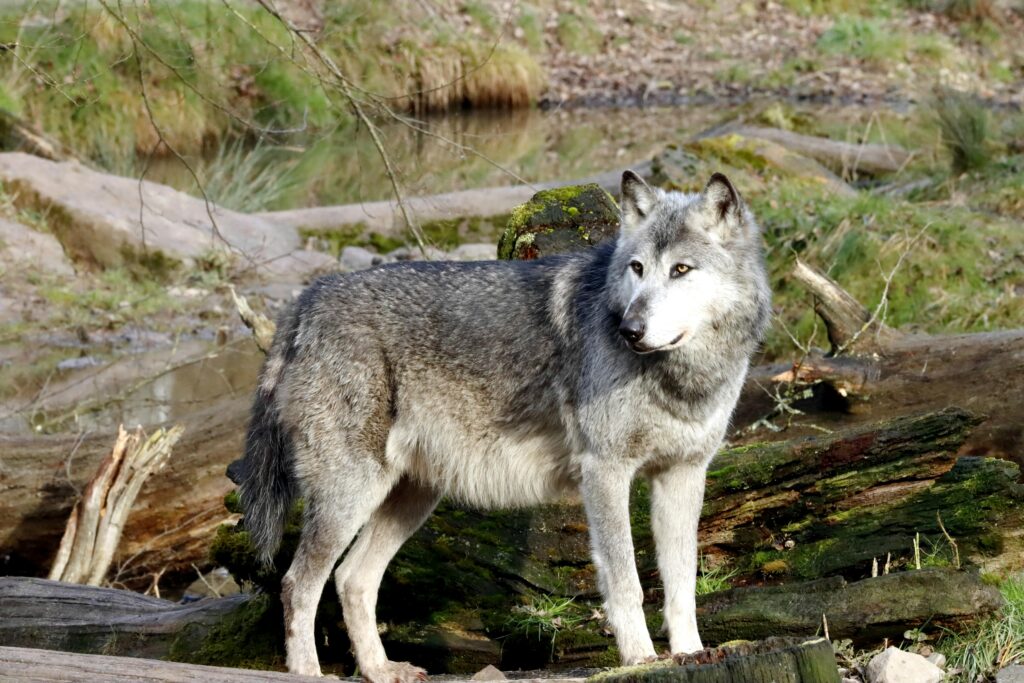
    11. Gray Wolf | Canis lupus

    Biogeography & Evolutionary Provenance: The Gray Wolf is a Holarctic generalist that has achieved a massive recolonization of Western Europe. A March 2026 genomic study reveals that while numbers have reached $\sim 21,000$ in Europe, these populations are largely isolated lineages with low effective population sizes, making them vulnerable to inbreeding. Their evolutionary history is defined by multiple “expansion and contraction” cycles linked to glacial movements. Current strongholds include the Canadian wilderness, the Russian taiga, and the Northern Rockies.

    Gray Wolf | Canis lupus
    Pexels-sunny67 | Gray Wolf | Canis lupus

    Trophic Ecology & Social Dynamics: Wolves are cursorial hunters, using “social intelligence” and pack coordination to wear down large ungulates over long distances. This cooperative strategy minimizes individual injury and maximizes the probability of a kill. They are the quintessential “keystone species,” triggering trophic cascades that improve entire ecosystem health. A common misconception is the rate of livestock depredation; in most regions, livestock makes up less than $1\%$ of their diet, usually occurring only when wild prey populations have collapsed.

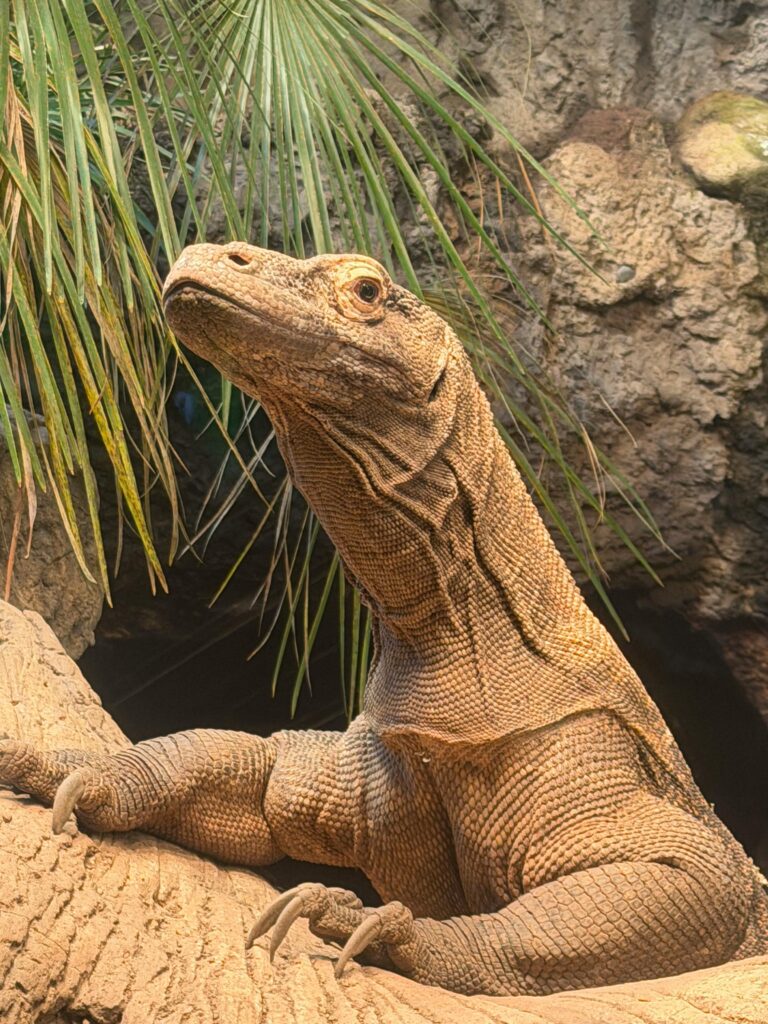
    12. Komodo Dragon | Varanus komodoensis

    Biogeography & Evolutionary Provenance: The world’s largest lizard is an Indonesian endemic, restricted to five islands within the Komodo National Park. In 2026, their primary threat is rising sea levels, which are encroaching on the low-lying coastal nesting grounds. Their evolutionary lineage is a relic of giant varanids that once roamed Australia; they survived on these isolated islands through a process of “island gigantism.”

    Top Predators | Komodo Dragon | Varanus komodoensis
    Pexels-kay | Komodo Dragon | Varanus komodoensis | Top Predators

    Trophic Ecology & Social Dynamics: They utilize a combination of serrated teeth, anticoagulant venom, and ambush to bring down prey as large as water buffalo. Socially, they are surprisingly intelligent, exhibiting size-based hierarchies and communal feeding behavior where younger dragons must climb trees to avoid being cannibalized by adults. A long-held misconception was that they killed through “septic bacteria” in their mouths; 21st-century research confirmed that complex venom glands are their primary lethal mechanism.

    13. Harpy Eagle | Harpia harpyja

    Biogeography & Evolutionary Provenance: This Neotropical giant is the world’s most powerful raptor, belonging to the “booted eagle” clade. Their range is centered in the lowland rainforests of Central and South America. By 2026, satellite data shows they have become “islands” of biodiversity within the fragmented “Arc of Deforestation.” Strongholds persist in Guyana and the deeper Amazon, where they serve as indicators of primary forest health.

    Harpy Eagle | Harpia harpyja
    Pexels-juan-felipe | Harpy Eagle | Harpia harpyja

    Trophic Ecology & Social Dynamics: Harpies are “sit-and-wait” predators of the canopy, utilizing massive $5$-inch talons to snatch sloths and monkeys from the trees. This strategy is an exercise in caloric efficiency, as their large prey provides sustained energy. They are generally solitary, defending vast territories of up to 10,000 hectares. A common misconception is their threat to livestock; while they may take an occasional piglet at the forest edge, stable isotope analysis shows their diet remains nearly 100% forest-dwelling mammals.

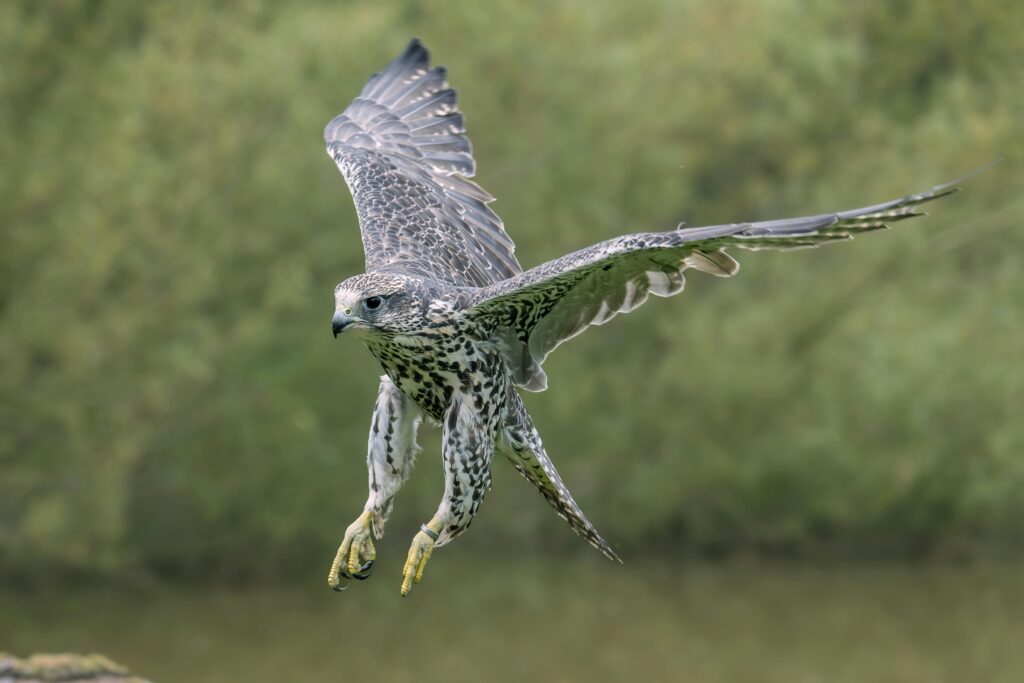
    14. Peregrine Falcon | Falco peregrinus

    Biogeography & Evolutionary Provenance: The Peregrine is a cosmopolitan specialist found on every continent except Antarctica. Following their near-extinction due to DDT, they have become one of the most successful avian recovery stories. In 2026, they are recognized as “urban apex predators,” nesting on skyscrapers in cities like New York and London. Their evolution is a study in high-speed aerodynamics, with specialized “baffles” in their nostrils to allow breathing during high-velocity dives.

    Peregrine Falcon | Falco peregrinus | Wild Animal Predation
    Pexels-adriaan-westra-| Peregrine Falcon | Falco peregrinus

    Trophic Ecology & Social Dynamics: Their hunting strategy, the “stoop,” involves a near-vertical dive reaching speeds of $240+$ mph ($107+$ m/s), delivering a kinetic strike to avian prey. This high-risk strategy is the fastest movement in the animal kingdom. While solitary hunters, they form long-term monogamous pair bonds. A misconception is that they “grab” their prey; in reality, the force of the strike usually kills the target instantly through blunt force trauma before the falcon retrieves it in mid-air.

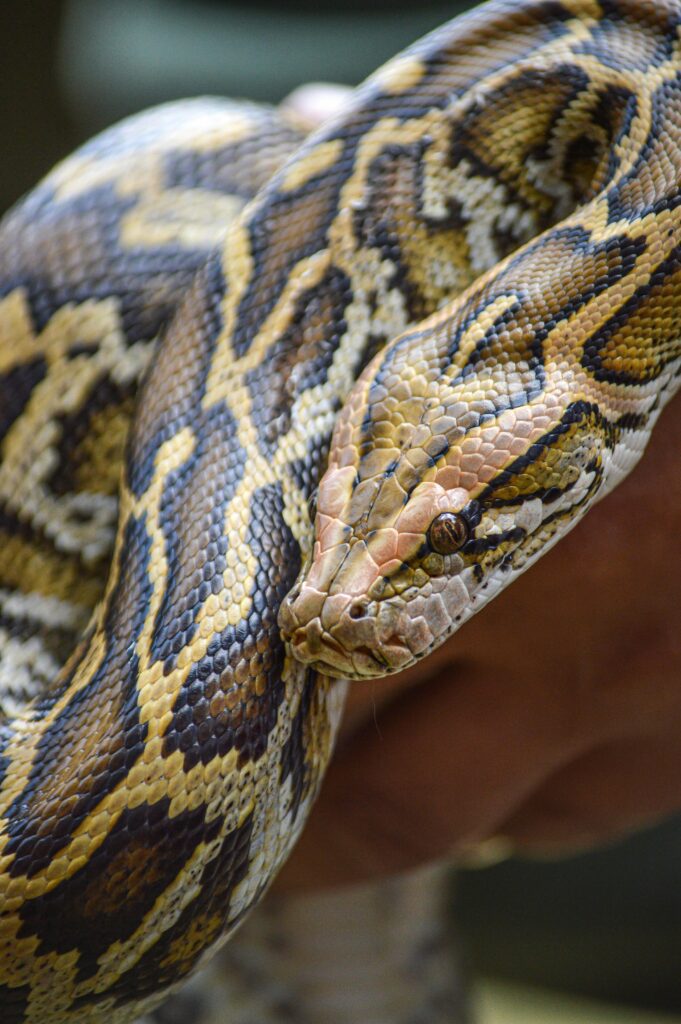
    15. Burmese Python | Python bivittatus

    Biogeography & Evolutionary Provenance: Native to the marshes of Southeast Asia, the Burmese Python has become the definitive invasive apex predator in the Florida Everglades. By 2026, their “invasion front” has pushed northward into Central Florida, fueled by warming winters. Their evolutionary lineage is characterized by extreme metabolic flexibility, allowing them to thrive in varied tropical and subtropical wetlands.

    Burmese Python | Python bivittatus
    Pexels-emptymirror | Burmese Python | Python bivittatus

    Trophic Ecology & Social Dynamics: As ambush constrictors, they utilize infrared-sensing pits to target warm-blooded prey in total darkness. In the Everglades, they have caused a near-total collapse of small mammal populations. They are strictly solitary outside of the breeding season. A common misconception is that they are a significant danger to humans; while they are capable of reaching  5+ meters, attacks on humans are exceedingly rare and typically occur only when the snake is cornered or misidentifies a limb in murky water.

    16. African Wild Dog | Lycaon pictus 

    Biogeography & Evolutionary Provenance: This hypercarnivorous canid diverged from the Canis genus nearly $2$ million years ago. Their range is now highly fragmented across sub-Saharan Africa. As of March 2026, the global population is estimated at fewer than 7,000 individuals, with significant conservation efforts centered in South Africa’s Waterberg Biosphere. They require vast, contiguous territories to survive, making them highly susceptible to habitat fragmentation.

    African Wild Dog | Lycaon pictus 
    Pexels-dkeats | African Wild Dog | Lycaon pictus

    Trophic Ecology & Social Dynamics: They are “cursorial endurance” hunters with the highest success rate of any large mammal . They utilize a sophisticated “voting” system (using sneezes) to coordinate pack movements. Their social structure is extremely altruistic, with the entire pack sharing food and caring for the wounded. A misconception is that they are “cruel” hunters; their method of rapid disembowelment is an evolved strategy to consume prey as quickly as possible before larger scavengers like lions or hyenas arrive.

    17. Giant Petrel | Macronectes spp.

    Biogeography & Evolutionary Provenance: These pelagic “tubenoses” are the apex scavengers and predators of the Southern Ocean. Their biogeography is currently shifting southward as rising sea surface temperatures alter the distribution of Antarctic krill. Their evolution is defined by their salt-excreting “tubes” on the bill and their unique ability to hunt both on land and at sea. Strongholds include South Georgia and the Prince Edward Islands.

    Giant Petrel | Macronectes spp.
    Pexels-robertkso- | Giant Petrel | Macronectes spp.

    Trophic Ecology & Social Dynamics: They are the only “procellariids” that regularly forage on land, predating on penguin chicks and scavenging seal carcasses. At sea, they hunt squid and krill. Socially, they are aggressive and competitive at feeding sites, establishing a hierarchy based on size. A misconception is that they are “pure” scavengers; however, they are active and lethal predators of smaller seabirds, and their terrestrial hunting is a vital part of their energetic budget.

    18. Tasmanian Devil | Sarcophilus harrisii

    Biogeography & Evolutionary Provenance: The world’s largest carnivorous marsupial was once widespread across mainland Australia but has been restricted to Tasmania for $3,000$ years. In 2026, rewilding efforts at Barrington Tops (New South Wales) have successfully established a second year of wild-born joeys on the mainland. The primary threat remains the contagious Devil Facial Tumour Disease (DFTD), though 2026 research indicates some populations are developing genetic resistance.

    Tasmanian Devil | Sarcophilus harrisii
    pexels-matej-bizjak | Tasmanian Devil | Sarcophilus harrisii

    Trophic Ecology & Social Dynamics: Devils are “bone-crushing” specialists that fill the niche of both scavenger and predator. Their social dynamics involve communal feeding “frenzies” that facilitate social hierarchy and mate selection. They are vital “cleaners” of the ecosystem, preventing the spread of disease by consuming carrion. A misconception is that they are a threat to livestock; historical persecution was based on the false belief that they killed healthy sheep, whereas they almost exclusively target sick individuals or existing carcasses.

    19. Praying Mantis | Order: Mantodea

    Biogeography & Evolutionary Provenance: Mantids are a globally distributed lineage of Dictyoptera. In 2026, their range is expanding into northern latitudes due to “urban heat islands,” which allow them to survive in previously inhospitable climates. They are ancient predators, with their “raptorial” leg morphology appearing in the fossil record over $100$ million years ago. They are increasingly used in integrated pest management (IPM) across modern agricultural landscapes.

    Praying Mantis | Order: Mantodea
    Pexels-erik-karits | Praying Mantis | Order: Mantodea

    Trophic Ecology & Social Dynamics: They are high-efficiency ambushers that utilize a “sit-and-wait” strategy to minimize energy expenditure. Their social structure is strictly solitary and often cannibalistic. While primarily insectivorous, larger species are known to hunt vertebrates such as hummingbirds and small frogs. A misconception is that the female always eats the male during mating; in the wild, this only occurs in a small percentage of encounters, typically when the female is severely undernourished.

    20. Dragonfly | Order: Anisoptera

    Biogeography & Evolutionary Provenance: Dragonflies are among the oldest winged insects on Earth, with an evolutionary history dating back $300$ million years. Their range is cosmopolitan, but as of 2026, “specialist” species are declining due to the chemical contamination and desiccation of freshwater wetlands. They are critical “bioindicators” of water quality. Regional strongholds include the tropical wetlands of the Amazon and the Mekong.

    Dragonfly | Order: Anisoptera | Animal Predators
    Pexels-guido-fochtler | Dragonfly | Order: Anisoptera

    Trophic Ecology & Social Dynamics: They are the most “successful” predators on the planet, with approx 95% kill rate. They utilize four independently controlled wings to intercept prey in mid-air, a strategy requiring massive neural processing. They are largely solitary and highly territorial over breeding sites. A misconception is that they “sting”; dragonflies have no stinger and are completely harmless to humans, acting instead as a primary regulator of pest populations like mosquitoes and midges.

    These predators are an essential part of our planet’s natural heritage, deserving respect and conservation efforts to ensure their continued existence.

    What Makes These Predators So Fierce? (Step by Step)

    If you want to understand why an animal earns apex status, evaluate it the same way a wildlife biologist would. Here’s a simple framework you can apply to any predator.

    • Confirm its trophic position. Ask whether a healthy adult has any natural predators. If nothing routinely hunts it, it qualifies as an apex predator in its ecosystem.
    • Assess its weaponry. Look at the primary killing tools: bite force, teeth and claw shape, talons, venom, or constriction and match them to the prey it takes.
    • Check the hunting success rate. Find field-study kill rates. High per-hunt success (like the African wild dog’s 80–90%) signals efficiency; low rates (like the polar bear’s ~10%) reflect difficult prey, not weakness.
    • Weigh size, speed, and strength. Factor in body mass, top speed, and raw power, since these determine what an animal can physically overpower.
    • Measure ecological dominance. Consider whether removing it would trigger a trophic cascade. Keystone apex predators reshape entire landscapes, the ultimate mark of fierceness.

    Run any predator through those five steps and you’ll quickly see where it belongs on a list like this one.

    Threats Facing the World’s Apex Predators

    For all their power, nearly every animal on this list is under pressure from the one species with no natural predator of its own: humans. Habitat loss, hunting, pollution, and climate change threaten apex predators across every continent and ocean. Polar bears lose the sea ice they hunt from; tigers and snow leopards lose forest and mountain range; sharks are killed in enormous numbers each year.

    Because apex predators are keystone species, their decline doesn’t stay contained. Remove the wolf and deer overrun the vegetation; remove the shark and mid-level predators explode and destabilize reefs. Protecting the fiercest apex predators in the world isn’t sentimentality, it’s ecological maintenance that keeps whole systems functioning. Conservation efforts, protected areas, and anti-poaching work are the difference between these animals thriving and vanishing.

    Conclusion

    The 20 fiercest apex predators in the world showcase just how many ways evolution has engineered dominance: the crushing jaws of a saltwater crocodile, the coordinated intelligence of an orca pod, the surgical skull-bite of a jaguar, and the relentless efficiency of an African wild dog pack. Fierceness isn’t one trait, it’s the total package of weaponry, strategy, power, and ecological command.

    What unites them all is that they earn the top of their food chains and hold it. And what they now need is our restraint and protection, because a world that loses its apex predators loses the balance they quietly enforce. If this ranking sparked your curiosity, dive deeper into the individual species each one is a masterclass in survival at the very top.


    Frequently Asked Questions

    • What is the fiercest apex predator in the world?

    By the strongest measured bite force, the saltwater crocodile is often considered the fiercest, recording roughly 3,700 PSI — the highest ever directly measured in a living animal. But “fiercest” depends on the metric: the orca dominates the oceans through intelligence and cooperation, while the African wild dog leads in raw hunting efficiency at 80–90%.

    • Which apex predator has the highest hunting success rate?

    Among large predators, the African wild dog is the most efficient, with pack hunting success rates of roughly 80–90%. Among the cat family, the tiny black-footed cat leads at about 60%. Famous big predators are far less efficient — lions succeed around 25% of the time and polar bears only about 10%.

    • What animal has the strongest bite force?

    The saltwater crocodile holds the record for the strongest bite force ever directly measured, at about 3,700 PSI. The Nile crocodile is estimated even higher in some studies, around 5,000 PSI, and great white sharks are

    modeled at nearly 4,000 PSI, though that figure comes from computer estimates rather than a live measurement.

    • Are humans apex predators?

    Ecologically, humans function as “super predators” who sit above nearly every other species and have no natural predators. However, humans are unusual because we rely on tools and cooperation rather than natural weaponry, so scientists often treat us as a special case rather than a conventional apex predator.

    • What is the difference between an apex predator and a keystone species?

    An apex predator sits at the top of its food chain with no natural predators. A keystone species has an outsized effect on its ecosystem relative to its abundance. Many apex predators, such as wolves and sharks, are also keystone species — but not every keystone species is an apex predator.

    • Can apex predators be prey to anything?

    Healthy adult apex predators have no routine natural predators, but there are exceptions. Orcas hunt great white sharks, lions and crocodiles occasionally kill each other, and virtually all apex predators are vulnerable to humans through hunting and habitat destruction. Young, old, or sick individuals are also more vulnerable than prime adults.

    • Why are predators important in an ecosystem?

    Predators help maintain ecological balance by managing prey populations, which prevents overgrazing and habitat destruction. This balance supports biodiversity and fosters healthy ecosystems.

    • Can an animal be both a predator and prey?

    Yes, many animals can be both predator and prey. For instance, snakes often prey on smaller animals but can fall victim to birds of prey or larger mammals, reflecting their place within the food chain’s levels.

    • Where do predators live?

    Predators occupy various habitats across the globe, from ocean depths to mountain peaks. They adapt to diverse environments, such as jungles, savannahs, forests, and even urban areas, displaying their remarkable adaptability.

    Recent Encounters: Apex Predators and Humans

    • In 2026, a remarkable incident in Colorado highlighted the resilience of both humans and apex predators when a camper survived an encounter with a mountain lion by killing the animal in self-defense. Such encounters remind us of the delicate balance between animal predators and human development.
    • Below is a list of recent encounters between apex predators and humans in the USA, Canada, and the UK. These incidents involve some of the world’s most formidable hunters, ranging from land-based carnivores to marine predators.

      United States

      • Mountain Lion (Crosier Mountain, Colorado) – January 1, 2026


        • The Encounter: A 46-year-old female hiker and trail runner was tragically killed in a predatory attack by a mountain lion on the Crosier Mountain Trail. This followed two separate incidents in November 2025 where hikers on the same trail successfully fended off cougars by yelling and throwing rocks.


        • Source: UCHealth Today / Colorado Parks and Wildlife

      • Black Bear (Ozark National Forest, Arkansas) – October 2, 2025


        • The Encounter: Max Thomas, 60, was fatally mauled at his campsite in the Sam’s Throne Campground. Evidence suggested the bear attacked him while he was breaking down his camp. It was the second fatal bear attack in Arkansas within a month.


        • Source: The Guardian / Associated Press

      • Great White Shark (Monterey, California) – 2025


        • The Encounter: Marathon swimmer Erika Fox was fatally bitten by a shark in Monterey Bay. This was one of ten unprovoked shark encounters recorded in California during 2025, a year that saw a slight uptick in shark-human interactions along the West Coast.


        • Source: Shark Stewards / International Shark Attack File (ISAF)

      Canada

      • Grizzly Bear (Central Coast, British Columbia) – March 11, 2026


        • The Encounter: A grizzly bear attacked a school group consisting of students and teachers in a remote community. Several individuals sustained injuries before the bear was deterred.


        • Source: CBS News / Today’s Latest Updates

      • Cougar (Lake Kathlyn, British Columbia) – July 2025


        • The Encounter: A man working in the Lake Kathlyn area was swiped by a cougar. In a rare display of physical defense, the man punched the cougar in the face, causing the animal to disengage. He suffered only minor injuries.

        • Source: MeatEater / BC Conservation Officer Service

      • Cougar (Squamish, British Columbia) – August 8, 2025


        • The Encounter: A mountain biker in the Alpine Capone area was pursued by a cougar for approximately 20 minutes. The rider managed to keep the bike between himself and the cat while walking backward and throwing rocks until the predator eventually retreated.

        • Source: CBC News / BC Conservation Officer Service

      United Kingdom

      • Orca (West Coast of Scotland) – April 2, 2026


        • The Encounter: A rare sighting of the “West Coast Community” of orcas—specifically the famous males John Coe and Aquarius—was recorded. While not an “attack,” these apex predators are the only resident orcas in the UK, and sightings are considered high-stakes encounters given their size and predatory status.

        • Source: BBC Wildlife Magazine / Hebridean Whale & Dolphin Trust

      • Suspected “Big Cat” (North Wales) – October 23–24, 2025


        • The Encounter: Multiple witnesses reported sightings of a “large black cat” (resembling a panther or puma) in Pwllheli and Anglesey. These reports are part of a documented increase in urban and rural big cat sightings verified by police disclosure logs and local monitoring groups.


        • Source: WalesOnline / Metropolitan Police Disclosure Log

      • Grey Seal (River Thames, London) – 2024/2025

        • The Encounter: While typically viewed as docile, the UK’s grey seal population has surged (including 3,000 in the Thames). Authorities have issued warnings following several instances of seals behaving territorially toward swimmers and dogs, noting that seal bites carry a high risk of “seal finger” (a severe bacterial infection).


        • Source: Friends of Horsey Seals / ZSL Thames Survey

    Understanding these dynamics is key to promoting coexistence and preventing future conflicts, aiding in the preservation of both human and wildlife interests.

  • 8 Steps to create Sustainable Outdoor spaces in 2026 which are Beautiful and Eco friendly

    8 Steps to create Sustainable Outdoor spaces in 2026 which are Beautiful and Eco friendly

    To create a sustainable outdoor space that is both beautiful and eco friendly, you must prioritize resource conservation by selecting native plants, installing smart irrigation, and utilizing permeable or reclaimed materials for hardscaping. By working with your yard’s natural conditions such as soil quality and sunlight patterns, you can build a resilient landscape that supports local biodiversity while requiring significantly less maintenance and water.

    • Plant Smarter: Use native and drought-resistant species that thrive in your local climate without heavy fertilizers or pesticides.

    • Conserve Water: Implement drip irrigation, rain barrels, and mulching to minimize evaporation and runoff.

    • Sustainable Hardscaping: Opt for permeable pavers, recycled stone, or reclaimed wood to reduce environmental impact and improve drainage.

    • Support the Ecosystem: Incorporate features like pollinator gardens and bird feeders to create a habitat for local wildlife.

    • Low Maintenance: Replace traditional high-water lawns with ground covers like clover or creeping thyme to save time and resources.

    In this guide, you’ll learn how to design a garden that suits your space, lifestyle, and environmental goals with the 8 Steps to create Sustainable Outdoor spaces in 2026

    1. Define Your Purpose

    The first step is Define your space not just by activity (dining vs. playing) but by sensory intent. Are you creating a “Restorative Zone” for meditation or a “Productive Zone” for urban farming? Design with the intent to connect with nature, ensuring the space serves your mental health as much as your social calendar.

    Step 1: Define Your Purpose
    Step 1: Define Your Purpose

    2. Optimize Layout design and Flow

    A greatt layout ensures your outdoor space is both functional and attractive. Consider the flow of movement through the area. For larger spaces, create distinct zones for different activities, such as dining, lounging, and playing. in 2026, the Use a “Sponge” layout Instead of traditional concrete paths, use permeable hardscaping (like gravel or spaced pavers) that allows water to recharge the groundwater. Create “Pocket Ecosystems”—dense clusters of native plants—to act as natural air conditioners, cooling the seating areas by several degrees through evapotranspiration.

    step 2: Optimize Layout design and Flow
    step 2: Optimize Layout design and Flow

    3. Select the Right Furniture

    Prioritize Modular & Repairable pieces. Instead of replacing a whole set, choose brands that offer individual part replacements. Look for “Low-Carbon” certifications and materials like recycled aluminum (which uses 95% less energy than virgin ore) or FSC-certified thermally modified timber, which lasts decades without toxic chemical treatments. For dining areas, choose a table that fits your space and accommodates the number of people you typically entertain.

    step 3: Select the Right Furniture
    step 3: Select the Right Furniture

    Don’t forget to add side tables for convenience. You can get a glimpse of these design tips in action at Signature Homes move-in ready homes in Lodi.

    4. Incorporating Greenery: Keystone Species & “No-Till”

    Plants and greenery can transform any outdoor space, adding beauty, tranquility, and a touch of nature. Consider incorporating a mix of plants, including potted plants, hanging baskets, and garden beds. Choose plants that thrive in your climate and are easy to maintain. Move away from decorative annuals and toward Keystone Planting. Use “No-Till” methods (layering organic matter rather than digging) to preserve soil microbes and sequester carbon. Integrate “Foodscaping” mixing edible berries and herbs into your ornamental beds to create a space that feeds both you and the local pollinators.

    Incorporating Greenery: Keystone Species & "No-Till"
    Incorporating Greenery: Keystone Species & “No-Till”

    5. Focus on Comfort and Ambiance

    Creating a comfortable and inviting atmosphere is key to enjoying your outdoor space. Add soft textiles like outdoor rugs, cushions, and throws to make the area cozy. Consider installing an outdoor fireplace or fire pit for warmth and ambiance during cooler evenings. For lighting, Adopt “Dark-Sky” compliant lighting. Use shielded, warm-toned (below 2700K) LED fixtures that point downward to prevent skyglow. For ambiance, integrate smart bio lighting that mimics the natural circadian rhythm, dimming and shifting colour as the night progresses to support both your health and the local owl and bat populations

    create an ambieance that Focus on color of the design
    create an ambience that Focus on color of the design

    6. Incorporate Shade and Shelter

    Protection from the sun and elements ensures your outdoor space is usable throughout the year. Supplement hard structures with Living Shade. Use fast-growing, deciduous vines on pergolas to provide thick shade in the summer while allowing solar heat to warm your home in the winter. For year-round shelter, utilize “Passive Cooling” techniques, such as positioning structures to catch prevailing breezes, reducing the need for outdoor fans or heaters.

    7. Add Personal Touches

    Personalize with Functional Art. Instead of a standard fountain, install a “Pondless” recirculating water feature that provides a safe drinking spot for birds without wasting water. Add “Soundscape” elements like bamboo wind chimes or rustling grasses (like Muhly Grass) to mask urban noise and create a private sanctuary. Incorporate items that make the space enjoyable for you and your family, like a hammock, outdoor games, or a cozy reading nook.

    8. Consider Sustainability

    Sustainable choices can enhance the functionality and appeal of your outdoor space. Implement Predictive Resource Management. Use AI-connected soil moisture sensors that sync with local weather forecasts to ensure you never over-water. Install “Bioswales” (landscaped ditches) to capture 100% of your roof’s runoff, turning a heavy rain into a deep-watering event for your garden rather than a burden on the city’s storm drains.

    Some FAQ about Eco-Friendly Outdoor Spaces in 2026:

    1. What is the most eco-friendly decking material in 2026? Reclaimed wood or composite boards made from 100% post-consumer recycled plastic and FSC-certified wood fibers are the top choices.

    2. How can I reduce my outdoor water bill? Switch to “Hydrozoning”—grouping plants by water need—and use AI-controlled drip irrigation that adjusts based on real-time evaporation rates.

    3. Are “Smart” gardens really more sustainable? Yes, if used correctly. AI sensors can reduce water waste by up to 50% by preventing irrigation during or after rain.

    4. What are “Keystone” plants? These are native plants (like Oaks or Milkweed) that are essential to the survival of a large number of other species in your specific zip code.

    5. Is a fire pit eco-friendly? Bio-ethanol or smokeless propane pits are preferred over wood-burning ones in 2026 to reduce particulate matter and CO2 emissions.

    6. Can I have a lawn and still be eco-friendly? Yes, by replacing traditional turf with “Micro-Clover” or “Mow-Less” native grass blends that require 70% less water and no fertilizer.

    7. What is “Dark-Sky” lighting? It is lighting designed to minimize glare and light spill, protecting the night environment for humans and wildlife.

    8. How do I start “No-Till” gardening? Instead of digging, lay down cardboard to kill weeds, then layer 4–6 inches of compost and mulch on top. Plant directly into this layer.

    9. What is a bioswale? A landscaped depression that collects rainwater from “hard” surfaces (like roofs or driveways), filters it, and lets it soak slowly into the ground.

    10. What is “Circular” furniture? Furniture designed to be easily taken apart at the end of its life, with every component being either biodegradable or 100% recyclable.

    Conclusion

    Garden design is an art that combines creativity, planning, and sustainability. By understanding your space, choosing the right elements, and maintaining your garden properly, you can create an outdoor area that is both beautiful and functional.

    Whether you prefer a modern look or a natural, wildlife-friendly environment, thoughtful design will help you achieve your vision. With time and effort, your garden can become a space that brings joy, relaxation, and a deeper connection to nature.

  • How Technology is Transforming the Care and Cultivation of Flowers and Plants 2026

    How Technology is Transforming the Care and Cultivation of Flowers and Plants 2026

    You went away for a long weekend. You came back to a peace lily doing its best impression of a wet dishcloth, and a tomato plant that somehow got both too much water and not enough. If you’ve ever wondered whether you’re just missing the gene for this, take heart, you’re not. You’re missing data, and that’s a much easier problem to fix.

    That’s really the story of how technology is transforming the care and cultivation of plants right now. Not robots taking over your borders. Not gadgets replacing your instincts. Just a steady shift from guessing to knowing, from “I think it needs water” to “the soil at root depth is at 22% moisture and rain is coming Thursday, so it doesn’t.”

    This guide walks through the seven technologies actually changing plant care in 2026, what each one costs, which ones are worth it for a home garden versus a commercial operation, and the part most articles skip what this tech still can’t do for you.

    The short answer

    Technology is transforming the care and cultivation of plants by replacing guesswork with real-time data. Sensors measure soil moisture and nutrients, AI apps diagnose disease from a photo, weather-linked irrigation waters only when plants need it, and automated greenhouses hold ideal conditions year-round. The result: healthier plants, less water, and far less effort.

    What “smart gardening” actually means

    Strip away the marketing and smart gardening is three things stacked together:

    1. Sensing: something measures what’s happening (soil moisture, light, temperature, humidity, leaf appearance).
    2. Deciding: software interprets that measurement against what the plant needs.
    3. Acting: a valve opens, a light comes on, or your phone buzzes with a suggestion.

    That’s it. Everything from a $25 moisture probe to a million-dollar automated greenhouse runs on that same three-step loop. Once you see the pattern, the whole category stops feeling intimidating and starts feeling like a menu you can order from.

    And you don’t have to order everything. Most gardeners get 80% of the benefit from step one.

    Why is gardening technology gaining popularity?

    Modern life often buries our green thumbs under a mountain of daily chores. Between erratic weather, strict water limitations, and the concrete squeeze of urban growth, traditional gardening can feel like an uphill battle. Fortunately, smart gardening bridges this gap, transforming how we cultivate nature. How Technology is Transforming the Care and Cultivation in USA.

    By leveraging cutting-edge technology, you can help your plants flourish with minimal intervention. These clever tools don’t just save time; they promote a more sustainable lifestyle by optimizing every drop of water and inch of soil.

    Smart Gardening: Let Your Plants Do the Talking.
    Picture by Anna Shvets :How Smart Tech Saves Your Plants.

    Exploring the various ways technology is revolutionizing the care and cultivation

     Smart Gardening: Let Your Plants Do the Talking.

    Smart gardens harness cutting-edge technology to automate and optimize the art of growing plants. By integrating everything from self-watering pots to AI-powered monitoring systems, these setups slash manual labor while supercharging plant health and growth.

    They offer a perfect lifeline for space-starved city dwellers, busy professionals, and gardening novices who find traditional maintenance a bit daunting. Instead of worrying about soil moisture or light cycles, you can let the tech do the heavy lifting while you enjoy a flourishing indoor jungle.

    Some Technologies powering the Smart Gardens Systems

    1. Precision Irrigation & Automated Hydration

    Smart irrigation systems eliminate the guesswork of traditional watering by utilizing soil moisture sensors to deliver precise hydration. These systems often managed via dedicated smartphone apps which calculate exact water requirements in real-time, preventing the common pitfalls of root rot or dehydration.

    Smart controllers fix that by pulling in local weather data or reading soil moisture directly, then adjusting or skipping the cycle. The numbers here are genuinely striking. Residential outdoor water use in the United States accounts for nearly 8 billion gallons of water each day, mainly for landscape irrigation, and experts estimate as much as 50 percent of it is wasted through overwatering caused by inefficient methods and systems.

    Swapping the timer helps more than you’d think. The EPA reports that replacing a standard clock-based controller with a WaterSense labeled irrigation controller can save an average home up to 15,000 gallons of water annually. To earn that label, controllers are independently certified against specific WaterSense criteria for efficiency and performance — which makes the label a useful shortcut when you’re staring at a wall of options.

    Two flavors exist, and they’re both good: weather-based controllers use local weather and landscape conditions to tailor watering schedules, while soil moisture-based controllers monitor moisture in the soil to prevent irrigation when water isn’t needed.

    The 3 Massive Advantages of Precision Irrigation

    1. Better Water Management: It eliminates over-watering and ensures the “right amount of water at the right time,” leading to significant water savings and lower energy costs during smart irrigation.

    2. Efficient Soil Protection: By delivering water directly to the root zone, it minimizes surface runoff, reduces soil compaction, and prevents nutrient leaching, keeping the soil fertile and healthy.

    3. Increased Crop Yields: Targeted moisture delivery reduces plant stress and limits weed growth, resulting in higher-quality crops and greater overall field productivity.

    Precision Irrigation & Automated Hydration
    Precision Irrigation & Automated Hydration

    2. AI-Driven Diagnostic & Monitoring Platforms

    AI-powered monitoring systems transform plant care into a data-driven science by analyzing telemetry from sensors tracking temperature, humidity, and nutrient density. Artificial intelligence (AI) and machine learning are becoming increasingly important in the field of horticulture. These technologies are being used not only to analyse vast amounts of data, predict plant growth patterns, and optimize care practices but also see How Technology is Transforming the Care and Cultivation in USA gardens.

    How AI is Transforming Plant Care:

    • Predictive Analytics: AI algorithms can analyze data from sensors, weather forecasts, and historical records to predict plant growth patterns and potential issues. This allows growers to take proactive measures to prevent problems such as pest infestations or nutrient deficiencies.
    • Image Recognition: AI-powered image recognition tools can identify plant diseases, pests, and nutrient deficiencies based on images of the plants. This technology can be used to diagnose problems early and recommend appropriate treatments.
    • Automated Decision-Making: Machine learning models can optimize irrigation schedules, nutrient delivery, and other care practices based on real-time data, ensuring that plants receive the best possible care.
    • Personalized Recommendations: AI-driven apps can provide personalized care recommendations based on the specific needs of individual plants, helping gardeners make informed decisions.
    AI-Driven Diagnostic | Ondo Weather Station
    AI-Driven Diagnostic | Ondo Weather Station

    3. Advanced Controlled-Environment Agriculture (CEA) {Automated Greenhouses}

    Hydroponic and aeroponic technologies revolutionize indoor cultivation by removing soil from the equation entirely. These systems circulate nutrient-dense water or atomized mist directly to the root zones, facilitating faster metabolic growth and higher yields compared to traditional geophonic methods. These facilities eliminate environmental variables, engineering a consistent microclimate that guarantees peak metabolic performance.

    Real-Time Environmental Orchestration: High-precision sensors constantly monitor critical growth metrics—including Vapor Pressure Deficit (VPD), ambient temperature, and humidity. The central controller processes this data to adjust ventilation, shading, and CO2 enrichment in real-time, maintaining the “sweet spot” for plant development.

    Perpetual Harvest Cycles: By bypassing seasonal limitations, this technology facilitates year-round production. Cultivators achieve significantly higher biomass yields and faster turnover rates compared to traditional field farming.

    Resource Efficiency & Sustainability: Smart systems slash water and nutrient waste by delivering inputs only when the plants reach specific absorption thresholds. Furthermore, integrating photovoltaic (solar) arrays and thermal energy storage drives the facility toward carbon neutrality and reduces long-term operational overhead.

    Evoulution of Agriculture: Traditional Greenhouse vs Smart CEA (Automated)
    Evoulution of Agriculture: Traditional Greenhouse vs Smart CEA (Automated)

    4. IoT-Integrated Smart Cultivators

    IoT-enabled planters act as a central hub for plant telemetry, syncing directly with mobile applications to stream real-time health metrics. These “connected” containers autonomously regulate water delivery, light exposure, and nutrient dosage based on the specific biological requirements of the species.

    Point your phone at a sad leaf, get a diagnosis. This is the technology that’s improved most dramatically in the last two years, and it’s the one that’s most useful to beginners.

    Image-recognition models now identify most common fungal diseases, pest damage, and classic nutrient deficiencies with real accuracy. They’re pattern-matching against millions of labeled images and leaf symptoms are, conveniently, a very visual problem.

    Where AI diagnosis genuinely shines:

    • Telling nitrogen deficiency from iron chlorosis (both cause yellowing, opposite fixes)
    • Catching powdery mildew early enough that airflow changes still work
    • Identifying whether that beetle is a pest or a beneficial before you reach for anything
    • Answering “what even is this plant?” for inherited gardens
    • Deploying Swarm Intelligence and Fleet Orchestration:

    • Implementing Edge-AI for 24/7 Operational Intelligence:

    • Executing High-Fidelity Precision Horticulture

    “Where to stay skeptical: these tools are confident even when they’re wrong. Root problems, viruses, and herbicide drift all look like a dozen other things from above ground. Treat the answer as a strong hypothesis, not a verdict — and cross-check anything drastic with your local extension service before you spray.”

    The latest robotic machinery utilizes multispectral sensors and generative AI to assess crop ripeness and health with surgical accuracy. By automating selective harvesting and micro-pruning, these systems ensure high-value consistency while reducing chemical use and soil compaction.

    IoT-Integrated Smart Cultivators
    IoT-Integrated Smart Cultivators

    5. Spectral-Tuned Smart LED Lighting

    As global agricultural demand rises and usable farmland shrinks, high-tech farming including greenhouses and vertical farms—relies on Cree LED’s advanced lighting solutions to solve production challenges.

    Horticultural LEDs are engineered around what plants actually absorb rather than what looks bright to human eyes. That means more usable light per watt and dramatically less waste heat — which matters more than the electricity savings, because heat is what forces ventilation, which is what dries everything out.

    You can also tune the spectrum by growth stage: more blue for compact, sturdy seedlings, more red as plants move toward flowering and fruiting. For anyone starting seeds on a windowsill in February, this is the difference between stocky transplants and leggy, sad ones falling over in their trays.

    Rough guidance for home growers: leafy greens and herbs are happy with 14–16 hours of light a day; fruiting plants like tomatoes and peppers want more. Look for a fixture that publishes its PPFD numbers, if a listing only advertises wattage, the manufacturer is hiding something.

    Key Benefits of Using “LED Lighting” in High Tech Farming

    • Customized Photosynthesis: Unlike human-centric lighting, horticulture LEDs are engineered for plant-specific metrics, maximizing the delivery of usable light energy (PPF) while minimizing heat waste.

    • Operational Efficiency: Innovations like the S Line technology provide sulfur and corrosion resistance, ensuring that robotic and automated lighting systems can survive the harsh, humid conditions of modern greenhouses.

    • Economic Impact: Advanced components allow fixture designers to either increase light output at the same cost or maintain performance with fewer LEDs, lowering the capital expenditure for “Agriculture 5.0” operations.

    • Sustainable Scaling: By enabling farms to be built closer to urban centers (reducing transport emissions) and maximizing vertical space, LED technology is the primary engine behind 24/7 sustainable food production.

    Smart LED Lighting
    Smart LED Lighting in smart Farming

    How to build a smart garden in 6 steps

    You don’t need to automate everything at once. In fact, please don’t, the fastest way to abandon this is to buy a pile of gadgets that all need separate apps. Start with one problem.

    Step 1: Pick your worst-performing spot

    Don’t start with the garden. Start with the one bed or pot that keeps disappointing you. That’s where data has something to tell you. Everything that’s already thriving needs no help, and instrumenting it just gives you dashboards to ignore.

    • Step 2: Measure before you automate

    Put one soil moisture sensor in that spot and leave it alone for two weeks. Don’t change anything. Just watch. You’re looking for the shape of the problem. does it dry out in a day or does it never dry at all? Almost everyone is surprised by what they find here, and plenty of people fix their problem at this step and stop.

    • Step 3: Choose one system, not six

    Pick a platform and stay in it. Six devices from six brands means six apps, six logins, and six chances to get bored. If you already own a smart-home hub, favour devices that talk to it. If you don’t, favour whichever ecosystem covers the most of your list.

    • Step 4: Automate the watering

    Now act on what you learned. Install a weather-linked or moisture-linked controller, or a simple drip line on a smart valve. Look for the WaterSense label — it’s independently certified, and it’s often the ticket to a utility rebate. Set it conservatively at first; you can always add water, but you can’t un-drown roots.

    • Step 5: Add light if you grow indoors

    If you start seeds or keep plants inside, add a tuned LED fixture on a timer. Match the schedule to what you’re growing — long days for leafy greens and herbs, longer still for anything you expect to fruit. This is a set-and-forget upgrade that pays off every single spring.

    • Step 6: Watch for a season, then adjust

    Give it one full growing season before you judge it. Compare your water use to last year. Note which alerts you actually acted on and which you swiped away, the ignored ones are telling you that sensor is in the wrong place or measuring the wrong thing. Then, and only then, expand.

    What garden technology still can’t do

    Here’s the part the gadget reviews leave out, and it matters — because knowing the limits is what keeps you from wasting money.

    It can’t fix bad soil. No sensor makes compacted clay drain. Data tells you the problem exists; compost and time solve it. If you’re choosing between a $200 controller and $200 of compost for a struggling bed, buy the compost.

    It can’t fix the wrong plant in the wrong place. A shade-loving fern under full sun will die on schedule, beautifully monitored. Technology optimises within a plant’s tolerances, it doesn’t rewrite them.

    It can’t replace looking at your plants. The most useful diagnostic instrument in any garden is still a person walking through it slowly. Sensors miss the things you’d notice instantly: the chewed edges, the odd smell, the branch that snapped in the wind.

    It adds failure modes. Wi-Fi drops. Batteries die in January. Apps get discontinued when a startup folds. Anything critical needs a manual fallback, and anything that “can’t fail” absolutely will, usually in August.

    None of this is a reason to skip the technology. It’s a reason to use it as a layer on top of good fundamentals, not as a substitute for them.

    The sustainability case

    There’s a version of this conversation that’s all convenience, and it undersells what’s happening.

    Water is the headline. The EPA notes that if every U.S. home with an automatic sprinkler system installed and properly operated a WaterSense labeled controller, the country could save meaningful volumes of water annually and that’s from swapping one small box, not rebuilding anything.

    But the compounding effects go further:

    • Fewer chemicals, because targeted spot-treatment replaces blanket spraying
    • Less fertiliser runoff, because nutrients go out when roots can take them up
    • Less replacement, because plants that don’t get stressed don’t need replacing and the greenest plant is the one you didn’t have to buy twice
    • Shorter supply chains, when growing moves closer to where people live

    That last one is quietly the biggest. Produce that travels 20 miles instead of 2,000 changes the maths on the whole system.

    The bottom line

    How technology is transforming the care and cultivation of plants comes down to something reassuringly simple: it’s closing the gap between what your plants need and what you know about them. It isn’t replacing the green thumb, it’s giving it better information.

    You don’t need a robot, don’t need a greenhouse. You need to know when your soil is actually dry, and you need to stop watering when it rains. Start there, spend under $200, watch a season, and expand only into what you’ll genuinely use.

    Your plants have been trying to tell you what they need this whole time. Now you can finally hear them.

    Ready to start? Browse our DIY Garden Tech section for build guides, or check Gardening Tools & Gear for what we’re testing this season.

    Frequently asked questions

    • Is smart gardening technology worth it for a small home garden?

    For most small gardens, yes but only selectively. A single soil moisture sensor and a weather-linked irrigation controller deliver nearly all the benefit for under $200, and utility

    rebates often cover part of that. Robots, greenhouses, and multi-zone monitoring rarely pay off below a certain scale.

    • How much water can smart irrigation actually save?

    The EPA reports that replacing a standard clock timer with a WaterSense labeled controller can save an average home up to 15,000 gallons per year. Real savings depend on your climate, soil, and how badly your old schedule was set — the worse your current setup, the bigger the improvement.

    • Can AI apps accurately diagnose plant diseases?

    They’re strong on common, visually distinct problems like powdery mildew, aphid damage, and classic nutrient deficiencies. They’re much weaker on root problems, viruses, and anything below the soil line. Treat an AI diagnosis as a good first hypothesis, then confirm with your local extension service before doing anything drastic.

    • Do I need Wi-Fi for a smart garden?

    Most connected devices need Wi-Fi for remote monitoring and app control, though many run their core schedule locally if the network drops. Standalone soil probes and battery timers need no network at all. If your garden sits at the edge of your signal, choose devices that work offline and treat the app as a bonus.

    • What’s the difference between hydroponics and traditional soil growing?

    Hydroponics delivers nutrients directly to roots in water, with no soil involved. It grows plants faster, uses far less water because the solution recirculates, and works indoors year-round. Soil, meanwhile, buffers mistakes and hosts a living microbiome, it’s more forgiving, and it’s cheaper to start.

    • Is gardening technology replacing gardeners?

    No, it’s replacing repetitive tasks. Automation handles watering schedules, monitoring, and mowing; people still handle design, plant selection, judgment calls, and everything that requires actually understanding a garden. The technology gives you back the hours you used to spend dragging hoses.

    • Will smart garden devices still work in a few years?

    This is the fair worry, and the answer is: some won’t. Cloud-dependent devices die when the company does. To protect yourself, favour brands with a long track record, devices that work locally without the cloud, and open standards like Matter over proprietary hubs.

  • How to Create a Wildlife-Friendly Garden That Supports Nature

    How to Create a Wildlife-Friendly Garden That Supports Nature

    Introduction

    A garden is not just a place for plants—it can also be a thriving habitat for wildlife. Birds, bees, butterflies, and beneficial insects all play a vital role in maintaining a healthy ecosystem. By creating a wildlife-friendly garden, you are not only enhancing the beauty of your outdoor space but also contributing to environmental conservation.

    Modern gardening practices often overlook the importance of biodiversity. The use of chemicals, loss of natural habitats, and urban expansion have significantly reduced wildlife populations. However, even a small garden can make a big difference if designed thoughtfully.

    In this guide, you’ll learn how to attract and support wildlife in your garden using simple, practical, and eco-friendly methods.


    Why Wildlife Matters in Your Garden

    Pollination

    Pollinators such as bees and butterflies help plants reproduce by transferring pollen. Without them, many plants would struggle to produce fruits and seeds.


    Natural Pest Control

    Birds and beneficial insects feed on harmful pests, reducing the need for chemical pesticides. This creates a balanced and healthier garden environment.


    Biodiversity and Ecosystem Balance

    A diverse garden is more resilient to diseases and environmental changes. Supporting wildlife helps maintain this balance naturally.


    Creating a Wildlife-Friendly Environment

    Plant Native Species

    Native plants are the best choice for attracting local wildlife. They provide familiar food and shelter for birds, insects, and other creatures.

    These plants are also easier to maintain and require fewer resources, making them ideal for sustainable gardening.


    Provide Food Sources

    Different types of wildlife need different kinds of food.

    • Nectar-rich flowers attract bees and butterflies
    • Berry-producing plants provide food for birds
    • Seeds and grains support small animals

    Having a variety of plants ensures that your garden supports multiple species.


    Add Water Features

    Water is essential for all living beings. Even a small water source can attract wildlife.

    • Birdbaths
    • Small ponds
    • Shallow dishes of water

    Make sure to keep the water clean and safe for animals.


    Designing Habitats for Wildlife

    Create Shelter Areas

    Wildlife needs safe spaces to rest and hide from predators.

    • Plant dense shrubs and hedges
    • Leave some areas of your garden slightly wild
    • Use logs, rocks, and natural materials

    These features provide shelter for birds, insects, and small animals.


    Build Nesting Spaces

    Encouraging birds to nest in your garden helps maintain a steady presence of wildlife.

    • Install birdhouses
    • Leave trees and branches for natural nesting
    • Avoid disturbing nesting areas

    Attracting Pollinators

    Pollinators are essential for a productive garden.

    Plant Pollinator-Friendly Flowers

    Choose flowers that produce plenty of nectar and bloom at different times of the year. This ensures a continuous food supply.


    Avoid Chemical Pesticides

    Chemicals can harm pollinators and disrupt the ecosystem. Use natural pest control methods instead.


    Provide Safe Spaces

    Pollinators need places to rest and breed. Leaving some areas undisturbed can support their life cycle.


    Supporting Birds in Your Garden

    Provide Food

    Bird feeders can supplement natural food sources, especially during colder months.


    Offer Water

    Birds need water for drinking and bathing. A simple birdbath can make a big difference.


    Ensure Safety

    Keep feeders and nesting areas away from predators and disturbances.


    Encouraging Beneficial Insects

    Not all insects are harmful—many are essential for a healthy garden.

    Examples of Beneficial Insects

    • Ladybugs (control aphids)
    • Bees (pollination)
    • Dragonflies (control mosquitoes)

    How to Attract Them

    • Plant diverse flowers
    • Avoid chemicals
    • Provide natural habitats

    Reducing Harmful Practices

    Limit Chemical Use

    Pesticides and fertilizers can harm wildlife and disrupt natural processes. Opt for organic alternatives.


    Reduce Lawn Area

    Large lawns offer little benefit to wildlife. Replacing some lawn space with plants and flowers increases biodiversity.


    Avoid Over-Cleaning

    A perfectly tidy garden may look neat but offers fewer resources for wildlife. Leaving some natural elements can be beneficial.


    Seasonal Wildlife Care

    Spring

    Focus on planting and creating habitats.

    Summer

    Ensure water availability and monitor plant health.

    Autumn

    Provide food sources like seeds and berries.

    Winter

    Offer shelter and additional food for survival.


    Balancing Wildlife and Gardening

    While attracting wildlife is beneficial, it’s important to maintain balance.

    • Protect plants from excessive damage
    • Use natural barriers if needed
    • Monitor wildlife activity

    A balanced approach ensures both plants and wildlife thrive together.


    Educational Benefits of Wildlife Gardening

    A wildlife-friendly garden is a great learning space.

    • Observe animal behavior
    • Teach children about nature
    • Understand ecological relationships

    This connection with nature enhances your gardening experience.


    Long-Term Impact

    Creating a wildlife-friendly garden has lasting benefits:

    • Supports declining species
    • Improves environmental health
    • Enhances garden productivity

    Every small effort contributes to a larger ecological impact.


    Common Mistakes to Avoid

    • Using harmful chemicals
    • Ignoring native plants
    • Not providing water
    • Over-maintaining the garden

    Avoiding these mistakes helps create a more welcoming environment for wildlife.


    Conclusion

    A wildlife-friendly garden is more than just a beautiful space—it’s a living ecosystem that supports nature and promotes sustainability. By making small changes, you can attract birds, pollinators, and beneficial insects while improving your garden’s health.

    The key is to work with nature, not against it. With thoughtful planning and consistent care, your garden can become a thriving habitat that benefits both you and the environment.

  • How to Choose, Grow, and Care for the Right Plants in Your Garden

    How to Choose, Grow, and Care for the Right Plants in Your Garden

    Introduction

    Choosing the right plants is one of the most important decisions you’ll make as a gardener. No matter how good your soil is or how well you water your garden, success largely depends on selecting plants that are suited to your environment and lifestyle. This is where a well-organized plant library becomes incredibly valuable.

    A plant library is more than just a collection of plant names—it’s a resource that helps you understand plant characteristics, care requirements, and compatibility with your garden conditions. Whether you’re growing flowers, vegetables, herbs, or ornamental plants, having the right knowledge can save you time, effort, and frustration.

    In this guide, you’ll learn how to choose the right plants, understand their needs, and build a thriving garden with confidence.


    Understanding Your Garden Environment

    Before selecting plants, it’s essential to understand the conditions of your garden.

    Sunlight Exposure

    Different plants require different levels of sunlight:

    • Full sun plants need 6–8 hours of direct sunlight daily
    • Partial shade plants thrive with 3–6 hours of sunlight
    • Full shade plants grow well with minimal direct sunlight

    Observing how sunlight moves across your garden will help you place plants correctly.


    Climate and Temperature

    Your local climate determines which plants can survive and thrive. Some plants prefer warm conditions, while others grow better in cooler environments.

    Seasonal changes also play a role. Understanding your growing season helps you choose plants that match the timing.


    Soil Type

    Soil affects nutrient availability and water retention. Knowing whether your soil is sandy, clay, or loamy helps you select suitable plants or improve the soil accordingly.


    Types of Plants to Include in Your Garden

    A balanced garden includes a variety of plant types:

    Flowering Plants

    These add color and beauty to your garden. Popular choices include roses, marigolds, and sunflowers.

    Vegetables and Herbs

    Growing your own food is both rewarding and sustainable. Common options include tomatoes, spinach, basil, and mint.

    Trees and Shrubs

    These provide structure, shade, and long-term value to your garden.

    Ground Covers

    These plants spread across the soil, helping prevent weeds and reduce erosion.


    Choosing the Right Plants

    Start with Native Plants

    Native plants are adapted to your local environment, making them easier to grow and maintain. They also support local wildlife and require fewer resources.


    Consider Maintenance Level

    Some plants require frequent care, while others are low-maintenance. Choose plants based on how much time you can dedicate to gardening.


    Match Plants to Your Space

    Small gardens benefit from compact plants or vertical gardening options, while larger spaces can accommodate trees and expansive layouts.


    Understanding Plant Care Requirements

    Watering Needs

    Each plant has different watering requirements. Overwatering can be just as harmful as underwatering.

    • Check soil moisture before watering
    • Use well-draining soil to prevent root rot

    Fertilization

    Plants need nutrients to grow, but too much fertilizer can cause damage.

    • Use organic fertilizers when possible
    • Follow recommended application guidelines

    Pruning and Maintenance

    Regular pruning helps maintain plant shape, remove dead parts, and encourage growth.


    Seasonal Planting Guide

    Spring

    Ideal for planting flowers, vegetables, and herbs as temperatures begin to rise.

    Summer

    Focus on maintaining plants and protecting them from heat.

    Autumn

    A good time for planting trees and preparing soil for the next season.

    Winter

    Use this time for planning, composting, and protecting plants from cold.


    Common Mistakes When Choosing Plants

    Ignoring Climate Conditions

    Choosing plants that are not suited to your climate often leads to failure.

    Overcrowding

    Planting too many plants in a small space can limit growth and increase competition for resources.

    Lack of Research

    Not understanding plant needs can result in poor care and unhealthy plants.


    Creating a Plant Care Routine

    Consistency is key to maintaining a healthy garden.

    • Water plants based on their needs
    • Monitor for pests and diseases
    • Adjust care routines according to seasons

    Benefits of a Well-Planned Plant Library

    Better Organization

    A plant library helps you keep track of plant types, care requirements, and growth patterns.

    Improved Gardening Success

    Having the right information leads to healthier plants and better results.

    Time and Cost Efficiency

    Choosing the right plants reduces waste and saves money in the long run.


    Supporting Biodiversity Through Plant Selection

    Choosing a variety of plants helps create a balanced ecosystem.

    • Attract pollinators with flowering plants
    • Support birds and insects with native species
    • Avoid monoculture (growing only one type of plant)

    Using Technology to Manage Your Plant Library

    Modern tools can help you organize and maintain your plant collection.

    Gardening Apps

    Apps can track plant care schedules, watering reminders, and growth progress.

    Digital Records

    Keeping notes about plant performance helps you make better decisions in the future.


    Designing Your Garden with Plants

    Plant selection also plays a role in garden design.

    Layering

    Use a combination of tall, medium, and low-growing plants for depth.

    Color Coordination

    Choose plants with complementary colors for visual appeal.

    Functional Placement

    Place plants based on their needs for sunlight and water.


    Conclusion

    A well-maintained plant library is a powerful tool for any gardener. By understanding your environment, selecting the right plants, and providing proper care, you can create a garden that is both beautiful and sustainable.

    Gardening success doesn’t come from luck—it comes from knowledge and planning. With the right approach, your garden can thrive year-round and bring lasting satisfaction.

  • The Complete Guide to Building Healthy Soil for a Thriving Garden

    The Complete Guide to Building Healthy Soil for a Thriving Garden

    Introduction

    If plants are the heart of a garden, then soil is its foundation. No matter how much effort you put into watering, planting, or designing your garden, everything ultimately depends on the quality of your soil. Healthy soil provides essential nutrients, supports root growth, retains moisture, and creates a balanced environment where plants can truly thrive.

    Unfortunately, many gardeners overlook soil health and focus only on plants. This often leads to poor growth, weak plants, and low yields. The truth is simple: when you improve your soil, everything else becomes easier.

    In this complete guide, you’ll learn how soil works, why it matters, and how to naturally improve it for long-term success.


    Understanding Soil Composition

    Soil is much more than just dirt—it’s a living ecosystem made up of several key components:

    Minerals

    Mineral particles come from broken-down rocks and are categorized into sand, silt, and clay. The balance of these particles determines soil texture.

    • Sandy soil drains quickly but lacks nutrients
    • Clay soil holds water but can become compacted
    • Silty soil is smooth and retains moisture well

    The ideal garden soil is loamy soil, which is a balanced mix of all three.


    Organic Matter

    Organic matter includes decomposed plant and animal material. It improves soil fertility, structure, and moisture retention.

    Compost is one of the best sources of organic matter and plays a key role in sustainable gardening.


    Air and Water

    Healthy soil contains spaces that allow air and water to move freely. Roots need oxygen to grow, and proper water balance is essential for nutrient absorption.


    Microorganisms

    Soil is full of life, including bacteria, fungi, and earthworms. These organisms break down organic matter and release nutrients that plants can absorb.


    Why Soil Health Matters

    Nutrient Supply

    Soil provides essential nutrients like nitrogen, phosphorus, and potassium. Without these, plants cannot grow properly.

    Root Development

    Healthy soil allows roots to expand easily, leading to stronger and more resilient plants.

    Water Management

    Good soil retains enough moisture for plants while allowing excess water to drain away.

    Disease Resistance

    Healthy soil supports beneficial microbes that help protect plants from diseases.


    Signs of Poor Soil Health

    Recognizing unhealthy soil is the first step toward improvement.

    • Plants grow slowly or look weak
    • Water either drains too quickly or stays too long
    • Soil appears dry, compacted, or lifeless
    • Low crop yield or poor flowering

    If you notice these signs, it’s time to improve your soil.


    How to Improve Soil Naturally

    Add Compost Regularly

    Compost is one of the most effective ways to improve soil health. It adds nutrients, improves structure, and supports beneficial microorganisms.

    You can make compost at home using kitchen waste like fruit peels, vegetable scraps, and garden clippings.


    Use Organic Fertilizers

    Organic fertilizers such as manure, bone meal, and fish emulsion provide essential nutrients without harming the environment.

    Unlike synthetic fertilizers, they release nutrients slowly and improve soil over time.


    Mulching

    Mulch is a layer of material placed on top of the soil. It helps retain moisture, regulate temperature, and prevent weed growth.

    Organic mulch, such as straw or leaves, also adds nutrients as it decomposes.


    Avoid Over-Tilling

    Excessive tilling can damage soil structure and kill beneficial organisms. Minimal disturbance helps maintain a healthy soil ecosystem.


    Understanding Soil Nutrients

    Nitrogen (N)

    Promotes leafy growth and is essential for overall plant health.

    Phosphorus (P)

    Supports root development and flowering.

    Potassium (K)

    Improves plant strength and disease resistance.

    Balancing these nutrients is key to a healthy garden.


    Soil Testing

    Soil testing helps you understand nutrient levels and pH balance.

    Why Test Soil?

    • Identify nutrient deficiencies
    • Adjust pH levels
    • Improve fertilizer application

    You can use simple home kits or professional testing services.


    Managing Soil pH

    Soil pH affects how well plants absorb nutrients.

    • Acidic soil (low pH) may limit nutrient availability
    • Alkaline soil (high pH) can cause deficiencies

    How to Adjust pH

    • Add lime to raise pH
    • Add sulfur or organic matter to lower pH

    Maintaining the right pH ensures optimal plant growth.


    Composting: Turning Waste into Gold

    Composting is a sustainable way to recycle organic waste into nutrient-rich soil.

    What to Compost

    • Fruit and vegetable scraps
    • Dry leaves
    • Grass clippings

    What to Avoid

    • Meat and dairy products
    • Diseased plants
    • Chemical-treated materials

    Regular composting improves soil health and reduces waste.


    The Role of Earthworms and Microorganisms

    Earthworms are natural soil enhancers. They improve aeration, break down organic matter, and increase nutrient availability.

    Microorganisms play a vital role in nutrient cycling and maintaining soil health. Supporting these organisms leads to a thriving garden ecosystem.


    Preventing Soil Erosion

    Soil erosion can wash away nutrients and damage your garden.

    Prevention Tips

    • Use mulch to protect soil surface
    • Plant ground cover to hold soil in place
    • Avoid overwatering
    • Create wind barriers

    Sustainable Soil Practices

    Crop Rotation

    Changing plant types each season prevents nutrient depletion and reduces pests.

    Cover Crops

    Planting cover crops like clover improves soil fertility and structure.

    Reduced Chemical Use

    Limiting synthetic chemicals protects soil life and long-term health.


    Common Soil Mistakes to Avoid

    • Overwatering or underwatering
    • Using too many chemical fertilizers
    • Ignoring soil testing
    • Removing organic matter instead of recycling it

    Avoiding these mistakes can significantly improve your results.


    Building Soil Health Over Time

    Improving soil is not a one-time task—it’s an ongoing process.

    Be Patient

    Soil improvement takes time, but the results are worth it.

    Stay Consistent

    Regular composting, mulching, and proper care lead to long-term success.

    Observe and Adapt

    Pay attention to how your soil and plants respond, and adjust your methods accordingly.


    Conclusion

    Healthy soil is the key to a successful and sustainable garden. By understanding soil composition, improving nutrient balance, and adopting natural practices, you can create a strong foundation for plant growth.

    Instead of relying on quick fixes, focus on long-term soil health. With consistent care and the right techniques, your garden will become more productive, resilient, and environmentally friendly.