


Pop a whole kumquat in your mouth and something delightful happens: the sweet, fragrant peel gives way to a burst of tart, tangy juice inside. No peeling, no fuss, just a perfect little two-in-one citrus you can eat straight off the tree. Even better, learning how to grow kumquat in pots is one of the easiest ways for almost anyone to grow their own citrus, because kumquats are the most cold-hardy and container-friendly of all the citrus family.
If you’ve assumed homegrown citrus was only for gardeners in Florida or California, the humble kumquat is about to change your mind. These naturally compact, self-fertile little trees thrive in containers, produce heavy crops of jewel-bright fruit, and can be wheeled indoors when winter bites. This complete guide covers everything, from picking the right variety to harvesting your first glossy orange kumquats.
Can You Grow a Kumquat Tree in a Pot?
Yes, kumquats grow beautifully in pots. In fact, they’re among the best citrus for container growing. Plant a compact variety like ‘Nagami’ or ‘Meiwa’ in a large, well-draining container filled with citrus soil, give it 6–8 hours of full sun, water when the top of the soil dries, and feed through the growing season. In cold regions, simply move the pot indoors for winter. A grafted tree can fruit within one to two years.
The magic of container growing is control and portability. Because kumquats can’t survive a hard freeze, keeping yours in a pot lets you enjoy fresh citrus anywhere in the country, outdoors soaking up summer sun, then tucked into a bright indoor spot when the cold arrives.
Meet the Kumquat
The kumquat (Citrus japonica, once classified as Fortunella) is the smallest of the true citrus fruits, native to southern China and eastern Asia, where it has been cultivated for centuries. The name comes from the Cantonese gam gwat, meaning “golden tangerine”, a fitting description for its glossy little orange fruits. Brought to Europe and then North America in the 19th century, it has been prized ever since as both an ornamental patio tree and a source of unusual, delicious fruit.
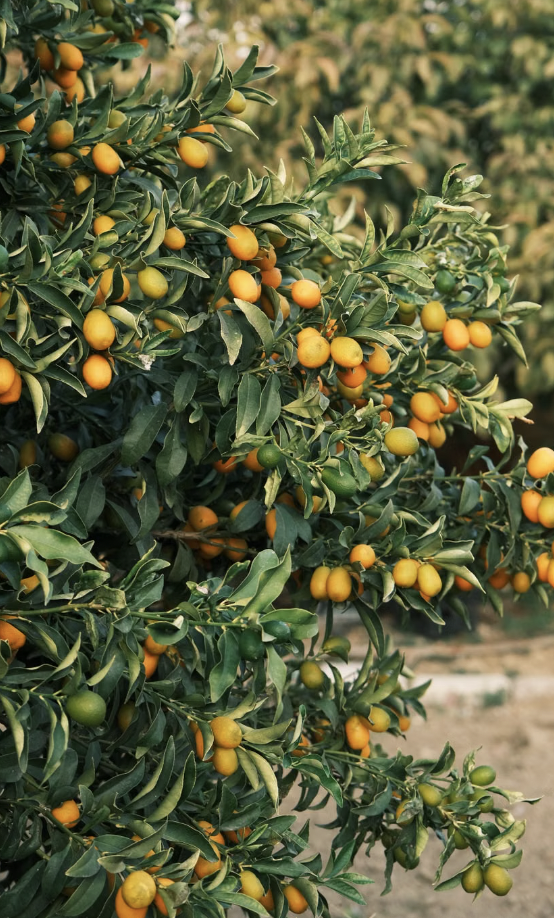
What makes the kumquat truly distinctive is how you eat it. Where most citrus asks to be peeled, the kumquat is enjoyed whole: the thin, sweet, aromatic rind and the tart, tangy flesh are meant to be eaten together in one bright, contrasting bite. The trees themselves are compact evergreens with thornless branches, deep-green glossy leaves, and clusters of fragrant white flowers that perfume the air in spring as lovely to look at as they are to harvest.
Why Kumquats Are the Perfect Potted Citrus
Among all the citrus you could grow, the kumquat is arguably the friendliest for pots and here’s why it earns that reputation as the ideal potted citrus:
- It’s the most cold-hardy citrus. Kumquats shrug off temperatures other citrus can’t, tolerating brief dips to around 18°F once established, so they grow in climates too cool for lemons or oranges.
- It stays naturally compact. While many citrus trees stretch 20 feet tall, a potted kumquat typically maxes out around 4 to 6 feet, perfect for a patio, balcony, or sunny doorstep.
- It’s self-fertile. You only need a single tree to get fruit, so there’s no need to find space for a pollination partner.
- It’s a heavy bearer. Kumquats fruit generously for their size, often loading their branches with dozens of bright orange fruits.
- It’s gorgeous and fragrant. Glossy evergreen leaves, fragrant white spring blossoms that bees adore, and vivid fruit make it as ornamental as it is productive.
For small-space, cool-climate, and first-time citrus growers, the kumquat checks every box.
Best Kumquat Varieties for Containers
Choosing the right variety shapes both your harvest and how you’ll enjoy it. Here are the standouts for pots:
| Variety | Fruit | Best For |
|---|---|---|
| Nagami | Oval, deep-orange, bright sweet-tart, a few seeds | The classic — eating whole, marmalade; most widely available |
| Meiwa | Round, larger, sweeter, nearly seedless | Fresh eating straight off the tree |
| Marumi | Round, slightly tart | Marmalades and preserves |
| Centennial Variegated | Variegated fruit and leaves, compact | Ornamental appeal in small spaces |
‘Nagami’ is the most popular and the one you’ll usually find at nurseries bold, snackable, and reliable. If you prefer a sweeter bite for eating fresh, seek out ‘Meiwa’. Either makes a wonderful container tree. Whatever you choose, buy a healthy grafted tree from a reputable nursery; kumquats can be grown from seed, but seedlings are weak and slow to fruit.
What You’ll Need
- A grafted kumquat tree in a compact variety
- A large container (at least 5 gallons to start, 15 gallons ideal) with multiple drainage holes
- A quality citrus/palm potting mix well-draining, slightly acidic
- Pot feet, bricks, or a rolling dolly to raise the pot off the ground
- A sunny spot with 6–8 hours of direct light, or a grow light for indoors
- Citrus fertilizer (or organic options like fish emulsion and kelp)
- Mulch to help hold moisture in the pot
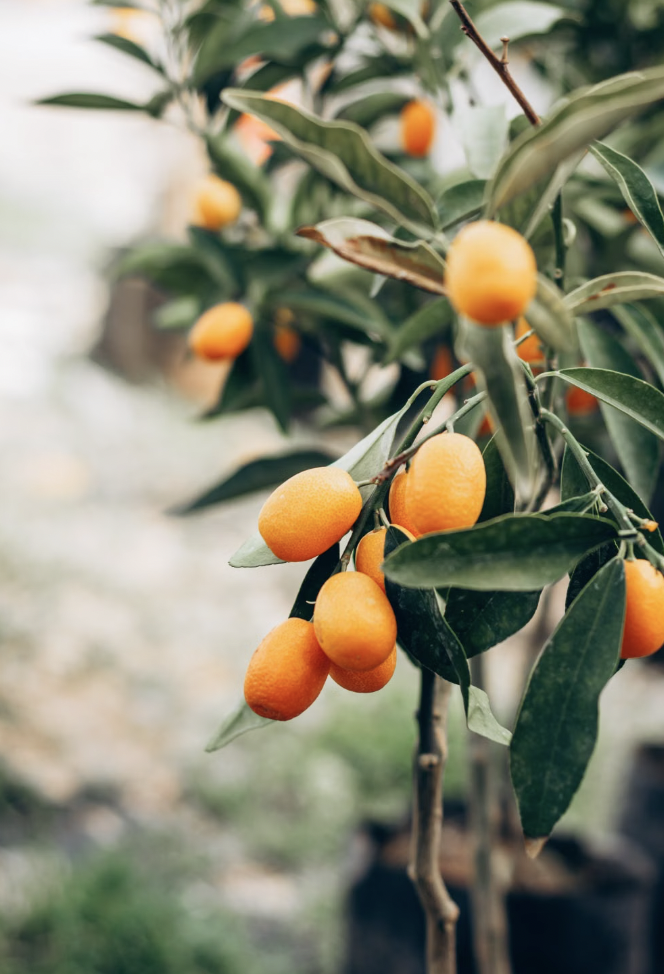
How to Plant a Kumquat Tree in a Pot: Step-by-Step
Spring is the ideal time to pot up a kumquat, giving it a full warm season to establish. Follow these steps.
- Step 1: Choose a Big Pot With Great Drainage
Here’s the single most important rule with potted kumquats: they hate being root-bound, so go big. Choose a container at least three times as wide as the root ball starting around 5 gallons for a young tree, sizing up to 15 gallons with several large drainage holes, since citrus can’t stand wet feet. Cover oversized holes with a scrap of fine screen so soil doesn’t wash out. A breathable fabric pot works wonderfully too.
- Step 2: Use the Right Citrus Soil
Soil choice prevents the majority of kumquat problems, so don’t reach for generic potting mix. Bark-heavy mixes break down and suffocate roots within months. Instead, use a quality citrus or palm potting mix that drains fast and stays slightly acidic (pH around 5.5–6.5). Good drainage plus the right acidity keeps roots healthy and leaves green.
- Step 3: Plant Your Kumquat
Fill the pot partway, then set the tree so the top of its root ball sits level with the final soil surface never buried deeper, which invites rot. Gently tease out any circling roots, backfill around them, and firm the soil lightly to remove air pockets, leaving an inch below the rim for watering.
- Step 4: Water In, Mulch, and Raise the Pot
Water thoroughly until it runs from the drainage holes. Add a two- to three-inch layer of mulch on the surface, keeping it several inches away from the trunk. Then raise the container off the ground on pot feet, bricks, or a rolling dolly this improves both drainage and air circulation, and a dolly makes it easy to chase the sun or dodge frost.
- Step 5: Place in Full Sun
Set your potted kumquat where it gets at least six to eight hours of direct sun a day; eight to ten is even better for fruiting. If you’re growing indoors, park it at your brightest window or add a grow light to keep it healthy through dim months.
Kumquat Tree Care: Water, Feeding & Pruning
Ongoing kumquat tree care is genuinely beginner-friendly once the tree is settled in the right pot and spot.
Watering. Consistency is everything with citrus. Keep the soil moist but never soggy, watering thoroughly when the top inch or so feels dry the simple finger test works perfectly. Remember that potted plants dry out faster than those in the ground, especially in summer heat, so check often. Both overwatering and letting the pot go bone-dry cause stress, leaf drop, and poor fruit, so aim for that steady middle ground.
Feeding. Kumquats are heavy feeders. Use a fertilizer formulated for citrus (ideally with a good portion of slow-release nitrogen) through spring and summer, and water well before and after feeding to avoid burning the roots. Organic gardeners get great results with citrus-friendly options like fish emulsion, liquid kelp, or homemade nettle tea and diluted manure a lovely low-waste approach that fits right into a natural feeding routine (see our guide to making your own organic fertilizer). If those fertilizer numbers are a mystery, our guide to understanding NPK ratios makes them clear. Yellowing leaves often signal watering issues or an iron deficiency, both easily corrected.
Pruning. Kumquats grow slowly and need little pruning. To shape the tree or thin crowded, dead, or crossing branches, prune lightly in early spring after harvest but before the flowers open. Aim for a bushy, sturdy framework that can support the weight of all that fruit.
Repotting. Because kumquats won’t tolerate being root-bound, plan to repot every two to three years into a slightly larger container with fresh mix. Root-bound trees show it through twig dieback and leaf loss, so give the roots room before they run out.
In our experience, the two habits that make the biggest difference to a potted kumquat’s health are unglamorous but powerful: watering by feel rather than by schedule, and never letting the tree outgrow its pot. Gardeners who check the soil with a finger before every watering and who bump their tree up a pot size the moment growth slows and roots start circling the drainage holes tend to have lush, heavy-bearing trees. Those who water on autopilot or leave a tree cramped for years are usually the ones battling yellow leaves and sparse fruit. Kumquats are forgiving plants, but they reward a little attentiveness generously.
Growing Kumquats Indoors
Because they’re compact and self-fertile, kumquats also make rewarding indoor citrus trees a glossy, fragrant, fruit-bearing houseplant that brightens a sunny room. The trick indoors is light: place your tree at the brightest window you have (a south-, east-, or west-facing one is ideal), and supplement with a grow light if the spot falls short of six hours of direct sun. Indoor air is often dry, so an occasional misting or a nearby humidity tray keeps the foliage happy, and rotating the pot every week or two encourages even, balanced growth.
Whenever the weather allows, kumquats appreciate a summer holiday outdoors, where natural sunlight and visiting bees improve growth and fruit set. Just move the tree gradually to avoid shocking it, and bring it back inside before the first cold nights. Whether it lives indoors full-time or splits its year between patio and windowsill, a kumquat is one of the most forgiving citrus trees you can grow under a roof.
Overwintering Your Potted Kumquat
The container advantage really shines in winter. While kumquats are the toughest citrus, they still can’t survive a hard freeze, and potted roots are more exposed to cold than in-ground ones. As temperatures drop toward freezing, move your tree to a sheltered spot, a bright indoor room, or an unheated but well-lit garage or conservatory.
A few tips for a smooth winter: give the tree the brightest indoor spot you can, since sudden drops in light trigger leaf drop; keep it somewhere cool rather than next to a hot radiator; and ease back on watering while growth slows. If you can only protect it outdoors, group pots together and drape them with a frost blanket on the coldest nights. Our overwintering plants guide walks through the whole routine, and keeping an eye on your first and last frost dates helps you time the move. Gardeners in warmer regions can check our USDA Zone 9 gardening guide for growing kumquats outdoors year-round.
How Long Until a Kumquat Tree Fruits & When to Harvest
Good news for the impatient: kumquats fruit relatively quickly. A grafted nursery tree often bears its first fruit within about one to two years, while seed-grown trees are slow and unreliable another reason to start with a nursery tree.
Here’s the yearly rhythm to expect:
- Late spring to summer: clusters of fragrant white flowers open and are visited by bees.
- Summer into fall: small green fruits form and slowly swell.
- Late fall through spring: fruit ripens to bright orange, typically ready to harvest from around November into April depending on variety and climate.
Your kumquat harvest is ready when the fruits are fully, richly orange. Conveniently, they hold well on the tree, so you can pick as needed over several months rather than all at once. Snip or gently twist off the fruit, and enjoy them the best way of all; whole, skin and all. Beyond fresh snacking, kumquats make superb marmalade, preserves, and candied treats, and they’re a bright, cheerful addition to both sweet and savory dishes.
In the kitchen, a bowl of homegrown kumquats opens up all kinds of possibilities. Slice them into salads for a citrus pop, simmer them into a glossy marmalade, candy them for cakes and cheese boards, or tuck a few into a roasting pan with chicken for a bright, tangy glaze. They’re rich in vitamin C, keep well for a couple of weeks, and because a healthy tree bears so heavily, you’ll likely have plenty to preserve and share. It’s the kind of small, sustainable abundance that makes growing your own citrus feel genuinely special.

Common Problems and How to Fix Them
Most kumquat troubles trace back to water, cold, or a cramped pot.
| Problem | Likely Cause | The Fix |
|---|---|---|
| Yellowing leaves | Over- or under-watering, or iron deficiency | Even out watering; use citrus feed with micronutrients |
| Sudden leaf drop | Temperature or light change; rootbound | Avoid drastic moves; give a bright, stable spot; repot if needed |
| Twig dieback, stalled growth | Root-bound in too small a pot | Repot into a larger container with fresh mix |
| Mushy roots, wilting | Overwatering / poor drainage | Improve drainage; let soil dry between waterings |
| Sticky leaves, cottony spots | Aphids, mealybugs, or scale | Treat with neem oil or insecticidal soap |
| Few flowers or fruit | Not enough light or nutrients | Move to full sun; feed regularly through the growing season |
A quick note for pet owners: while kumquats aren’t severely toxic, the acidity and sugars could upset a pet’s stomach if they eat a lot, so it’s worth keeping curious nibblers in mind.
Is Growing Kumquats in Pots Worth It?
Wonderfully so. A potted kumquat gives you glossy evergreen good looks, sweetly fragrant blossoms, and months of eat-them-whole citrus all in a compact, portable package that works whether you’re in sunny Florida or snowy New England. For anyone who’s ever wanted to grow their own citrus but thought their climate ruled it out, the kumquat is the joyful, achievable answer.
If your container citrus dreams are growing, keep exploring more exotic edibles: try growing star fruit at home, a lychee tree, guava trees in containers, or fig trees for beginners. For the full collection, browse our hub on growing tropical and exotic fruits, part of the broader EcoGardenHub Plant Library. New to pots in general? Our container gardening guide for beginners covers all the fundamentals.
Pot up a kumquat this spring, give it sun, the right soil, and a big enough home, and before long you’ll be plucking bright little suns from your own tree the easiest, cheeriest citrus you’ll ever grow. And once you’ve tasted that first homegrown kumquat, sweet peel and tangy center in a single bite, you’ll understand why this little golden fruit has charmed gardeners for centuries.
Frequently Asked Questions
How long does it take for a potted kumquat tree to fruit? A grafted nursery tree usually produces its first fruit within one to two years. Seed-grown kumquats are weak and slow, taking several years and often disappointing, so a nursery tree is the reliable choice.
What size pot does a kumquat tree need? Start with at least a 5-gallon container and size up to around 15 gallons, choosing a pot at least three times as wide as the root ball. Kumquats hate being root-bound, so repot every two to three years in a larger container.
Which kumquat variety is best for containers? ‘Nagami’ is the most popular and widely available, with bright sweet-tart fruit ideal for eating whole or making marmalade. If you prefer a sweeter, nearly seedless fruit for fresh snacking, choose ‘Meiwa’.
Do kumquat trees need full sun? Yes. Kumquats need at least six to eight hours of direct sunlight daily for healthy growth and good fruiting, with eight to ten hours even better. Indoors, use your brightest window or add a grow light.
How cold-hardy are kumquats? Kumquats are the most cold-hardy citrus, tolerating brief dips to around 18°F once established. Even so, they can’t survive a hard freeze, so potted trees should be moved to shelter during cold snaps.
Can you eat kumquats whole? Yes, and it’s the best part. Unlike most citrus, kumquats are eaten whole, the peel is sweet and the flesh is tart, giving a burst of contrasting flavor in one bite. They’re also excellent in marmalades and preserves.
Why are my kumquat leaves turning yellow? Yellow leaves usually point to inconsistent watering (too much or too little) or an iron deficiency. Check that the soil drains well and stays evenly moist, and feed with a citrus fertilizer that includes micronutrients.