


That leafy green crown you twist off a grocery-store pineapple and toss in the compost? It is actually a free, ready-to-plant houseplant in disguise. Learning how to grow pineapple from a top is one of the most rewarding kitchen-scrap projects you can try, and it costs you nothing more than a fruit you were already going to eat.
Here is the honest, encouraging truth: rooting a pineapple crown is genuinely easy, and watching those spiky leaves push out new growth on your windowsill is a small daily joy. Growing the fruit takes patience; we will be upfront about the timeline, but the plant itself is gorgeous, forgiving, and a brilliant way to turn “waste” into something alive. This guide walks you through every step, from choosing the right pineapple to the day you finally slice into homegrown fruit.
Can You Really Grow a Pineapple From the Top?
Yes. You can grow a brand-new pineapple plant from the leafy top (called the crown) of a store-bought fruit. Twist or cut off the crown, remove the lower leaves and any fruit flesh, let it dry for a few days, then root it in water or soil. Roots form in about four to eight weeks, and the plant can fruit in two to three years.
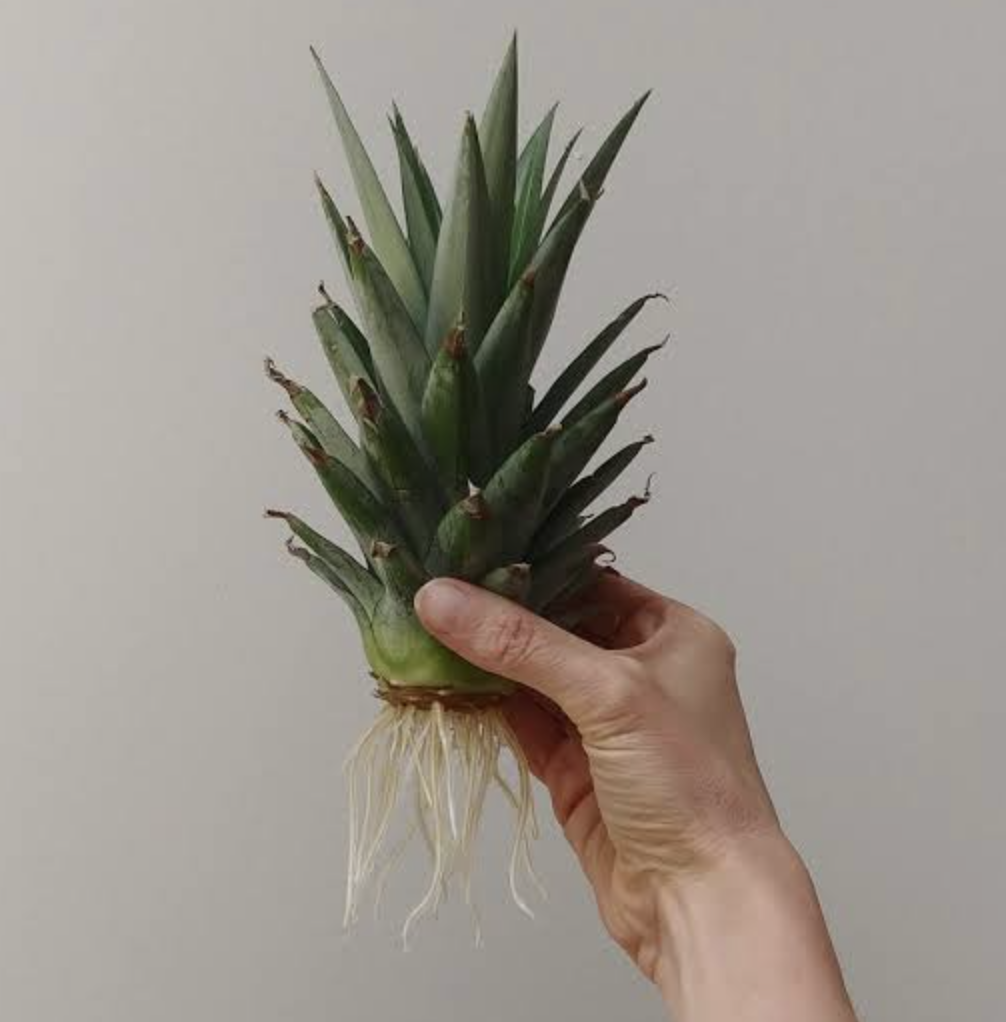
The pineapple (Ananas comosus) is a bromeliad, a herbaceous perennial, not a tree. That surprises many first-time growers who picture pineapples dangling from branches. In reality, each pineapple grows from the center of a low, rosette-shaped plant, and the crown on top of the fruit carries everything it needs to become a whole new plant. Commercial growers propagate this way too, so you are using the same trick the pros use, just on your kitchen counter.
What You’ll Need to Regrow a Pineapple
One of the best parts of this project is how little you need. Gather these before you start:
- A fresh, ripe pineapple with a healthy, green crown (this is your “seed”)
- A sharp knife or clean hands for twisting the top off
- A jar or glass of water (for the water method) or a 6–8 inch pot with drainage holes (for the soil method)
- Well-draining potting mix — a cactus/succulent mix, or regular potting soil cut with perlite or coarse sand
- A clear plastic bag (optional, to make a humidity tent)
- A warm, bright windowsill — or a DIY grow light setup for indoor plants if your home is short on natural light
That is it. No special equipment, no seeds to buy, no greenhouse required to get started.
How to Grow a Pineapple From a Top: Step-by-Step
Follow these six steps and you will have a rooted pineapple plant ready to grow. The whole hands-on process takes about fifteen minutes of active work, plus a few weeks of patient waiting while roots form.
Step 1: Choose a Ripe, Healthy Pineapple
Your future plant is only as good as the fruit you start with, so choose well. Look for a pineapple that smells sweet at the base, gives slightly when pressed, and has a firm, deep-green crown. Avoid crowns that are brown, mushy, dried out, or pulling apart in the center.
If you can find a locally grown pineapple at a farmers market, even better, it has usually traveled less and the crown is fresher. Fresh, green leaves in the center of the crown are the single best predictor of success.
Step 2: Remove the Crown (Twist or Cut)
There are two easy ways to separate the crown from the fruit:
- The twist method: Grip the fruit in one hand and the leafy crown in the other, then twist firmly, as if opening a stubborn jar. The crown pops off with a little stem attached is exactly what you want.
- The cut method: Slice off the top about an inch below the leaves, then carefully cut or break away all the remaining fruit flesh down to the tough inner core.
Whichever you choose, the goal is a clean crown with no juicy fruit left clinging to it. Leftover flesh rots easily and can take your whole crown down with it.
Step 3: Strip the Lower Leaves and Expose the Root Buds
Peel away the lowest ring of leaves, working upward, until about an inch of bare stem is showing. As you strip the leaves, look closely at the exposed base, you should see small, brown, bumpy nodes. Those are root primordia, the buds that will sprout your first roots. Uncovering them gives your plant a head start.
Trim off any remaining fruit at the very bottom until the base looks clean and dry. This is the most important rot-prevention step, so do not rush it.
Step 4: Cure the Crown So It Doesn’t Rot
Set the prepared crown on its side in a dry, shaded spot for two to seven days. This “curing” period lets the cut base callus over, forming a protective seal that dramatically lowers the risk of rot once it meets water or soil. It feels counterintuitive to wait, but this single step separates thriving crowns from mushy failures.
Step 5: Root It (Water Method vs. Soil Method)
Now choose how to grow those first roots. Both methods work well, and we compare them in detail below.
- Water method: Suspend the crown in a jar so only the bare stem sits in water, using toothpicks pushed into the stem to rest on the rim if needed. Place it in bright, indirect light and change the water every two to three days to keep it fresh. Roots usually appear in one to two months. Bonus eco tip: pour the old water onto your other houseplants instead of down the drain.
- Soil method: Skip the jar entirely. Plant the cured crown directly in a small pot of moist, well-draining mix, burying the bare stem up to the base of the leaves. Water it in, then slip a clear plastic bag over the pot to trap humidity, and keep it warm and bright. Roots typically establish in five to eight weeks.
Step 6: Pot Up Your Rooted Pineapple
Once your water-rooted crown has roots two to three inches long, it is ready for soil. Fill a 6–8 inch pot with a coarse, fast-draining mix, make a hole, and settle the crown so the base of the leaves rests right at the soil surface. Firm the soil gently and water well, letting the excess drain away.
If you rooted directly in soil, simply remove the plastic bag once you see new central growth and move the pot into brighter light. Congratulations, you now have a living pineapple plant.
Water Method vs. Soil Method: Which Should You Choose?
Neither method is “correct” — they simply suit different gardeners. Water-rooting lets you watch roots form (wonderful with kids), while soil-rooting skips a transplant and mimics how the plant grows in nature. Here is a side-by-side to help you decide.
| Factor | Water Method | Soil Method |
|---|---|---|
| Best for | Watching progress, beginners, curious kids | Fewer steps, sturdier roots, hands-off growers |
| Time to root | 1–2 months | 5–8 weeks |
| Transplant shock | Slightly higher (moving from water to soil) | Lower (roots start in their final medium) |
| Maintenance | Change water every 2–3 days | Keep soil lightly moist under a humidity bag |
| Rot risk | Low if base is cured and water stays fresh | Low if mix drains well and is not soggy |
| The “wow” factor | High — visible roots | Lower — hidden roots |
If this is your first time, try starting two crowns using both methods. It costs nothing extra, doubles your odds of success, and teaches you which approach you prefer.
Growing Pineapple Indoors: Light, Temperature & Humidity
For most US gardeners, growing pineapple indoors is the only realistic option, because pineapples cannot survive frost. The good news is that a pineapple makes a striking, low-drama houseplant that asks for the same things you would give a sun-loving succulent.
Light. Pineapples are sun worshippers. Give your plant the brightest window you have, a south- or west-facing sill is ideal aiming for at least six hours of bright light a day. If your home is dim, especially through winter, supplement with a grow light. Pale, floppy, stretching leaves are the plant’s way of telling you it wants more light.
Temperature. Pineapples love warmth. Growth is happiest between 68°F and 86°F (20–30°C). Below about 60°F growth stalls, above 90°F it also slows, and any frost is fatal. Keep your plant away from cold drafts, single-pane winter windows, and air-conditioning blasts.
Humidity. As a tropical bromeliad, your pineapple appreciates moisture in the air. A light misting of the leaves a couple of times a week keeps it happy, especially in dry, heated winter rooms. During rooting, that clear plastic bag doubles as a mini humidity chamber.
Once summer arrives and nights stay reliably warm, you can move the pot outdoors to a sheltered, partly sunny spot to soak up real sunshine just bring it back inside well before the first frost. Knowing your first and last frost dates makes this timing effortless, and if you want a deeper primer on cold protection, our guide to overwintering plants indoors has you covered.
Pineapple Plant Care: Watering, Feeding & Repotting
Solid pineapple plant care comes down to three easy rhythms: water evenly, feed lightly, and give the plant room to grow.
Watering. Pineapples are somewhat drought-tolerant, but indoors it is easy to overdo it. Aim for evenly, moderately moist soil — let the top inch or two dry out between waterings, then water thoroughly and let the excess drain. Soggy soil invites root rot, while bone-dry soil turns leaves pale, then reddish and curled. A cheap moisture meter takes the guesswork out at root level. Because pineapples are bromeliads, you can also pour a little water into the central “cup” of leaves, mimicking how they collect rain in the wild.
Feeding. Feed during the active growing season with a balanced houseplant fertilizer (a roughly even N-P-K such as 20-20-20) or a gentle slow-release organic option (something like 5-5-5). A good rhythm is every four weeks in spring and summer, tapering to every eight weeks in fall and winter. If fertilizer numbers feel like alphabet soup, our plain-English guide to understanding NPK ratios breaks it all down. In keeping with our low-waste ethos, you can also lean on gentle homemade amendments see how banana peels and eggshells fit into a natural feeding routine.
Repotting. Your pineapple will grows a lot. A mature plant can reach three to four feet tall and nearly as wide, so plan to move it up a pot size roughly once a year as the roots fill in. Always choose a container with drainage holes and refresh it with a coarse, well-draining mix. If containers are new to you, our container gardening guide for beginners covers pot sizes, drainage, and soil in friendly detail.
How Long Until Your Pineapple Fruits?
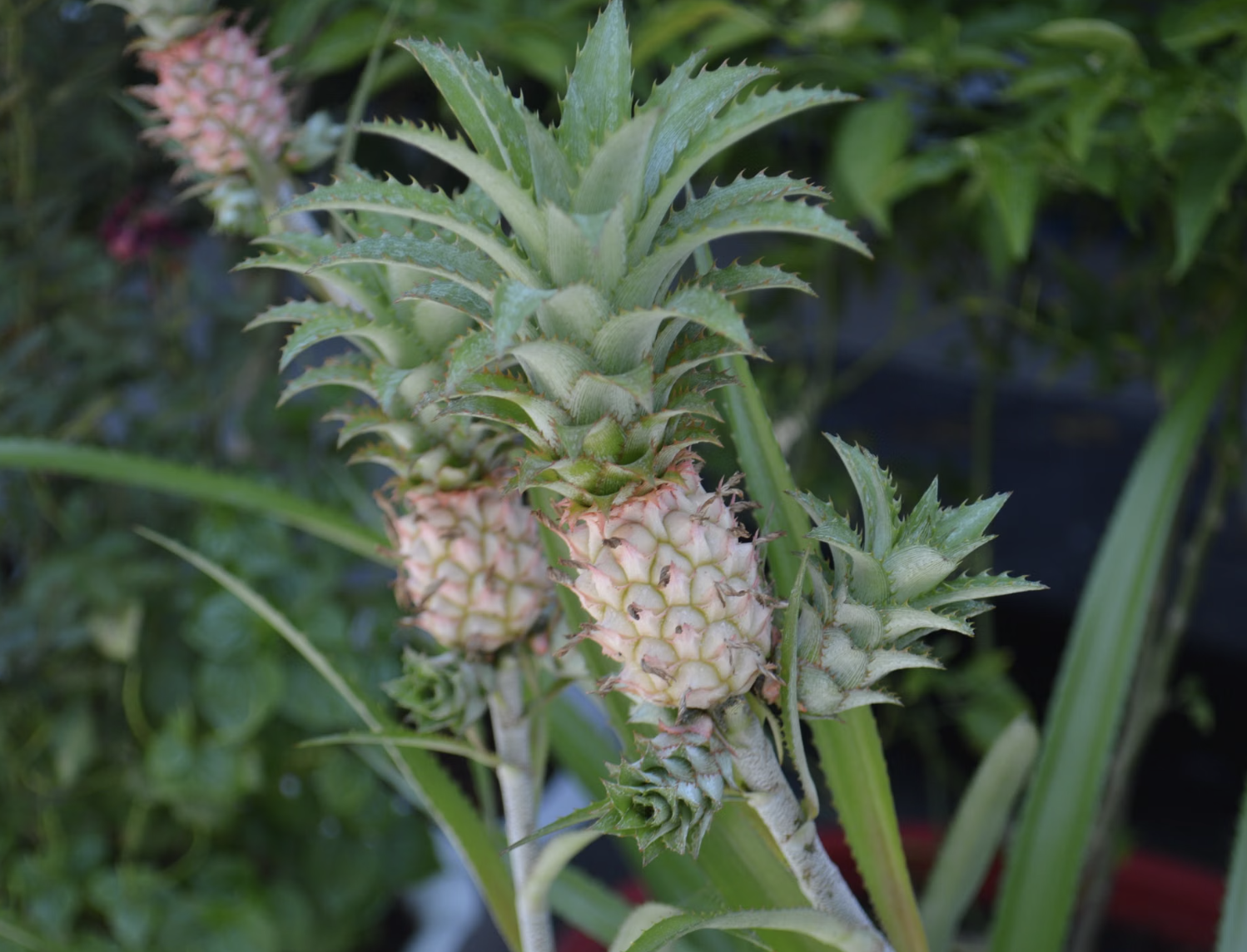
Here is where patience becomes part of the fun. A pineapple grown from a top typically takes two to three years to flower and fruits sometimes longer if light, warmth, or feeding are less than ideal. In that time you are rewarded with a bold, sculptural plant, so think of the fruit as the grand finale rather than the whole show.
Want to nudge things along? Once your plant is mature (at least a couple of years old and a good size), you can try the classic ripe-apple trick. Enclose the whole plant in a clear plastic bag with a ripe apple or two for about a week. As the apples release ethylene gas, they can coax the pineapple into flowering. It does not always work, but it is a harmless, free experiment that has delighted growers for generations.
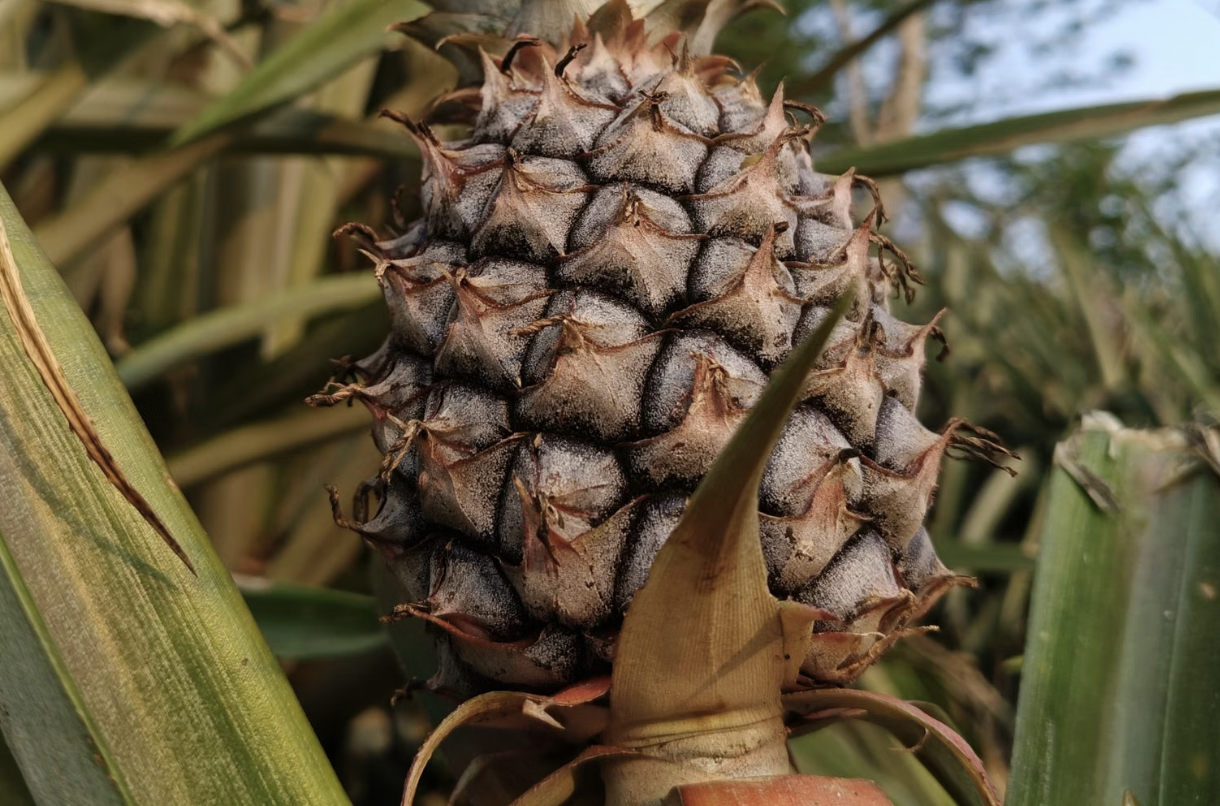
After flowering, a small fruit forms in the center of the plant and slowly swells over several months. When it turns golden and smells sweet at the base, it is ready to harvest and enjoy.
To set expectations, here is a realistic timeline of what to watch for along the way:
- Weeks 1–2: Curing and the very first root nubs appearing on water-rooted crowns.
- Weeks 4–8: A healthy root system establishes and the central leaves begin to grow.
- Months 3–12: Steady leaf growth; the rosette widens and you move up a pot size.
- Years 1–2: The plant approaches full size (three to four feet across) and matures.
- Years 2–3: Flowering, followed by a single fruit that ripens over several months.
- After fruiting: Pups and suckers form, ready to become your next generation of plants.
In our own windowsill trials, the crowns that succeeded fastest shared three things: a fresh green top, a proper few-day cure before rooting, and consistently bright light. The ones that failed almost always rotted early from skipped curing or leftover fruit which is exactly why we labor the point in Step 3 and Step 4 above.
After the Harvest: Pups, Suckers & Endless Free Plants
Here is the beautiful twist that makes pineapples so sustainable: the mother plant fruits only once, and then she begins to fade. But before she goes, she produces offsets, ittle clones called pups, suckers, or slips around her base and stem.
Simply twist or cut these offsets off once they are a few inches tall, then root and pot them exactly like you did the original crown. Each one grows faster than the crown did (often fruiting in a year or two rather than three), which means one grocery-store pineapple can launch a rotating, never ending supply of plants. It is the ultimate low-waste gardening loop a single fruit that keeps on giving.
Common Problems and How to Fix Them
Most pineapple troubles trace back to water, light, or rot. Here is a quick troubleshooting guide to keep your plant thriving.
| Problem | Likely Cause | The Fix |
|---|---|---|
| Base turns mushy and brown | Rot from leftover fruit or soggy conditions | Remove all fruit flesh, cure the crown before rooting, use fast-draining mix |
| No roots after 8+ weeks | Too cold, too dark, or a damaged crown | Move somewhere warm and bright; start a fresh crown as backup |
| Pale, stretched leaves | Not enough light | Move to a brighter window or add a grow light |
| Leaf tips turning brown | Over- or under-watering | Even out watering; trim brown tips with clean scissors |
| Center of plant yellow/brown | Crown rot — often fatal | Improve drainage next time; the plant may not recover |
| White cottony spots or sticky leaves | Mealybugs, aphids, thrips, or scale | Wipe with insecticidal soap; isolate from other houseplants |
A quick note on pests: mealybugs, aphids, thrips, and scale are the usual suspects on indoor pineapples. Catch them early, wipe them off, and keep your plant well-lit and unstressed, and they rarely become a serious problem.
Is Growing Pineapple Worth It? A Sustainable Kitchen-Scrap Win
Absolutely and not just for the fruit. Regrowing a pineapple from a top is a feel-good, waste-reducing habit that turns a would-be scrap into a beautiful, air-freshening houseplant and, eventually, homegrown fruit. It is proof that sustainable living can be genuinely fun rather than a chore.
This project also pairs wonderfully with other easy tropical growing adventures. If you have caught the bug, try growing papaya from seed, growing guava trees in containers, or keeping a citrusy kumquat tree in a pot. For the full collection of exotic edibles you can grow at home, browse our hub on growing tropical and exotic fruits, part of the broader EcoGardenHub Plant Library. And if you are lucky enough to live in a warm region, our USDA Zone 9 gardening guide will help you grow your pineapple outdoors year-round.
Start one crown this week. In a few days you will spot the first roots, in a few weeks a whole new plant and somewhere down the line, a pineapple you grew yourself, from a scrap you almost threw away.
Frequently Asked Questions
How long does it take to grow a pineapple from a top? Roots form in about four to eight weeks, but the plant needs roughly two to three years to flower and produce fruit. The plant itself is attractive the entire time, so enjoy it as a houseplant while you wait for the fruit.
Should I grow my pineapple top in water or soil? Both work. Water rooting lets you watch the roots develop and is great for beginners and kids; soil rooting skips a transplant and tends to produce sturdier roots. If you are unsure, start one crown each way.
Do I have to root the pineapple top in water first? No. Rooting in water is popular because it is fun to watch, but you can plant a cured crown straight into well-draining soil under a humidity bag and skip the water stage entirely.
Can you grow a pineapple indoors? Yes, and for most US gardeners indoors is the way to go, since pineapples cannot survive frost. Give it a bright window (or a grow light), warmth between 68–86°F, and occasional misting, and it will thrive as a houseplant.
Why is my pineapple top rotting instead of rooting? Rot almost always comes from leftover fruit flesh on the crown or from conditions that are too wet. Remove every bit of fruit, cure the crown for a few days until the base dries, and use a fast-draining mix or fresh water to prevent it.
Does the pineapple plant die after fruiting? The main plant fruits once and then slowly declines, but it first produces offsets called pups or suckers around its base. Root those and you will have new plants that often fruit faster than the original.
How big does a pineapple plant get? A mature pineapple can reach about three to four feet tall and nearly as wide, so give it room to spread and plan to move it into a larger pot roughly once a year.