


Carrots have a reputation for being finicky twisted roots, stubby little nubs, seeds that never come up at all. But here’s the thing almost nobody tells beginners: those problems aren’t really carrot problems. They’re soil problems. And that’s exactly why learning how to grow carrots in raised beds is such a game-changer. In a raised bed you control the soil completely, and carrots reward you with long, straight, impossibly sweet roots.
For most gardeners, a raised bed isn’t just an alternative to in-ground carrots it’s genuinely better. Loose, stone-free, deep, well-drained soil is everything a carrot wants, and a raised bed hands it over on day one. This guide walks you through all of it: choosing a variety that fits your bed, getting those famously stubborn seeds to germinate, thinning without wrecking your crop, and pulling your first perfect carrot.
How Do You Grow Carrots in a Raised Bed?
Fill a raised bed at least 12 inches deep with loose, stone-free soil enriched with compost. Sow seeds just ¼ inch deep in cool weather, keep the surface consistently moist for the 1 to 3 weeks it takes to germinate, then thin seedlings to 2 to 3 inches apart using scissors. Give them full sun and even moisture, and harvest in 60 to 80 days.
The two things that decide your success are soil texture and germination moisture. Get loose, rock-free soil and keep those tiny seeds damp for their long sprouting window, and the rest of carrot growing is genuinely hands-off.
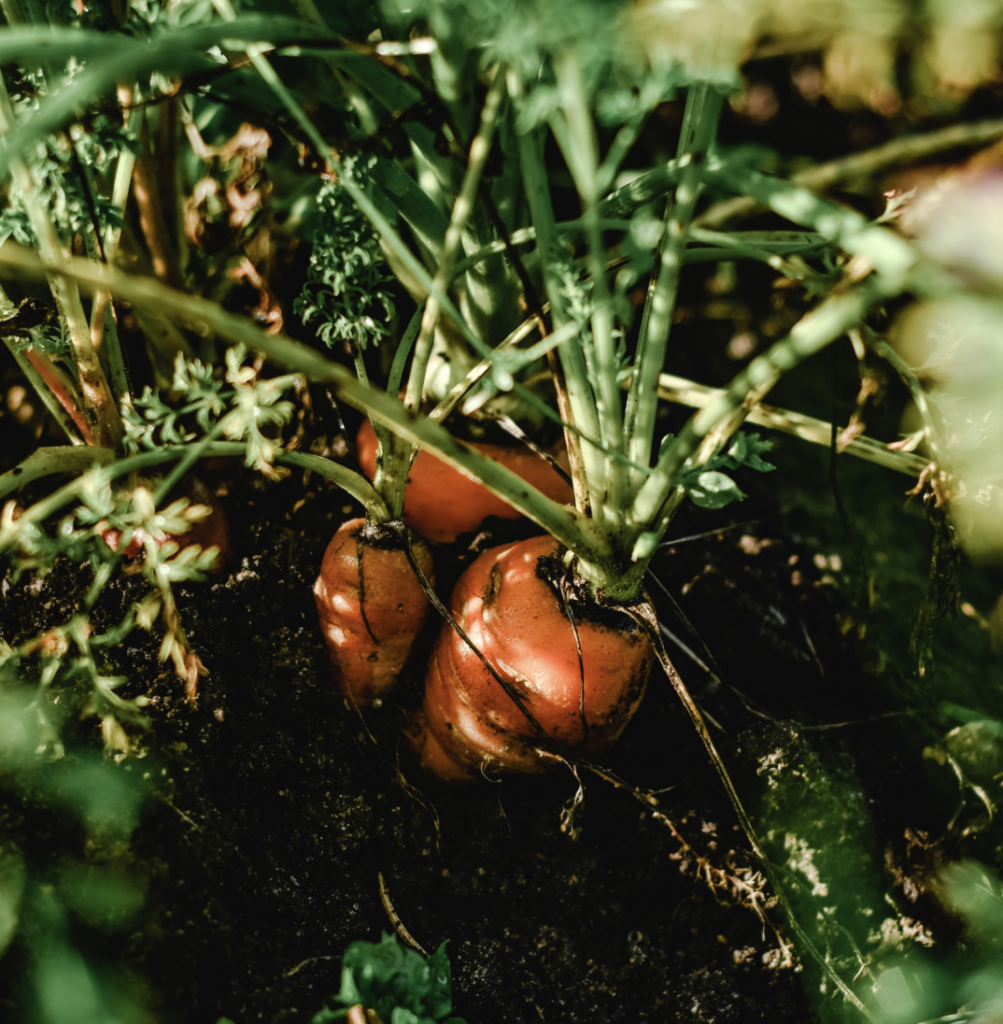
Why Raised Beds Are Perfect for Carrots
Carrots are unusual among vegetables in that the part you eat has to physically push down through the soil. That single fact explains everything about growing them and why raised beds suit them so well:
- Loose, workable soil. You fill the bed yourself, so there’s no fighting compacted clay. Roots slide straight down instead of forking around obstacles.
- You remove the rocks. Anything bigger than about half an inch will fork a carrot. In a raised bed you simply don’t put rocks in.
- Excellent drainage. Carrots need steady moisture but rot in waterlogged ground; raised beds drain freely while compost holds moisture.
- Depth on demand. Need 12 to 18 inches for long varieties? Just build up.
- Easier weeding and pest control. Fewer weeds compete with slow-starting seedlings, and it’s simple to fit mesh covers against carrot fly.
- Soil warms earlier in spring, so you can sow sooner.
There’s also a practical comfort factor: raised beds bring the soil surface closer to you, which matters more than you’d think for a crop that involves plenty of close-up seed sowing, thinning, and weeding on your hands and knees.
If you’re building a bed for carrots, our guides to DIY raised garden bed plans and making the perfect raised bed soil mix will set you up properly from the start.
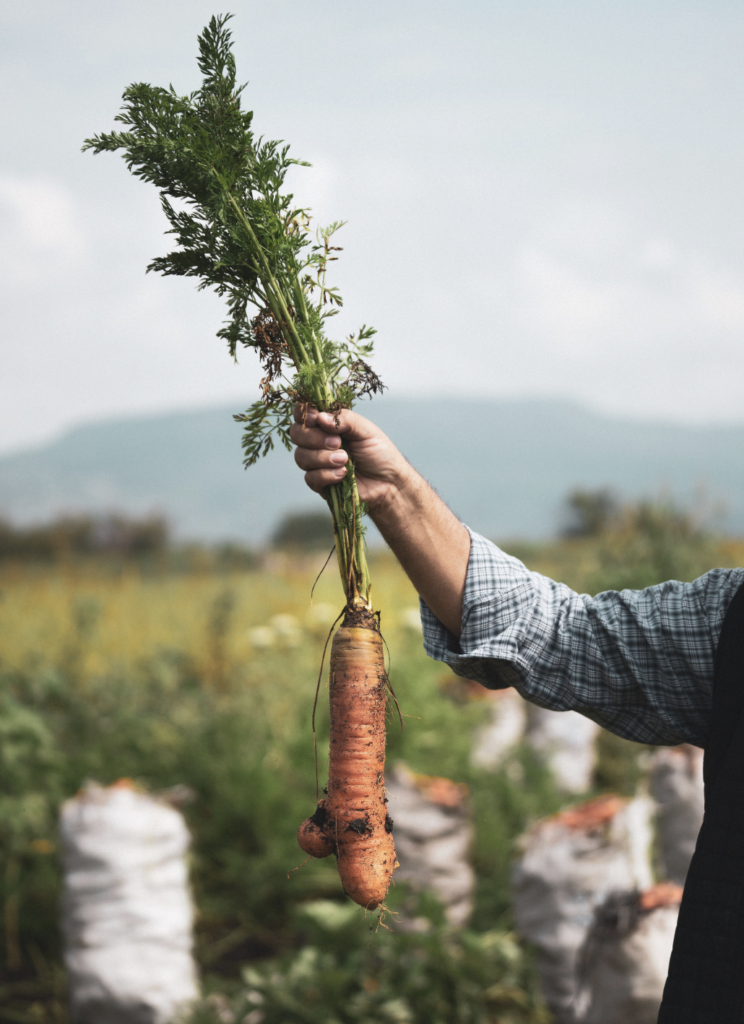
Farmer holding a freshly picked carrot with a scenic farm backdrop.
Match Your Variety to Your Bed Depth
Here’s the mistake that sinks most first-time carrot growers: planting a long variety in a shallow bed. A carrot that hits the bottom of the bed simply stops, stunts, or forks. The fix is beautifully simple, choose the variety that fits the depth you have.
| Carrot Type | Bed Depth Needed | Examples | Notes |
|---|---|---|---|
| Round / mini | 6–8 inches | ‘Paris Market’, ‘Thumbelina’ | Perfect for shallow beds and containers |
| Chantenay (short, stubby) | 8–10 inches | ‘Red-Cored Chantenay’ | Tolerates heavier soil; stores well |
| Nantes (cylindrical, sweet) | 10–12 inches | ‘Scarlet Nantes’, ‘Nelson’ | The classic all-rounder; great raw |
| Danvers (tapered) | 12 inches+ | ‘Danvers Half Long’ | Reliable, good for heavier soils |
| Imperator (long, slim) | 16–18 inches | Supermarket-style types | Needs the deepest, loosest soil |
The general rule: at least 12 inches of loose soil for full-size carrots, 8 to 10 inches for round and short types, and 16 to 18 inches if you want those long, slender supermarket-style roots. If your bed walls are shorter than you’d like, there’s a neat workaround, mound the soil higher in the center of the bed, plant carrots in that raised ridge, and put shallow-rooted crops around the edges.
Preparing the Soil (The Most Important Step)
Carrot quality is decided before you ever sow a seed. Aim for loose, crumbly, sandy-loam soil that’s rich in organic matter and completely free of obstacles.
Loosen deeply. Break up the soil to at least 12 inches, crumbling any clumps. Even dedicated no-till gardeners often make an exception for their carrot bed that loose texture is worth it.
Remove every stone. Sift out rocks, sticks, clods, and old root fragments. Anything larger than about half an inch can fork a growing root.
Add compost, but never fresh manure. Work in a generous 2 to 3 inches of compost to improve structure, drainage, and moisture retention. But avoid fresh manure and heavy nitrogen fertilizer: they cause forked, hairy roots and lush leafy tops at the expense of the carrot itself. This is the counterintuitive part of carrot growing — they’re not heavy feeders, and too much richness actively hurts them.
Skip bagged “garden soil.” Those heavy mixes are designed for in-ground use and compact badly in beds. Use a light raised-bed mix or blend of topsoil, compost, and sand.
Check pH. Carrots prefer slightly acidic soil, around pH 6.0 to 6.8. Our guide to testing your garden soil shows you how.
Finally, rake the surface smooth and level fine, even soil makes a huge difference for tiny seeds.
How to Plant Carrots in a Raised Bed: Step-by-Step
- Step 1: Sow at the Right Time
Carrots are a cool-season crop. Sow in early spring as soon as the soil can be worked (around 45°F), roughly two to three weeks before your last frost, and again in mid-to-late summer for a fall harvest. They dislike heat and may bolt above 90°F, so in warm climates grow them through fall and winter. Check your frost dates to plan, and consider succession planting a new short row every two to three weeks for a continuous supply.
- Step 2: Direct Sow Only, and Sow Shallow
Never start carrots in trays, they transplant terribly, and any root disturbance means a twisted carrot. Sow directly where they’ll grow. Moisten the bed first, then sow seeds just ¼ inch deep (some growers go as shallow as ⅛ inch). Too deep and the seedlings can’t push through; too shallow and they dry out. Cover lightly with fine soil or vermiculite and press gently for good seed-to-soil contact.
- Step 3: Use the Sand Trick (and the Radish Trick)
Carrot seeds are almost comically tiny, which makes even sowing a challenge. Two classic solutions:
- Mix seeds with dry sand and sprinkle the mixture over the bed. The sand spreads the seed evenly and makes it visible against the soil. An empty spice jar makes a perfect shaker.
- Add a pinch of radish seeds to the mix. Radishes sprout in days, marking your rows while the slow carrots germinate, breaking up any surface crust, and getting harvested long before they compete.
Sow a little more thickly than you need, gaps in a carrot row are far more annoying to live with than a few minutes of thinning later on.
- Step 4: Keep the Surface Moist (Non-Negotiable)
This is where most carrot crops are won or lost. Carrot seeds take 10 to 21 days to germinate, and if the soil surface dries out at any point during that window, the seeds die. Water gently and often, in hot weather that can mean a light misting two or three times a day and never let the top layer crust over. A thin layer of mulch, a board, or a fabric row cover laid over the bed holds moisture beautifully; just remove it the moment seedlings appear.
In our experience, this is the single reason most people believe “carrots are hard.” Gardeners water the bed thoroughly on sowing day, then treat it like any other crop and check back a week later, by which point a couple of hot afternoons have baked the surface and the seedlings never stood a chance. It’s not a green-thumb problem; it’s a three-week attention problem. Commit to keeping that top half-inch damp for twenty-one days and carrots quietly become one of the easiest things in the garden. After germination they ask almost nothing of you.
- Step 5: Thin With Scissors (Twice)
When seedlings are 1 to 2 inches tall, thin them. It feels wasteful, but crowded carrots stay tiny and misshapen, root crops sense their neighbors and simply refuse to size up.
Use scissors, don’t pull. Snip unwanted seedlings off at soil level so you don’t disturb the roots of the keepers next door. Thin in waves: a first pass to about 1 inch apart, then a second when they crowd again, ending at 2 to 3 inches apart for standard varieties (up to 4 inches for large types, 1 to 1.5 inches for bunching carrots). Best of all, that final thinning gives you a free harvest of sweet baby carrots.
Carrot Care: Water, Feeding and Weeding
- Watering. Carrots want consistency above all, no wide swings between soggy and bone dry. Erratic moisture causes split and cracked roots, while drought makes them woody and bitter. Once seedlings are established, water deeply once or twice a week rather than lightly every day. Raised beds dry faster than in-ground beds, so check often. Drip irrigation or a soaker hose is ideal, delivering water to the roots without soaking the foliage.
- Mulching. A thin layer of straw or shredded leaves between rows conserves moisture, moderates temperature, and suppresses weeds. Keep a little gap around the crowns to prevent rot. See our guide to types of mulch.
- Feeding. Less is more. If you prepped the bed with compost, your carrots likely need nothing else. Too much nitrogen produces gorgeous ferny tops and woody, forked roots. If you want to give them a boost, carrots appreciate potassium, a drink of compost tea every couple of weeks in early to mid-summer, as roots are sizing up, is perfect. Our guides to NPK ratios and compost tea can help.
Weeding. Carrot seedlings are slow and easily outcompeted. Weed early and often, ideally as soon as the first thread-like seedlings emerge, then again when they’re 3 to 4 inches and 5 to 6 inches tall. Weeding little and often beats one big rescue mission.
Protecting Carrots From Pests
Carrots are largely trouble-free, with one notable exception: the carrot rust fly. These pests are drawn by the scent of carrot foliage and lay eggs where the leaves meet the root; their larvae tunnel into the carrot, causing rusty scarring and rot.
The most effective defense is physical. Cover the bed with fine insect mesh (1–2 mm) or a floating row cover from sowing, sealing the edges so flies can’t get underneath. carrots don’t need insect pollination, so you can leave covers on all season. Crop rotation helps too, since the pests overwinter in the soil, and companion planting works surprisingly well: sage planted in the carrot bed masks the carrot scent and deters the flies. Our companion planting guide has more pairings, and crop rotation basics explains the rotation side.
Wireworms and slugs can also nibble roots, and in damp conditions Alternaria leaf blight may yellow the foliage, good airflow and watering at the soil line rather than overhead keep it in check.
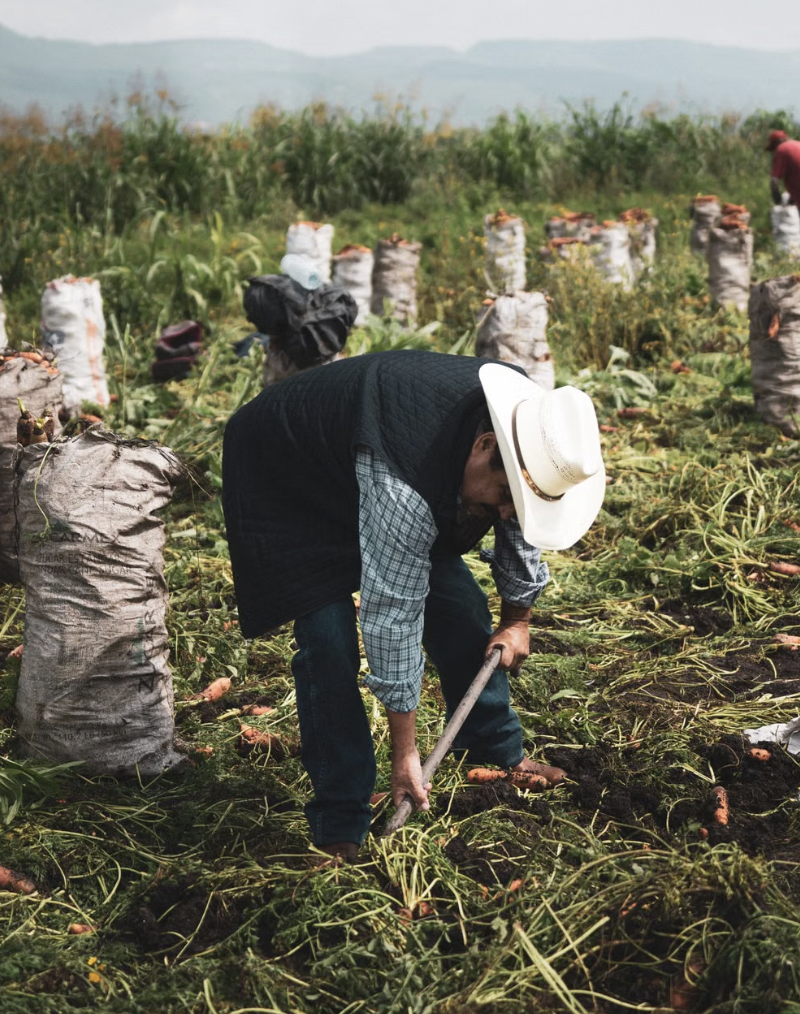
Harvesting Carrots
Most varieties mature in 60 to 80 days. The signs of readiness: the shoulders of the root begin to push up above the soil, showing their full, rich color, and the tops have grown lush (usually around 12 inches tall).
You can start pulling baby carrots any time, they’re delicious small. but patience genuinely pays with bigger, sweeter roots. Don’t leave them too long, though, or they turn woody.
- How to pull them without snapping the tops: loosen the soil beside each carrot with a trowel or fork first, then grip low at the shoulders and ease it out with a gentle twist. Yanking straight up on the greens usually leaves the carrot in the ground.
- A sweet bonus: carrots are frost-hardy, and a light frost actually improves their flavor, prompting the plant to convert starches to sugars. In many regions you can leave carrots in the ground under a thick mulch blanket and harvest them through winter, a wonderful, low-effort form of storage. Our winter garden prep guide covers overwintering root crops.
- Storing: twist off the leafy tops right away (they draw moisture from the root), and store unwashed carrots in a perforated bag in the fridge crisper, where they’ll keep for four to six weeks.
And don’t throw those tops away, carrot greens are entirely edible and make a lovely, slightly bitter pesto or a flavorful addition to stock, which is exactly the sort of low-waste bonus a homegrown crop should give you. The roots themselves are nutritional powerhouses, loaded with beta-carotene (which your body converts to vitamin A), fiber, and antioxidants. Homegrown carrots also open up colors you’ll rarely find in a supermarket, deep purple, sunny yellow, creamy white. all grown exactly the same way, and all a delight on the plate.
Common Problems and How to Fix Them
| Problem | Likely Cause | The Fix |
|---|---|---|
| Seeds never germinated | Soil dried out or crusted; sown too deep | Keep surface constantly moist for 1–3 weeks; sow just ¼ inch deep |
| Forked or twisted roots | Stones, compacted soil, fresh manure, or transplanting | Sift out rocks; loosen deeply; never use fresh manure; direct sow only |
| Tiny, stunted carrots | Overcrowding — not thinned | Thin to 2–3 inches with scissors, in waves |
| Short, stubby roots | Bed too shallow for the variety | Match variety to depth, or mound soil higher |
| Lush tops, poor roots | Too much nitrogen | Skip fertilizer; compost alone is plenty |
| Split or cracked roots | Irregular watering | Water deeply and consistently; mulch |
| Rusty tunnels in roots | Carrot rust fly larvae | Use 1–2 mm mesh covers; rotate crops; plant sage |
| Bitter or woody carrots | Heat, drought, or left in too long | Grow in cool seasons; harvest at mature size |
Is Growing Carrots in Raised Beds Worth It?
Absolutely and honestly, it’s the way most gardeners should grow them. Every classic carrot frustration traces back to soil, and a raised bed solves that on day one. Give them loose, stone-free soil, keep the seedbed damp for those first few weeks, thin them properly, and carrots become one of the most hands-off crops in the garden. Then comes the best part: pulling a bright, crisp, sun-warmed carrot from the earth never stops feeling like a small piece of magic and it will taste nothing like the bagged ones from the store.
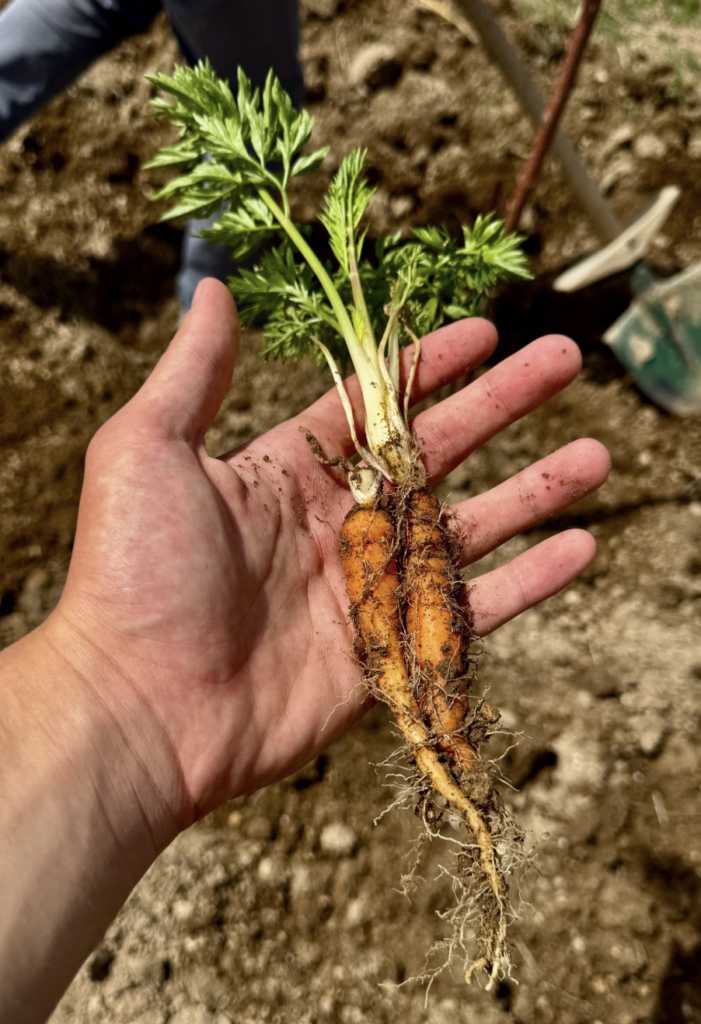
Ready to fill the rest of your bed? Carrots make excellent neighbors for other cool-season crops, try leaf lettuce for continuous harvest, kale in cool weather, or spinach year-round. For warm-season company nearby, see tomatoes in containers. Explore the full Vegetables collection, part of the broader EcoGardenHub Plant Library.
Loosen your soil, scatter a pinch of seed with a little sand, and keep it damp. in a couple of months you’ll be pulling treasure out of the ground. Few crops ask so little and surprise you so much.
Frequently Asked Questions
- How deep should a raised bed be for carrots? At least 12 inches of loose soil for full-size carrots, 8 to 10 inches for short or round varieties, and 16 to 18 inches for long Imperator types. If your bed is shallow, mound the soil higher in the center or choose a shorter variety.
- How far apart should carrots be spaced? Thin seedlings to 2 to 3 inches apart for standard varieties, about 1 to 1.5 inches for bunching carrots, and up to 4 inches for large types. Crowded carrots stay small and misshapen, so thinning is essential.
- Why are my carrots forked or twisted? Forking is caused by obstacles, stones, clods, or compacted soil or by fresh manure and excess nitrogen. Transplanting also causes twisted roots. Sift out debris, loosen the soil deeply, use only well-rotted compost, and always direct sow.
- Why won’t my carrot seeds germinate? Carrot seeds take 10 to 21 days to sprout and die if the surface dries out or crusts over. Keep the top layer consistently moist with light, frequent watering, sow no deeper than ¼ inch, and cover the bed with mulch or a row cover until seedlings appear.
- Should I thin carrots by pulling or cutting? Cut them. Snip unwanted seedlings at soil level with scissors so you don’t disturb the roots of neighboring carrots. Thin in two waves, and enjoy the final thinnings as baby carrots.
- How long do carrots take to grow? Most varieties mature in 60 to 80 days from sowing. You can harvest baby carrots earlier, but leaving them to size up gives bigger, sweeter roots. just don’t leave them so long that they turn woody.
- Can you leave carrots in the ground over winter? Yes, in many regions. Carrots are frost-hardy, and a light frost actually sweetens them by converting starches to sugars. Cover the bed with a thick layer of mulch and harvest as needed through winter.