


There’s a particular kind of joy in reaching over your stove, pinching three fragrant leaves off a plant on the windowsill, and dropping them straight into the pan. No plastic clamshell, no wilted supermarket bunch, no trip to the shop. Just basil, still alive thirty seconds ago.
Learning how to grow basil indoors is the easiest entry point into herb growing there is, but there’s a truth most guides tiptoe around, and it’s the key to the whole thing. Basil is an annual. It will eventually flower, go woody, and die. That’s not a failure of your care; it’s the plant’s biology. So genuinely year-round basil isn’t about keeping one heroic plant alive forever. It’s about running a simple, almost effortless rotation. Once you understand that, fresh basil on your counter in February becomes routine.
Can You Grow Basil Indoors Year-Round?
Yes. Give basil 6 to 8 hours of direct sun or 12 to 14 hours under a grow light, a 6- to 8-inch pot with good drainage and fast-draining mix, water when the top inch dries, and keep it at 70–80°F away from cold drafts. Prune from the top above a leaf node every 2 to 3 weeks to keep it bushy, and pinch off flowers immediately. For a truly continuous supply, root cuttings in water every couple of months so a younger plant is always coming along.
Two things decide your success: enough light (the cause of nearly every sad indoor basil) and regular pruning (the difference between a leggy stick and a lush bush).
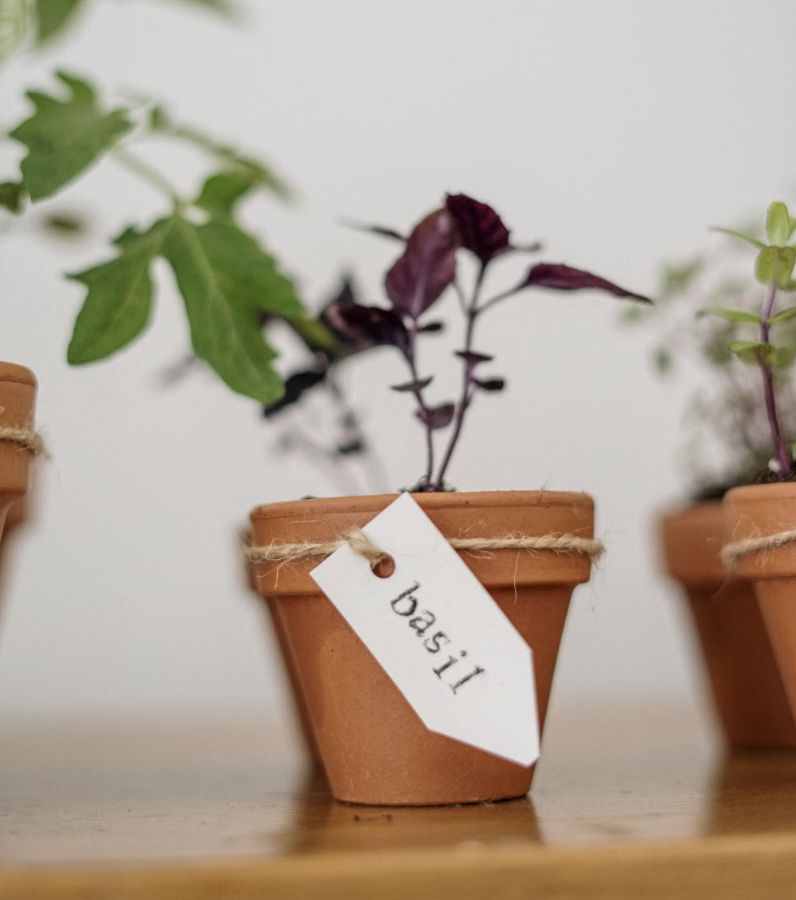
Meet Basil (King of Herbs)
Basil (Ocimum basilicum) is a member of the mint family, most likely originating in India before becoming inseparable from Mediterranean and Asian cooking. That heritage tells you what it wants: warmth and bright light. It’s often called the king of herbs, and it earns the title, only Few plants are as fragrant, as fast, or as immediately useful.
It’s also worth knowing basil’s medicinal side, especially within an herb garden. Its close relative holy basil (tulsi, Ocimum tenuiflorum) has been used in Ayurvedic tradition for centuries and grows indoors under exactly the same conditions as sweet basil. Culinary basil itself is rich in aromatic oils and antioxidants and the simple act of brushing past a plant and releasing that scent is its own small daily pleasure. If you’re building a medicinal herb collection, basil is a natural cornerstone: it’s the easiest of the group to grow, it shares its care requirements with tulsi, and it earns its space in the kitchen every single day.
Why Basil Is the Best Herb to Start With Indoors
- It’s fast. Seeds germinate in about a week, and you’re harvesting within weeks — no long waits.
- It’s compact. A single 6-inch pot on a windowsill is genuinely enough.
- It’s forgiving. Basil tells you clearly what it wants (droopy = water, leggy = light), so beginners learn quickly.
- It’s endlessly useful. Pesto, pasta, salads, sandwiches, cocktails, even tea.
- It propagates for free. A cutting in a glass of water roots in days — one plant becomes infinite plants.
- It smells wonderful. Just watering it perfumes the room.
Light: The Thing That Makes or Breaks Indoor Basil
If your indoor basil has ever gone tall, thin, and sad, this was why. Basil is a sun worshipper, and indoor light is far weaker than it looks to our eyes.
Your two options:
- A bright window. A south-facing window is ideal, giving at least 6 hours of direct sun. Strong afternoon light from a west-facing window also works well.
- A grow light. Run it 12 to 14 hours a day, positioned 6 to 12 inches above the plant. Keep leaves from touching the bulb. Our DIY grow light setup guide covers cheap, effective arrangements and honestly, for winter basil in most of the country, a grow light isn’t a luxury. It’s the difference between a harvest and a houseplant.
Read the signs:
| Sign | Meaning |
|---|---|
| Leggy, stretched stems; wide gaps between leaves | Not enough light |
| Pale or yellowing leaves, slow growth, weak flavor | Not enough light |
| Scorched or browning leaf edges | Too much intense light |
| Wilting despite moist soil, curling leaves | Light stress or heat |
One easy habit: rotate the pot a quarter turn every few days so the plant grows evenly and upright, instead of leaning permanently toward the glass.
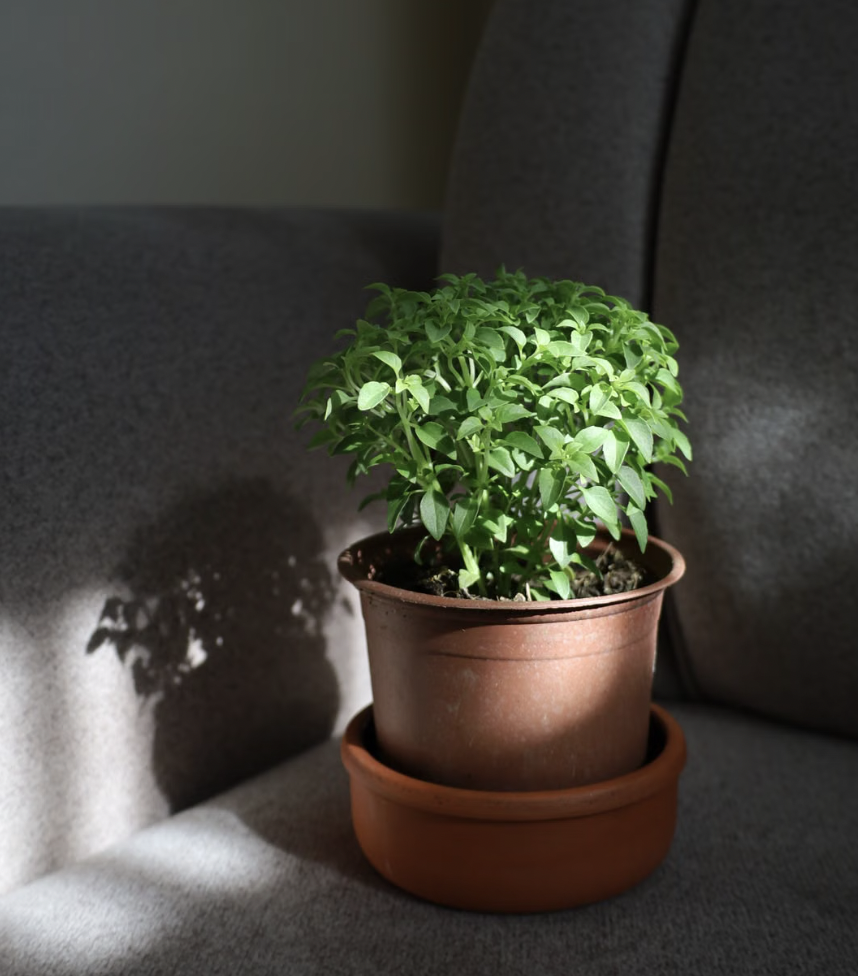
The Right Pot and Soil
Pot: at least 6 to 8 inches deep and wide, with a real drainage hole, non-negotiable. Terra cotta is a favorite because it’s porous and breathes, though any well-draining pot works. Basil grows fast and gets root-bound quickly, especially in the small nursery pots it’s sold in. When roots circle the surface or poke from the drainage holes, move up a size with fresh mix.
Soil: a loose, breathable potting mix rich in organic matter, amended with perlite or coco coir for drainage. Aim for a pH around 6.0–7.0. Basil wants steady moisture but absolutely hates wet feet, sharp drainage is what prevents root rot.
The Grocery-Store Basil Hack
Here’s a trick worth knowing. That $4 pot of basil at the supermarket isn’t one plant; it’s a crowded clump of a dozen or more seedlings jammed together, competing for the same soil. That’s exactly why it looks great for a week and then collapses.
Instead of watching it die: tip it out, gently tease the root ball apart into 4 to 6 clumps, and repot each into its own container with fresh mix. Water them in and give them bright light. You’ve just turned one struggling supermarket pot into a windowsill full of thriving plants, for the price of a coffee.
Starting Basil From Seed
Growing from seed is cheap, easy, and gives you access to varieties you’ll never find in a shop.
- Fill a small pot or tray with pre-moistened potting mix.
- Sprinkle seeds on the surface and cover with about ¼ inch of mix.
- Keep it warm and lightly moist, a sunny window or a spot near a heat source.
- Seeds germinate in roughly 7 to 14 days.
- Once seedlings have two or three sets of true leaves, thin them, cutting the extras at the soil line rather than pulling (which disturbs neighboring roots). Eat the thinnings.
- Move the strongest plants into their own 6-inch pots.
Our seed starting guide covers the fundamentals in more depth.
Choosing a Variety
| Variety | Why Grow It |
|---|---|
| Genovese | The classic Italian pesto basil — rich, sweet, reliable indoors |
| Sweet Basil | The all-purpose standard, widely available |
| Spicy Globe / Greek | Naturally dwarf and compact — the best pick for tight windowsills |
| Thai Basil | Anise-licorice notes; essential for Southeast Asian cooking |
| Purple (Dark Opal) | Beautiful deep-purple leaves; ornamental and edible |
| Lemon Basil | Bright citrus twist for salads, fish, and drinks |
| Holy Basil (Tulsi) | The medicinal one — grown for tea and traditional herbal use |
For a small windowsill, dwarf types like ‘Spicy Globe’ or Greek basil give you the most flavor per square inch.
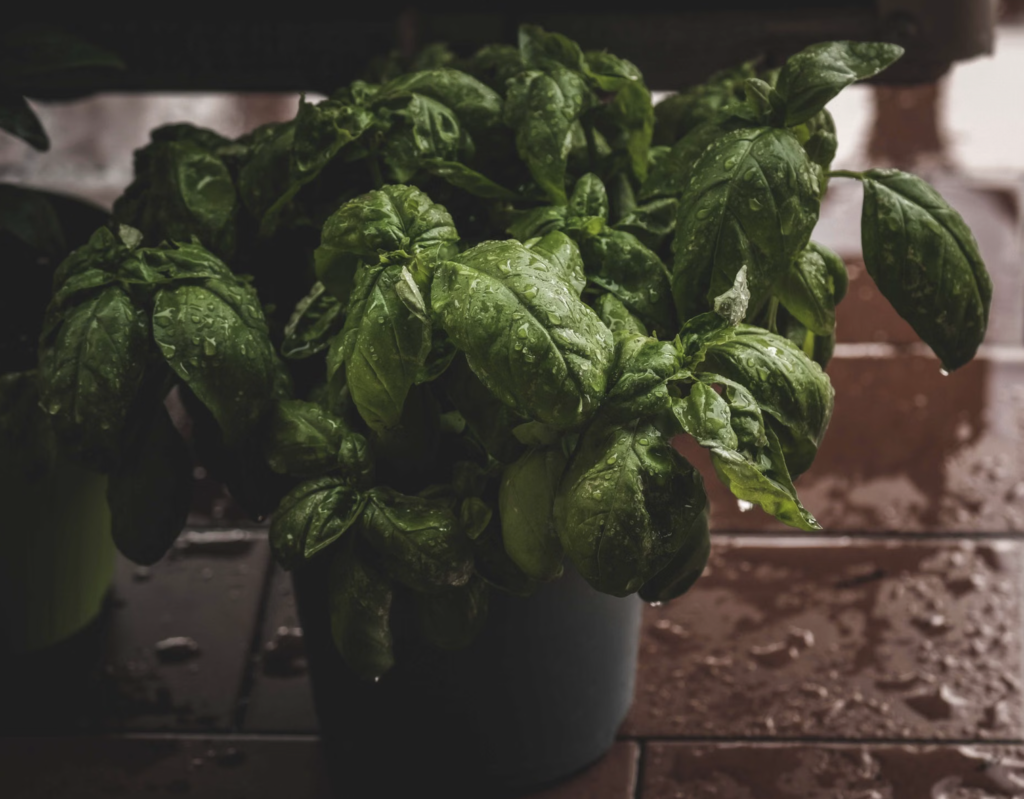
Watering, Warmth and Humidity
- Watering. Water when the top inch of soil feels dry, then water thoroughly until it drains. Always water at the base, not over the leaves, wet foliage invites fungal disease. Overwatering is the most common winter mistake: growth slows in low light, so the plant needs noticeably less than it did in summer.
- Warmth. Basil wants 70–80°F during the day and never below 50°F at night. Keep it away from heating vents, air-conditioning, and importantly cold windowpanes. Leaves touching winter glass get chilled and damaged. Pull the pot a few inches back from the glass; it costs you nothing and saves the plant.
- Humidity. Indoor heating creates desert-dry air, which basil dislikes. Set the pot on a tray of pebbles and water, group plants together, run a humidifier, or mist occasionally.
- Feeding. Go easy. Over-fertilizing produces spindly growth and noticeably less flavorful leaves a real trade-off for a herb you’re growing to eat. Use a diluted organic fertilizer at half strength, applied lightly but regularly rather than in big infrequent doses. Our guides to homemade organic fertilizer and NPK ratios can help.
Pruning: The Single Biggest Lever
Pruning is the one thing that separates a sad, leggy basil from a lush, bushy, productive one and most beginners do it backwards, picking random lower leaves.
Basil grows from the top. When you cut the main stem just above a leaf node (the point where two small leaves emerge), the plant responds by sending out two new side shoots from that node. Do it repeatedly and one stem becomes two, then four, then eight. You’re not taking from the plant, you’re multiplying it.
How to do it:
- Wait until the plant is 6 to 8 inches tall with several sets of leaves.
- Find a leaf pair partway down the stem and cut about ¼ to ½ inch above it, ideally at a 45° angle with clean scissors (fingers work, but can tear).
- Never remove more than a third of the plant at once, leave at least two-thirds intact.
- Repeat every 2 to 3 weeks on any stem over 6 inches.
- Prune in the morning, when the plant is well hydrated.
Pinch off flower buds the moment you see them. Once basil flowers, it redirects its energy into seed and the leaves turn tough and bitter. Deadheading buds keeps flavor sweet and delays the inevitable.
The Rotation System (The Real Secret to Year-Round Basil)
Here’s the honest part. Even with perfect care, basil stems eventually go woody and production slows. This is normal. It is not your fault. Most basil plants simply don’t last much beyond a year.
So stop trying to keep one plant alive forever, and run a rotation instead:
- Every couple of months, snip a healthy 4-inch cutting from a thriving plant, just below a node.
- Strip the lower leaves and stand the cutting in a glass of water on the windowsill.
- Roots appear in about 1 to 2 weeks.
- Pot it up once roots are an inch or two long.
- When the old plant tires, compost it, the new one is already producing.
Keep two or three plants at different ages and you’ll never be without basil. Many indoor growers also succession sow a few fresh seeds every few weeks for the same reason. This one habit, more than any other, is what “year-round basil” actually means. It also costs nothing, every future plant comes free from the one you already own.
In our experience, this is the mental shift that turns indoor herb growing from frustrating to effortless. People buy a basil plant in October, nurse it devotedly through a slow decline, and conclude they have a black thumb when it finally gives up in February. But that plant was always going to end, annuals do. The gardeners with basil on the counter every month of the year aren’t better at keeping plants alive; they simply always have a cutting rooting in a jam jar by the sink. It takes about ninety seconds every couple of months, and it quietly solves the entire problem.
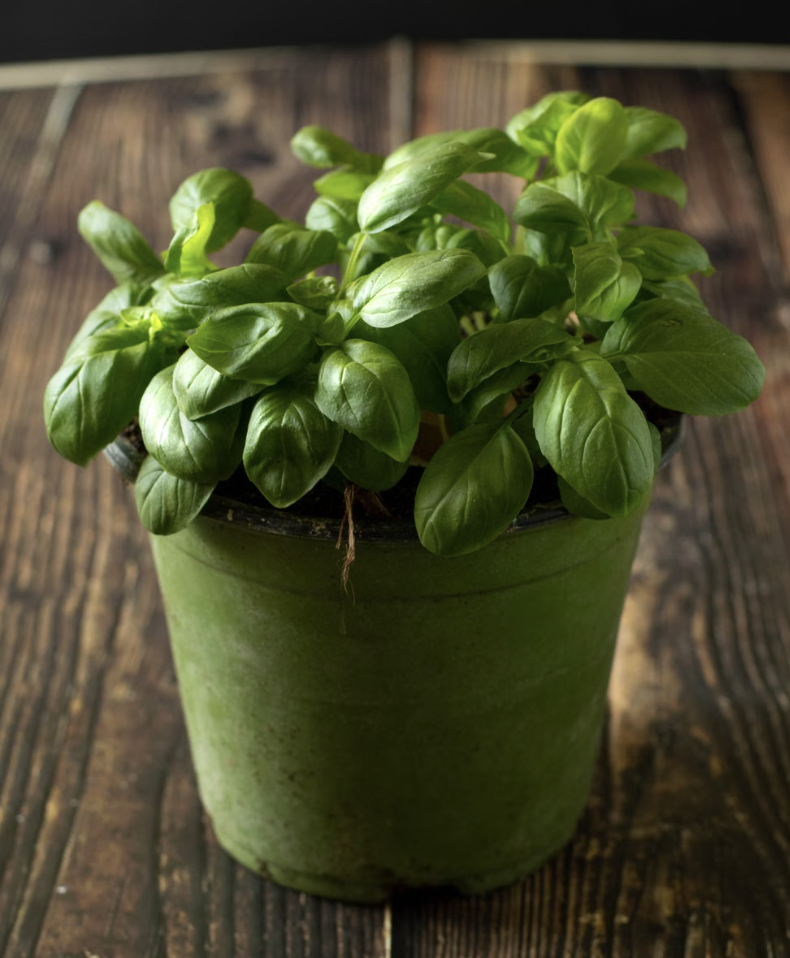
Harvesting
Start harvesting once a stem has six to eight leaves. Begin with small, light picks rather than one big haul.
Always harvest the way you prune: cut above a leaf node, take from the top, and leave at least two-thirds of the plant standing. Frequent harvesting genuinely helps basil every cut triggers new branching. The more you use it, the more you get.
For the kitchen, use basil fresh whenever possible; its aromatic oils fade fast with heat and time, so add it at the end of cooking. Surplus can be blitzed into pesto and frozen in ice-cube trays, or the leaves frozen whole in olive oil, a far better result than drying, which loses most of basil’s character.
Adjusting Through the Seasons
Indoor basil cares about the calendar more than most people expect, and a few small seasonal tweaks keep it thriving:
- Winter. Light drops dramatically and growth slows, this is where a grow light earns its keep. Water noticeably less, since the plant is using far less. Pull pots back from freezing glass, and keep them away from radiators, which create hot, bone-dry pockets of air. Don’t be alarmed if growth nearly stops in December and January; it will surge again as daylight returns.
- Spring and summer. Growth accelerates, so basil dries out faster, check the soil more often and water before the plant wilts rather than after. Resume light regular feeding. This is also the ideal time to take cuttings, since they root fastest in warmth and strong light. If you’d like, you can move pots outdoors once nights stay reliably above 50°F, hardening them off gradually, just watch for hitchhiking pests before bringing them back in.
Common Problems and How to Fix Them
| Problem | Likely Cause | The Fix |
|---|---|---|
| Tall, leggy, sparse growth | Not enough light | Move to a south window or add a grow light 6–12” above |
| Leaves turning bitter/tough | Plant is flowering | Pinch off flower buds immediately |
| Drooping plant | Under- or over-watering | Check soil; water when top inch is dry |
| Yellow lower leaves, mushy stems | Overwatering / root rot | Improve drainage; water less in winter |
| Growth stalled, roots at drain holes | Root-bound | Repot into the next size with fresh mix |
| Crispy leaf edges | Dry indoor air, or touching cold glass | Raise humidity; pull pot back from the window |
| Bland-tasting leaves | Too much fertilizer, or too little light | Feed at half strength; increase light |
| Store-bought pot collapsing | Overcrowded seedlings | Split the clump and repot separately |
| Tiny insects on new growth | Aphids, spider mites, whiteflies | Rinse; treat with insecticidal soap; check new plants before bringing indoors |
Fungal issues, downy mildew, root rot, and damping off are almost always a moisture and airflow problem. Water at the base, don’t crowd plants, and give them air movement.
Is Growing Basil Indoors Worth It?
Completely. A single pot on a windowsill pays for itself in a fortnight, gives you fresher and more aromatic leaves than anything sold in a shop, propagates itself for free forever, and perfumes your kitchen while it does it. Once you’ve got the rotation running, you’ll have basil in January without thinking about it and you’ll never buy another sad plastic packet again. It’s also the gateway herb: master basil’s rhythm of light, pruning, and cuttings, and almost every other indoor herb follows the same logic.
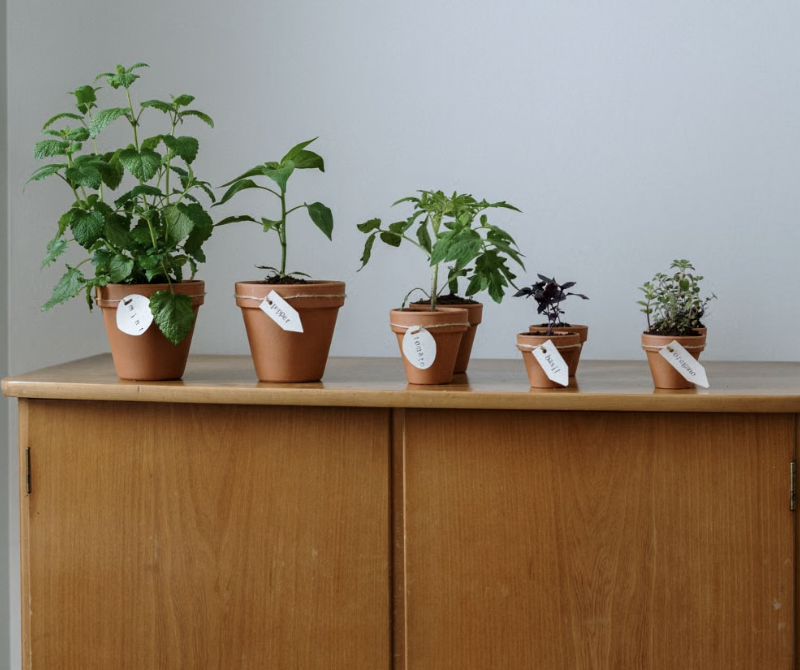
Ready to build out your indoor herb garden? Basil pairs beautifully with other easy herbs, try growing rosemary in pots, peppermint (and how to contain it), or chamomile for tea. It’s also the perfect anchor for a windowsill herb garden, and a classic companion for container tomatoes. Explore the full Medicinal Herbs collection, part of the broader EcoGardenHub Plant Library.
Grab a pot, some seeds or a supermarket clump, and your brightest window and start pinching. The more you cut, the more you’ll have. It really is that simple, and it really does work in the middle of winter.
Frequently Asked Questions
- How much light does basil need indoors? At least 6 to 8 hours of direct sunlight, ideally from a south-facing window or 12 to 14 hours under a grow light positioned 6 to 12 inches above the plant. Insufficient light is the number one cause of leggy, weak indoor basil.
- Why is my indoor basil leggy? Almost always low light. Basil stretches toward whatever light it can find, producing long stems with sparse leaves. Move it to a brighter window or add a grow light, and prune the tops to encourage bushier branching.
- How do you prune basil so it grows bushier? Cut the main stem about ¼ inch above a leaf node once the plant is 6 to 8 inches tall. Each cut prompts two new side shoots from that node. Repeat every 2 to 3 weeks, never removing more than a third of the plant.
- Can basil live indoors forever? No, basil is an annual and most plants don’t last much past a year before going woody and flowering. The trick is to root a fresh cutting in water every couple of months so a younger plant is always coming along behind.
- Should I let my basil flower? No. Pinch flower buds off as soon as they appear. Once basil flowers, it puts its energy into seed and the leaves turn tough and bitter. Deadheading keeps the flavor sweet and the plant productive.
- How often should I water indoor basil? Water when the top inch of soil feels dry, then water thoroughly until it drains. Always water at the base rather than over the leaves, and cut back in winter when slower growth means the plant needs less.
- Can I grow basil from a grocery store plant? Yes, and it’s a great value. Those pots contain many crowded seedlings, which is why they fail so fast. Tip it out, split the root ball into 4 to 6 clumps, and repot each separately, one pot becomes a whole windowsill.