


Introduction to the Seven-Spotted Lady Beetle
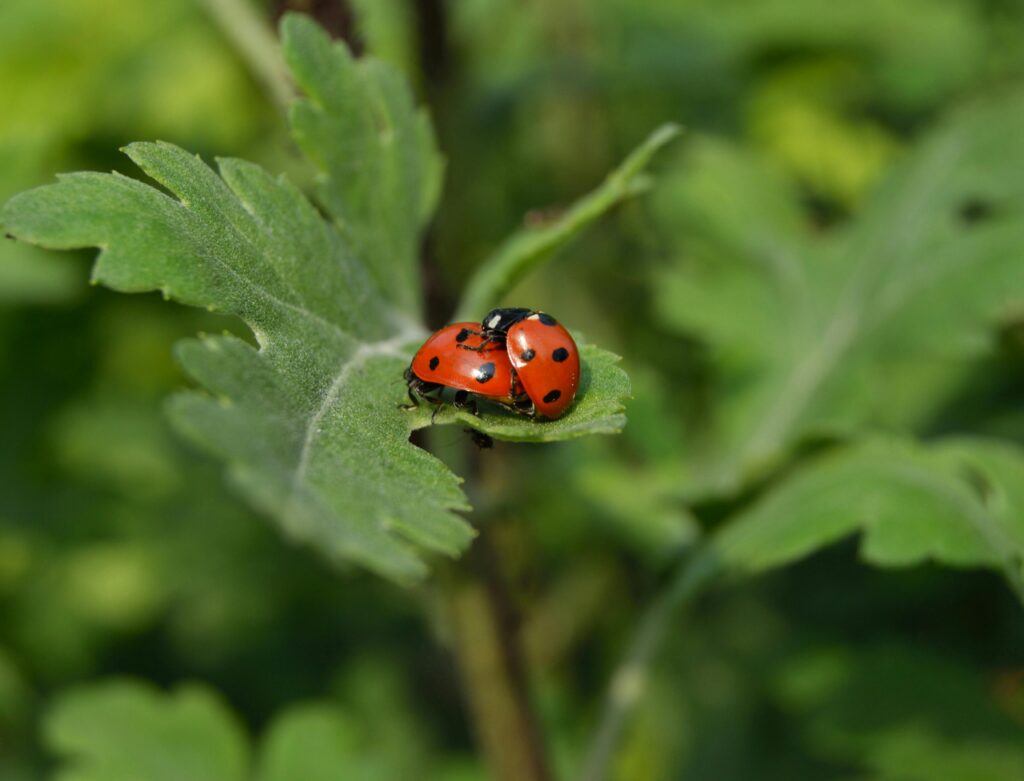
The Seven-Spotted Lady Beetle, scientifically known as Coccinella septempunctata, is a highly effective aphid predator. Also referred to as a ladybug, this generalist beetle plays a significant role in biological control. Originating in Europe, it is well-known for its distinctive seven black spots on a red-orange backdrop, serving crucial roles in garden ecology.
The Remarkable Role of Aphid Predators
Seven-spotted ladybugs are voracious aphid hunters, with both adults and larvae feeding on these common garden pests. Aphids can severely damage plants by sucking out nutrients, but ladybugs efficiently curb their populations. Besides aphids, these beneficial insects also target mites and other soft-bodied insects, making them key players in maintaining garden health.
Coccinella Septempunctata: A Versatile Generalist Beetle
As a generalist beetle, Coccinella septempunctata can adapt to various environments and prey upon a broad range of soft-bodied insects. This versatility enhances their effectiveness in integrated pest management plans. Unlike specialists, their varied diet ensures they remain useful even when specific prey is scarce, contributing to ecological balance and organic pest management.
7 Spotted Bug Life Cycle Insights: Egg, Larva, Pupa, Adult
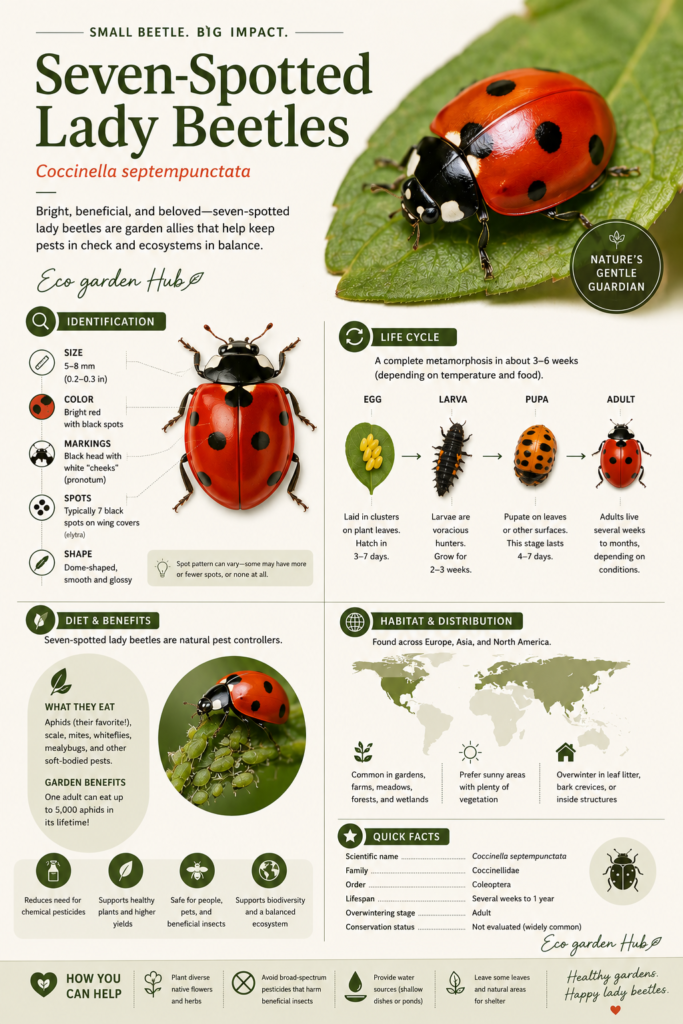
Understanding the lady beetle’s life cycle is crucial for effective garden integration. Each stage:egg, larva, pupa, and adult contributes uniquely to pest control. By optimizing habitats complementary to each life stage, gardeners can maximize these insects’ impact.
Egg Stage
Ladybugs begin their life cycle as eggs, often laid in clusters under leaves where aphid populations are present. Bright yellow eggs hatch within 3 to 7 days, and their strategic placement ensures the emerging larvae have immediate access to food sources. This thoughtful egg-laying process contributes significantly to their efficiency as biological control agents.
Larva Stage
The larval stage is the most voracious time for ladybugs, with larvae often resembling tiny alligators and covered in small spines. During this period, they consume hundreds of aphids, playing an extensive role in pest reduction. Gardeners often observe larvae actively roaming plant surfaces, targeting aphid-infested areas, and aiding pest management without chemicals.
Pupa Stage
Following the larval period, ladybugs enter the pupal stage, a transformative phase where they remain inactive while undergoing metamorphosis. Lasting around one week, the pupal stage represents a period of vulnerability. Adequate undisturbed habitats can ensure successful emergence into adulthood, thus sustaining their population and ecological roles.
Adult Stage
In their adult form, Seven-Spotted Lady Beetles can live up to a year, continuing their service as effective aphid predators. Adults are easily identified by their iconic red elytra and seven black spots, making them both an emblematic and practical addition to gardens. Their appetite for aphids and mites remains robust through adulthood, supporting garden vitality.
Ecological and Garden Benefits of Seven-Spotted Ladybug
Integrating C7 Beneficial Insects into gardens provides multiple benefits beyond aphid control. As beneficial insects, they contribute to the broader garden ecology by promoting biodiversity and reducing the need for chemical interventions. Encouragement of ladybugs not only enhances pest management but also fosters healthier, more resilient garden ecosystems.
License to Kill (Pests): Meet the Garden’s Top Predator.
In organic gardening, the presence of seven-spotted ladybugs offers a natural pest control method in lieu of synthetic pesticides. Their introduction and conservation are vital for achieving sustainable pest management. Through strategic planting and habitat creation, gardeners can enhance ladybug populations and effectiveness.
- Supporting Lady Beetle Populations in Gardens: To maximize the impact of ladybugs, it’s essential to support their presence with suitable habitats. Plant diversity, especially nectar and pollen sources like dandelions and fennel, attracts and sustains ladybug populations. Providing overwintering sites and reducing pesticide use can further bolster their garden presence.
-
The Gardener’s Best Friend: This beetle is a biological powerhouse. A single adult can devour up to 5,000 aphids in its lifetime, making it an essential ally for anyone looking to keep their plants healthy without relying on heavy chemicals.
-
The European Immigrant: Interestingly, despite being a state symbol for five American states, this species isn’t actually native to North America. It was introduced from Europe in the mid-20th century to help control agricultural pests—and it did its job so well it became a local legend.
-
Identifying the Legend: You can distinguish the C-7 from other lady beetles by its specific pattern: three spots on each wing cover and one “shared” spot right in the middle near the head.it’s worth the “Seven-spotted” variety and the “Asian Lady Beetle.” While the Seven-spotted is a welcome guest, the Asian variety often aggregates in homes during the winter, which can be a nuisance for homeowners!
- Challenges and Considerations in Utilizing Lady Beetle : While seven-spotted lady beetles are generally beneficial, there are challenges in maintaining their populations. Fluctuations in prey availability and habitat conditions can affect ladybug numbers. Additionally, competition and predatory risks must be managed for optimal biological control success.
Some FAQs about the Coccinella septempunctata
1. What is the Seven-spotted Lady Bug and why is it important for my garden?
The Seven-spotted Lady Beetle (often called the C-7) is a highly efficient biological control agent within the Coccinellidae family. It is vital for organic gardening because it acts as a natural predator of soft-bodied agricultural pests. By integrating these beetles into your Integrated Pest Management (IPM) strategy, you can significantly reduce the need for synthetic chemical insecticides.
2. How can I identify a 7 Spotted Bug Life Cycle versus an Asian Lady Beetle?
Identification is key for pest management. The Seven-spotted Lady Beetle is distinctively red with exactly seven black spots (three on each wing cover and one “shared” spot near the head). Unlike the Multicolored Asian Lady Beetle (Harmonia axyridis), the C-7 has two white spots on its black pronotum (the plate behind the head) and lacks the dark “M” or “W” shape common to the Asian variety (Gardiner, n.d.).
3. What do Seven-spotted Lady Beetles eat?
Both adults and larvae are voracious predators. Their primary diet consists of aphids, but they also consume mealybugs, scale insects, mites, and the eggs of various moths and beetles (Cunningham, 2007). This wide range of prey makes them one of the most effective natural enemies in a backyard ecosystem.
4. How many aphids can a single lady beetle consume?
A single adult Seven-spotted Lady Beetle is a powerhouse of aphid management, capable of devouring up to 5,000 aphids in its lifetime (Crowley, 2021). Even more impressive, the larval stage (often called “aphid alligators”) can eat hundreds of aphids before reaching adulthood, making them a critical component of sustainable pest control.
5. What does the Seven-spotted Lady Beetle larva look like?
Gardeners often mistake the larvae for pests and accidentally remove them. The C-7 larva is elongated, dark grey or black, and covered in soft spines with bright orange or yellow markings (Cunningham, 2007). Its “alligator-like” appearance is a sign of a healthy, self-regulating garden.
6. How can I attract Seven-spotted Lady Beetles to my garden naturally?
To attract these beneficial insects, you should create a “refuge” by planting insectary plants that provide nectar and pollen. Native flowering plants such as buckwheat, dill, coriander, and sweet alyssum are highly attractive to them (Fiedler, n.d.). Additionally, avoid using broad-spectrum pesticides, which kill beneficial predators along with the pests.
7. Should I buy and release Seven-spotted Lady Beetles in my yard?
Generally, professional entomologists do not recommend purchasing lady beetles for outdoor release. Most commercially sold beetles are harvested from the wild and have a biological instinct to fly away immediately upon release (Cunningham, 2007). It is more effective to conserve natural enemies already present by providing a diverse habitat and high-quality food sources.
8. Do 7 spotted Lady Beetles bite or invade houses in the winter?
Unlike the Asian Lady Beetle, the Seven-spotted variety does not typically congregate in large numbers inside homes during the winter. While they are capable of a “pinch” if handled roughly, they are not considered a household nuisance. They prefer to overwinter outdoors in leaf litter, dead plant material, or under tree bark (Crowley, 2021).
9. What is the life cycle of the Seven-spotted Lady Beetle?
The life cycle consists of four stages: egg, larva, pupa, and adult. Females lay clusters of bright yellow, football-shaped eggs near aphid colonies (Know, n.d.). The larvae go through four growth stages (instars) before attaching themselves to a leaf to pupate. The entire process from egg to adult usually takes about three to four weeks depending on the temperature.
10. How can I protect lady beetles during the winter months?
To support the overwintering population, avoid “cleaning” your garden too thoroughly in the fall. Leaving some leaf litter, hollow stems, and mulch provides the necessary insulation for adults to survive the cold (Crowley, 2021). These “hibernating” beetles will be the first line of defense in your garden when aphid populations surge in the spring.
References
-
Crowley, L. (2021). The genome sequence of the seven-spotted ladybird, Coccinella septempunctata Linnaeus, 1758. Wellcome Open Research, 6, 319. https://doi.org/10.12688/wellcomeopenres.17346.1
-
Cited by: 21
-
-
Cunningham, A. P. (2007). Lady Beetles of Nebraska. Extension Publications at DigitalCommons@University of Nebraska – Lincoln.
-
Cited by: 2
-
-
Fiedler, A. (n.d.). Attracting Beneficial Insects with Native Flowering Plants. MSU College of Agriculture and Natural Resources.
-
Cited by: 20
-
-
Gardiner, M. M. (n.d.). Natural Enemy Field Guide. Michigan State University Extension.
-
Cited by: 3
-
-
Know, W. Y. S. (n.d.). Aphid Natural Enemies and Biological Control. DigitalCommons@USU – Utah State University.
-
Cited by: 8
-
Conclusion: Championing the Seven-Spotted Lady Beetle
The Coccinella septempunctata serves as a powerful ally in aphid management, embodying the essence of natural pest control. By understanding and supporting their life cycle, garden enthusiasts can leverage their ecological services. In creating ladybug-friendly environments, gardeners not only manage pests organically but also enrich their garden’s ecological framework, ensuring sustainable growth and resilience.