


Key Takeaways for 2026 Battery Recycling:
-
- Tape battery terminals before disposal to prevent short circuits
-
- Separate batteries by chemistry type (alkaline, Li-ion, lead-acid)
-
- Use Call2Recycle or Earth911 to find local drop-off points
-
- Never put batteries in curbside recycling bins
-
- Store used batteries in a cool, dry place away from metal objects
-
- Check state regulations, as 22 states now have battery disposal laws
The USA recycling industry recovered over 100,000 metric tons of battery materials in 2025. With new facilities from Redwood Materials, Li-Cycle, and Ascend Elements coming online, recycling capacity will double by 2027. Proper battery disposal in 2026 directly supports the circular economy and reduces demand for virgin mining.
Safely Recycling Household and Tech Batteries
Battery recycling in 2026 involves sorting batteries by chemistry type, preparing them safely for transport, and delivering them to certified collection points or mail-in programs. The process keeps toxic metals like lead, cadmium, and cobalt out of landfills while recovering valuable materials for new products.
There are 3 main benefits of recycling batteries in 2026: preventing hazardous waste from contaminating soil and water, recovering critical minerals for domestic supply chains, and reducing the need for new mining operations. The United States generates over 3 billion used batteries annually, yet only about 15% get recycled through proper channels.
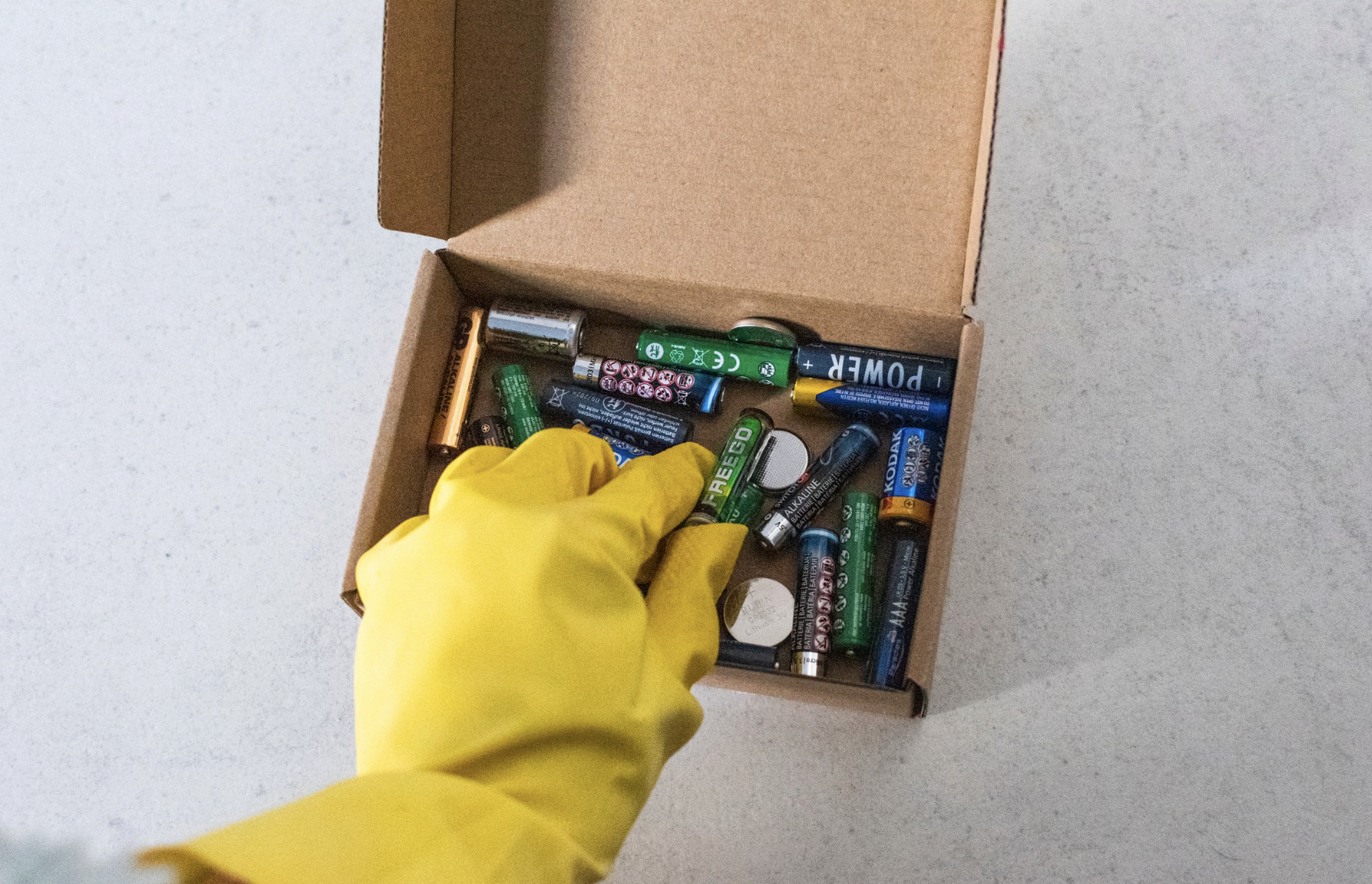
Battery recycling applies to 3 primary use cases: household battery disposal for consumers, corporate compliance programs for businesses, and end-of-life management for electric vehicle (EV) fleets. Each use case requires different handling protocols and collection methods.
The battery recycling system has 4 main components: collection infrastructure (drop-off bins and mail-in containers), sorting facilities that separate batteries by chemistry, processing plants that extract materials through hydrometallurgical or pyrometallurgical recycling, and material recovery operations that produce black mass for new battery manufacturing.
How to Recycle Batteries
To recycle batteries in 2026, identify the battery type first, then follow the specific disposal method for that chemistry. Each battery type requires different handling due to varying material compositions and hazard levels.
Non-Rechargeable / Single Use
Standard alkaline batteries (AAA, AA, C, D, 9-volt) manufactured after 1996 contain no mercury and can go in household trash in most states, but recycling is the better option. Call2Recycle reports that over 40 states now have laws restricting alkaline battery disposal in landfills. Tape the terminals with clear packing tape to prevent sparking, then place them in a sealed plastic bag. Drop them at The Home Depot, Lowe’s, or local municipal collection centers.
Lithium primary batteries (CR123A, CR2032, lithium button cells) require special handling. These contain lithium metal that can cause fires if damaged. Tape both terminals completely with non-conductive tape. Store them in a fireproof container away from flammable materials. Take them to household hazardous waste facilities or use Earth911’s recycling locator to find drop-off points.
Zinc-air batteries (hearing aid batteries) are small but contain valuable materials. Place tape over the air holes and positive terminal. Drop them at participating audiologists or mail them through TerraCycle’s hearing aid battery recycling program. These batteries contain silver and zinc that recovery facilities can extract.
Rechargeable Batteries
Lithium-ion battery recycling (Li-ion) requires immediate attention in 2026. These batteries power smartphones, laptops, power tools, and electric scooters. They pose fire risks if damaged or improperly stored. Tape the terminals, place each battery in a separate plastic bag, and store them at room temperature away from heat sources. Take them to Call2Recycle drop-off points at Staples, Best Buy, or Lowes. Redwood Materials and Li-Cycle operate processing facilities that recover up to 95% of cobalt, nickel, and lithium from Li-ion batteries.
Nickel-metal hydride (NiMH) and nickel-cadmium (NiCd) batteries need separate handling. NiCd batteries contain cadmium, a toxic heavy metal regulated under Universal Waste Regulations. Tape terminals and drop them at Battery Solutions collection points or participate in manufacturer take-back programs. NiMH batteries are less hazardous but still contain valuable nickel that recycling centers recover.
Sealed lead-acid (SLA) batteries (UPS backups, emergency lighting) follow vehicle battery protocols. Take them to Interstate Batteries locations or auto parts stores. These batteries have a 99% recycling rate in the United States, the highest of any consumer product.
Vehicle Batteries
Lead-acid car batteries are the most recycled product in America. Return them to any auto parts store (AutoZone, Advance Auto Parts) when purchasing a replacement. Retailers accept them for free under Battery Council International guidelines. The lead and plastic casings get 100% recycled into new batteries.
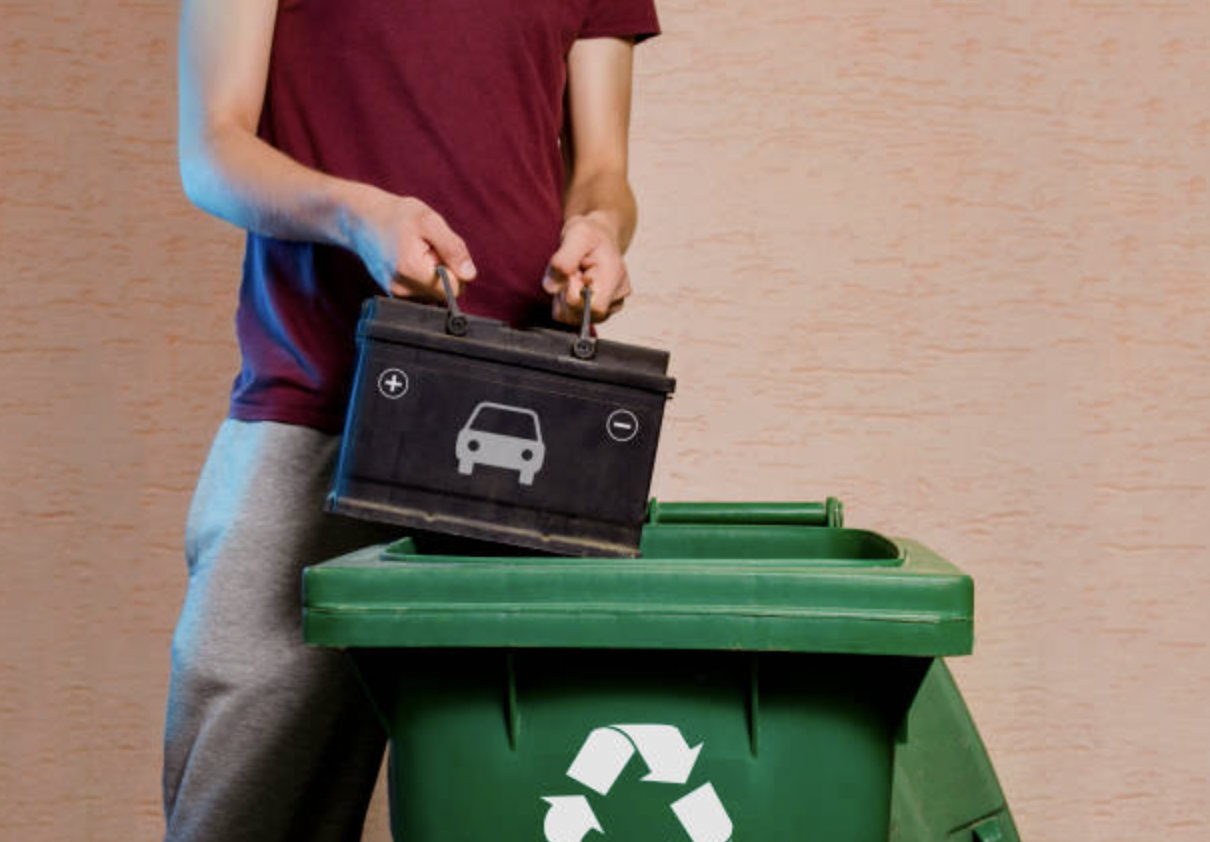
EV battery recycling in 2026 uses advanced recovery methods. Lithium-ion battery packs from electric vehicles contain up to 8 kg (18 lbs) of lithium, 35 kg (77 lbs) of nickel, and 12 kg (26 lbs) of cobalt. Take them to certified EV battery recycling centers operated by Cirba Solutions or American Battery Technology Company. These facilities use direct cathode recycling to preserve the battery’s crystal structure, reducing energy consumption by 40% compared to traditional methods.
Second-life batteries extend EV battery life before recycling. Battery management systems (BMS) assess remaining capacity. Batteries with 70-80% capacity get repurposed for stationary energy storage. Ascend Elements processes end-of-life EV batteries using hydrometallurgical recycling to produce new cathode materials.
Where to Recycle Batteries
- The Home Depot and Lowe’s accept rechargeable batteries and cell phones at their front-of-store collection bins. These retailers participate in Call2Recycle’s national program. They do not accept alkaline batteries or large industrial batteries.
- Best Buy accepts all rechargeable batteries up to 11 lbs (5 kg) per day. They also accept alkaline batteries in states with disposal restrictions. Check the store’s recycling kiosk near the entrance.
- Waste Management Inc. offers curbside battery recycling in select cities. Residents place batteries in special bags or containers provided by the municipality. Check local waste district websites for availability.
- Earth911’s recycling locator provides the most comprehensive directory. Enter your ZIP code and battery type to find nearby drop-off locations. The database includes municipal collection events, retail partners, and mail-in options.
- Mail-in programs work for households without local drop-off options. Big Green Box sells containers starting at $55 for a 5-gallon (19-liter) box. Battery Solutions offers pre-paid shipping labels for $25 per 5 lb (2.3 kg) box. Call2Recycle provides free shipping for businesses through their corporate compliance kits.
- Hazardous waste facilities accept all battery types. Search for “household hazardous waste collection” in your county. These facilities follow EPA battery recycling guidelines and accept batteries free of charge.
Some Battery Recycling FAQs: From Household AAs to EVs
1. Why is it so important to recycle batteries instead of throwing them away? Batteries contain heavy metals and toxic chemicals (like lead, cadmium, and lithium) that can leach into soil and water supplies if left in landfills. Furthermore, recycling recovers rare, highly valuable materials (like cobalt and nickel), reducing the need for destructive and carbon-intensive mining operations.
2. Can I still throw regular AA and AAA alkaline batteries in the trash? In many regions, it is legally permissible to throw standard, single-use alkaline batteries in the normal trash because they no longer contain mercury. However, it is highly discouraged. Even alkaline batteries contain steel, zinc, and manganese that can be recovered and reused if taken to a dedicated recycling drop-off.
3. How should I safely store old batteries before recycling them? Safety is critical, especially with lithium batteries, which can cause fires if they short-circuit. Store old batteries in a cool, dry place inside a non-conductive container (like a plastic or cardboard box). To prevent short-circuiting, place a small piece of clear tape over the positive and negative terminals, or store each battery in its own small plastic bag.
4. Where can I drop off rechargeable household batteries (phones, laptops, power tools)? You should never put rechargeable lithium-ion batteries in your standard recycling bin, as they are a major fire hazard at standard sorting facilities. Instead, take them to dedicated e-waste centers, municipal hazardous waste drop-off events, or retail stores that partner with battery recycling networks (such as major hardware or electronics stores).
5. What happens to my smartphone and laptop batteries when they get recycled? Once collected, these lithium-ion batteries are sorted and discharged safely. They are then usually shredded into a mixture known as “black mass.” Recyclers use advanced chemical processes (hydrometallurgy) or heat (pyrometalurgy) to extract the valuable lithium, cobalt, copper, and nickel from this mass so it can be sold back to manufacturers.
6. What happens to Electric Vehicle (EV) batteries when they no longer hold a good charge? When an EV battery degrades to about 70-80% capacity, it is no longer ideal for driving, but it still holds a massive amount of energy. Before being completely broken down, they are often evaluated for “second-life” applications, such as stationary energy storage for solar panels or grid stabilization.
7. How are EV batteries actually recycled once they reach the end of their life? If an EV battery cannot be reused, it is sent to a specialized recycling facility. By 2026, many facilities use automated robots to safely dismantle the massive battery packs. The individual cells are then crushed and processed to reclaim up to 95% of the critical metals, which are then used to manufacture brand new EV batteries in a closed-loop system.
8. What are the most valuable materials recovered during battery recycling? The most sought-after materials are cobalt, lithium, nickel, and copper. Because global demand for these metals has skyrocketed due to the EV boom, recovering them from old batteries is both environmentally crucial and highly profitable.
9. Are there new recycling technologies improving this process in 2026? Yes. “Direct recycling” is becoming more common. Instead of shredding and melting the battery down to its base elements, direct recycling carefully removes the cathode material intact so it can be refreshed and reused with far less energy and waste. Hydrometallurgical (water and chemical-based) extraction has also become much cleaner and more efficient than traditional smelting.
10. How can I find the exact rules and drop-off locations for my specific area? Because regulations vary heavily by city and state/province, the best method is to check your local municipal waste management website. You can also use online locator tools like Call2Recycle or Earth911 to find the nearest drop-off bins for specific battery types.