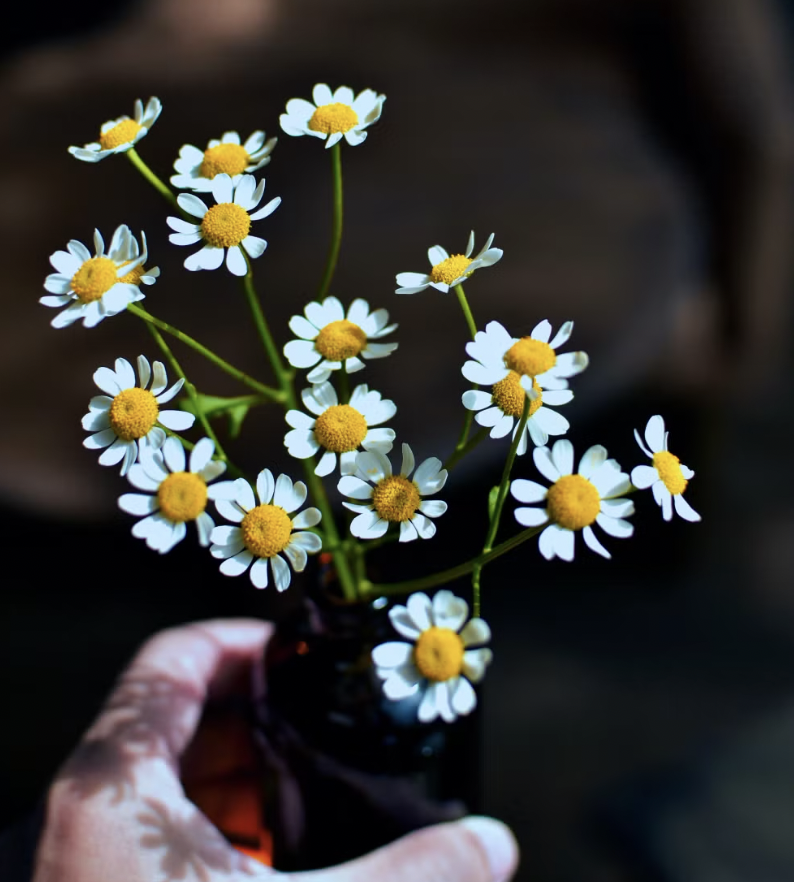
There’s a particular pleasure in walking out on a summer morning, pinching a handful of tiny white daisies off a plant you grew, and turning them into a cup of tea that evening. Chamomile has been soothing people since ancient Egypt, and it remains one of the most popular herbal teas on earth. Yet it’s so easy to grow that it will happily seed itself around your garden forever after one planting.
But here’s the thing most guides skip, and it’s why some people try homegrown chamomile once and never again: their tea comes out bitter. Learning how to grow chamomile is genuinely simple. Learning to grow chamomile for good tea comes down to three specific decisions, which species you plant, exactly when you pick, and how you brew. Get those right and you’ll have a year’s supply of the sweet, apple-scented cup you were hoping for.
How Do You Grow Chamomile for Tea?
Grow German chamomile for tea. Surface-sow the seeds (they need light to germinate) in full sun and well-drained soil, spacing plants 8 to 10 inches apart. Harvest only the flower heads, never the stems or leaves, which turn tea bitter, in the morning once the petals lie flat. Pick constantly to keep more flowers coming, then dry them in a single layer somewhere dark and airy for 1 to 2 weeks.
Two things separate lovely chamomile tea from a disappointing one: using only the flowers, and not over-steeping. Both are easy once you know.
German vs Roman: The Decision That Matters Most
“Chamomile” refers to several plants, and for tea the distinction genuinely matters. The two you’ll encounter:
| German Chamomile (Matricaria chamomilla) | Roman Chamomile (Chamaemelum nobile) | |
|---|---|---|
| Life cycle | Annual (but self-sows freely) | Perennial, zones 4–9 |
| Size | 2–3 ft tall, narrow and spindly | 3–12 in tall, sprawls 12+ in wide |
| Habit | Upright; may flop and need support | Low, dense groundcover |
| Soil preference | Well-drained, sandy | Lighter, compost-rich, evenly moist |
| For tea | The one you want — highest levels of aromatic compounds; the species used in commercial tea | Usable, and often described as sweeter and more apple-scented |
| Best use | Tea, drying, medicinal preparations | Fragrant lawns, paths, groundcover |
The short answer: plant German chamomile for tea. It’s what’s in the box you buy at the shop, it carries the highest concentration of the aromatic compounds chamomile is prized for, and it produces flowers prolifically all summer.
That said, opinions genuinely differ on flavor, some growers find Roman chamomile sweeter, others find it more bitter than German. If you have room, grow both: German in a bed for your tea harvest, Roman between stepping stones where it releases its apple scent every time you walk on it. There’s also Dyer’s chamomile (Golden Marguerite), a hardy perennial grown for its yellow natural dye rather than tea.
An Honest Word on Quantity
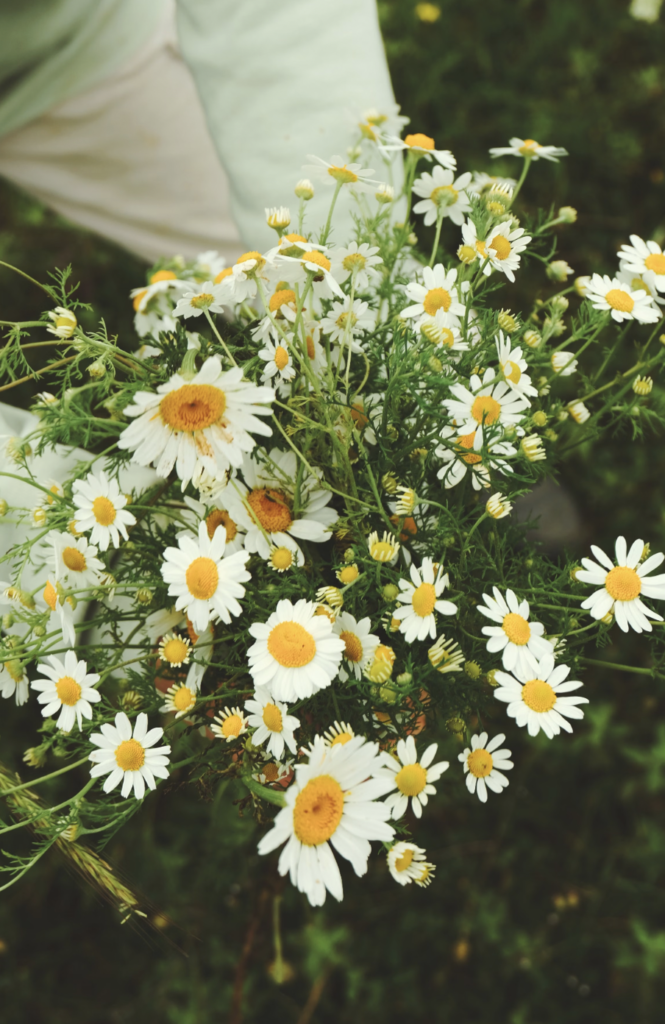
Before you plant, set your expectations, because most articles don’t. Chamomile flowers are tiny and they shrink dramatically when dried. It takes a surprising quantity of dried blossoms to fill a single teapot, and considerably more for salves or infused oils. This is exactly why chamomile products cost what they do.
A few plants will keep a casual drinker in fresh cups through the summer. But if you want to dry and store enough for the whole year, plan on something closer to 40 plants. That sounds like a lot until you realize German chamomile is essentially a wildflower, scatter it in a spare bed and let it self-sow, and you’ll have that patch by year two without lifting a finger.
How to Grow Chamomile: Step-by-Step
- Step 1: Start Seeds Indoors (or Direct Sow)
Chamomile seedlings grow slowly, so most gardeners get better results starting indoors 4 to 8 weeks before the last frost. You can also direct sow outdoors after all frost danger has passed, it’s just a later harvest.
- Step 2: Surface-Sow: Seeds Need Light
Here’s the detail that sinks beginners: chamomile seeds need light to germinate. Don’t bury them. Press them onto the surface or cover with the barest dusting, about 1/16 inch. Keep them consistently moist. At around 74°F they’ll sprout in 7 to 10 days.
Be aware that seed-starting success is naturally modest, germination rates run roughly 40–60% even in good conditions, so sow more generously than you think you need. Our seed starting guide covers the fundamentals.
- Step 3: Harden Off and Transplant
Once seedlings have at least two sets of true leaves and the weather is warm, harden them off over about a week and transplant after your last frost. Check your frost dates for timing.
- Step 4: Plant in Sun, With the Right Soil
Chamomile prefers full sun but tolerates partial shade, a genuine bonus in hot climates, where afternoon shade is welcome. Space plants 8 to 10 inches apart.
Match the soil to your species: German chamomile wants well-drained, sandy soil (if your ground is heavy or damp, plant it in a raised bed), while Roman chamomile prefers lighter, compost-rich, evenly moist soil.
- Step 5: Water Steadily, Feed Lightly
Give about an inch of water a week, keeping soil evenly moist but never soggy. Water well after transplanting until plants establish. Feeding is barely necessary, a side-dressing of aged compost or a dilute fish emulsion is plenty. Like most herbs, chamomile grown too rich produces lush foliage at the expense of concentrated aromatic oils.
When to Harvest Chamomile (Timing Is Flavor)
This is where good tea is made or lost.
What to pick: only the flower heads. This is the single most important rule for tea. The green stems and leaves are what make chamomile tea bitter, leave them on the plant. Pinch or snip each flower off right below the base of the head. Don’t tug, or you’ll uproot the plant.
When they’re ready: harvest when the flowers are at full bloom, with the white petals lying flat or just as they begin to tilt back from the yellow center. Another reliable cue: about two-thirds of the tiny yellow tubular florets in the center have opened. That’s when essential oil content peaks. It takes roughly three to five days from bud-opening to reach that stage.
A flavor note: if you find your tea too strong or bitter, try harvesting slightly younger blooms, just as they open older flowers turn more bitter as they age.
What time of day: the reliable window is late morning, once the dew has dried but before the day’s heat. (Some growers prefer midday on a sunny day, when the flowers are most fully open.) Either way, harvest dry never pick wet plants, since excess moisture spoils a drying harvest.
Handle gently. Chamomile’s valuable compounds degrade with rough handling, and you should never wash the flowers. Pick carefully, bring them straight inside, and dry them right away.
Pick Constantly: It’s How You Get More
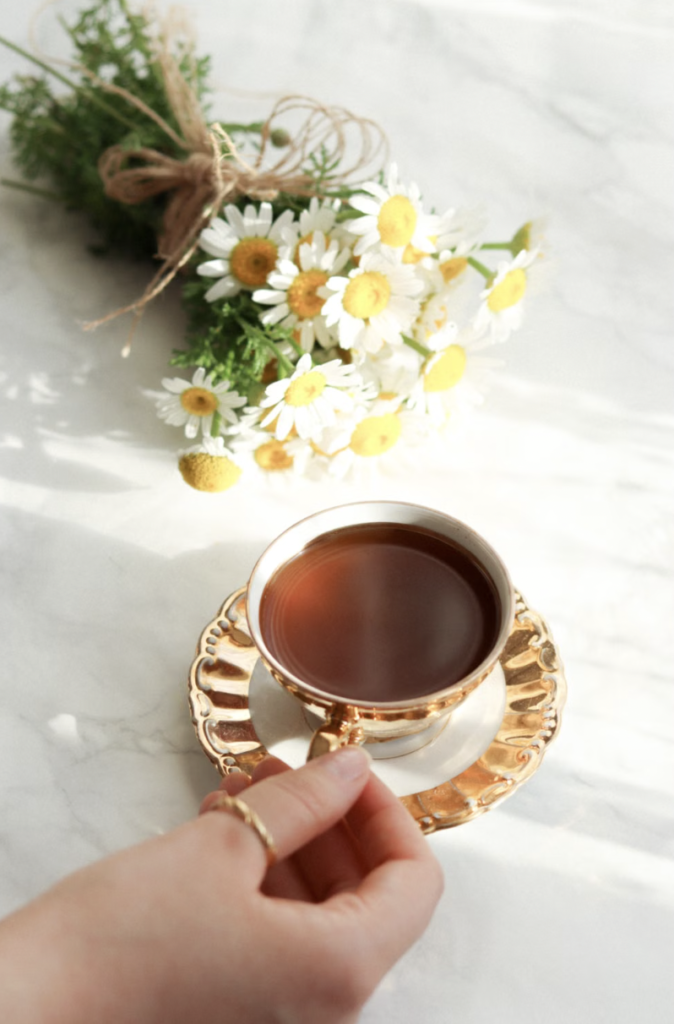
Here’s the loveliest quirk of growing chamomile: the more you pick, the more you get. Harvesting signals the plant to keep producing new blossoms. Conversely, if you stop picking and the flowers go to seed, the plant reads its job as done and stops flowering.
So from mid-summer onward, make it a habit. Daily or weekly harvests are entirely realistic with German chamomile, and picking a few blossoms while you drink your morning coffee is one of the pleasanter gardening chores there is. Flowering runs roughly June through September.
If you do let some flowers go to seed at season’s end, you’ll be rewarded differently: German chamomile self-sows enthusiastically, and volunteers will pop up all over your garden next spring.
In our experience, the gardeners who end up with jars of beautiful chamomile aren’t the ones who plan a big harvest day, they’re the ones who make it a two-minute daily ritual. A bowl by the back door, a wander down the bed after breakfast, thirty seconds of pinching, and back inside to spread the flowers on a tray. Do that from July to September and the jars fill themselves almost without your noticing. Wait for a “proper” harvest session instead, and you’ll find half your flowers have already gone over to seed and the plant will have quietly stopped making more.
How to Dry Chamomile
Drying preserves your harvest for the whole year, and the principles are simple: gentle heat and good airflow, away from light.
Air drying (best flavor): 1. Spread the flowers in a single layer, with no bloom touching another, on a plate, tray, screen, or drying rack. 2. Place somewhere dry, dark, and airy a cupboard, spare room, or shaded porch, at roughly 70–80°F. 3. Wait 1 to 2 weeks, depending on humidity. 4. They’re done when a flower crumbles easily between your fingers.
Dehydrator (faster): lay flowers in a single layer and run at the lowest setting 95°F or less, for 1 to 4 hours, checking every 30 minutes. Heat is the enemy of flavor: too much drives off the essential oils that make chamomile worth growing.
Storing: once fully dry and cooled, store in an airtight glass jar away from heat and sunlight. Properly dried and stored, your harvest will last until next year’s. You can also freeze chamomile, it’s quicker and keeps for about six months, though frozen flowers are less suited to tea.
Brewing Tea That Isn’t Bitter
This is the section most guides never write, and it’s the fix for the most common complaint about homegrown chamomile.
The ratios: – Dried: 1 to 2 teaspoons per cup of water (some prefer up to 3). – Fresh: roughly double the dried amount — 2 to 4 teaspoons per cup, since fresh flowers are less concentrated.
The method: pour just-boiled water over the flowers in an infuser or tea ball and steep for 3 to 5 minutes.
The four fixes for bitter tea:
- Use only flowers — no stems, no leaves. This is the big one.
- Don’t over-steep. Chamomile turns bitter with long steeping. Five minutes is the ceiling; three is often better.
- Dry with no or low heat. Excess heat during drying degrades the flavor.
- Harvest younger blooms, just as the petals open flat, rather than older ones.
Some drinkers also prefer slightly cooler water rather than a rolling boil. Add a sprig of mint or a spoonful of honey if you like, but a good chamomile, well grown and gently dried, tastes sweetly of apples all on its own.
Beyond Tea: Other Uses
The Chamomile Tea earns its place in a medicinal herb garden many times over:
- A calming soak. Tie a handful of flowers in muslin or cheesecloth and drop it into a warm bath with Epsom salts, lovely after a day in the garden.
- Infused oils and salves. Steep dried flowers in a carrier oil like jojoba to make soothing face oils and balms for dry skin.
- A hair rinse. Rinsing with cooled chamomile tea is a traditional way to bring out light highlights.
- A natural garden fungicide. A genuinely useful trick: chamomile’s sulfur content makes it a mild fungicide. Steep ½ cup of flowers in 2 cups of boiling water, let it cool completely, strain, and spray on seedlings and soil to help suppress damping-off and other fungal issues.
- In the kitchen. Scatter the flowers over fruit salads or use them to decorate cakes.
A responsible note: chamomile is a member of the daisy family (Asteraceae), so people with allergies to ragweed, daisies, or related plants may react to it. It’s also traditionally used to promote sleep, pleasant in the evening, less so before driving. If you take medication or are pregnant, check with a healthcare professional before using any herb medicinally. Nothing here is medical advice.

Chamomile as a Companion Plant
Chamomile pulls its weight even when you’re not harvesting it:
- It repels cabbage moths, making it an outstanding companion for brassicas, plant it among your kale, cabbage, broccoli, and cauliflower.
- It attracts beneficial insects — hoverflies, ladybugs, tachinid flies, and predatory wasps — which then hunt aphids and cabbage worms for you. See our guide to beneficial insects every gardener should know.
- It feeds pollinators. Bees and butterflies adore it; a Roman chamomile lawn is a small pollinator haven. See designing a pollinator garden.
- It’s said to improve the growth and flavor of cucumbers, onions, and aromatic herbs, and it grows happily alongside lavender and rosemary.
- It suppresses weeds when planted densely between crops.
Our companion planting guide has more pairings.
Growing Chamomile in Containers
Chamomile takes to pots readily, which makes it a fine option for patios and balconies. Roman chamomile is the more natural container plant. It’s low, spreading habit spills attractively over the rim of a pot, and brushing past releases that apple scent. German chamomile works too, though its tall, spindly stems may flop, so choose a deeper pot for stability and expect to give it a little support.
Use a container at least 8 to 12 inches deep with good drainage, fill it with a free-draining mix, and set it in full sun. Water when the top inch dries, chamomile likes even moisture but resents sitting wet. A pot of chamomile beside a seating area is a lovely thing: fragrant, alive with bees, and close enough to pinch a few blossoms into your cup on the way past. Our container gardening guide for beginners covers pot selection, and chamomile is a natural addition to a windowsill herb garden if you have a genuinely bright spot.
Common Problems and How to Fix Them
| Problem | Likely Cause | The Fix |
|---|---|---|
| Tea tastes bitter | Stems/leaves included; over-steeped; old blooms | Use flowers only; steep 3–5 min max; pick younger blooms |
| Plant stopped flowering | Flowers were left to go to seed | Keep picking — harvesting drives more blooms |
| Seeds never germinated | Sown too deep — they need light | Surface-sow, barely covered, at ~74°F |
| German chamomile flopping over | Naturally tall, narrow, and spindly | Provide light support or grow in a sheltered spot |
| Dried flowers lost their scent | Dried with too much heat | Air-dry or use a dehydrator at 95°F or less |
| Mouldy dried flowers | Not fully dry, or stored warm/damp | Dry until they crumble; store in airtight glass, cool and dark |
| Rotting plants | Soggy soil, especially German chamomile | Improve drainage; plant German chamomile in a raised bed |
| Chamomile everywhere next spring | It self-sowed (this is normal!) | Enjoy it, or deadhead before seed set |
Is Growing Chamomile Worth It?
Wholeheartedly. If you drink herbal tea, chamomile is one of the easiest wins in the garden: it grows like the wildflower it essentially is, seeds itself for free forever, feeds pollinators, protects your cabbages, and hands you an endless supply of the world’s most soothing cup for the price of one seed packet, once. You’ll also know exactly how it was grown, harvested, and dried, which is more than any box on a shelf can offer.
Ready to build out your tea and herb garden? Chamomile pairs beautifully with other easy herbs, try growing peppermint (and keeping it contained) for the classic tea partner, plus lavender for beginners, echinacea, rosemary in pots, or basil indoors. Explore the full Medicinal Herbs collection, part of the broader EcoGardenHub Plant Library.
Scatter a pinch of German chamomile seed on a sunny patch this spring, pick the flowers all summer, and by winter you’ll be drinking your own garden, one calm cup at a time.
Frequently Asked Questions
- Which chamomile is best for tea, German or Roman? German chamomile (Matricaria chamomilla) is the standard choice, it’s the species used in commercial teas and carries the highest concentration of aromatic compounds. Roman chamomile can be used too and is often described as sweeter, but it’s a low groundcover better suited to fragrant lawns and paths.
- Why is my homemade chamomile tea bitter? Usually because stems and leaves were included, or the tea was over-steeped. Harvest only the flower heads, steep for just 3 to 5 minutes, dry the flowers with little or no heat, and pick younger blooms just as the petals open flat.
- When should I harvest chamomile? Pick when the flowers are fully open and the white petals lie flat, or about two-thirds of the yellow center florets have opened, that’s when essential oils peak. Harvest in late morning after the dew dries, and always when the plants are dry.
- Do you have to keep picking chamomile flowers? Yes, and it’s to your benefit. Frequent harvesting signals the plant to produce more blossoms, while letting flowers go to seed tells it to stop flowering altogether. Pick daily or weekly all summer.
- How do you dry chamomile flowers? Spread them in a single layer somewhere dark, dry, and airy at 70–80°F for 1 to 2 weeks, until they crumble easily. A dehydrator works too at its lowest setting (95°F or less). Store fully cooled flowers in an airtight jar away from light and heat.
- How many chamomile plants do I need for tea? A few plants supply a casual drinker with fresh cups through summer. For enough dried flowers to last the whole year, aim for around 40 plants, the blossoms are tiny and shrink considerably when dried.
- Do chamomile seeds need light to germinate? Yes. Surface-sow them or cover with no more than about 1/16 inch of soil, keep them moist, and they’ll sprout in 7 to 10 days at around 74°F. Burying the seeds is a common reason they fail.