


The Core Philosophy of Japanese Garden Design
Authentic Japanese garden design ideas do not simply replicate a visual style; they embody a profound philosophical tradition rooted in Zen Buddhism and Shintoism. Western landscapes often conquer nature, forcing geometric symmetry and overwhelming the eye with a riot of colorful blooms. In contrast, Japanese garden design actively distills nature to its purest essence. Designers strip away the superfluous to create an environment that encourages mindfulness, reflection, and a deep connection to the natural world. This approach requires extreme intentionality. Every rock, branch, and pathway serves a specific purpose, contributing to a harmonious ecosystem rather than a mere collection of attractive plants.
To master this discipline, you must stop viewing the garden as an empty canvas to fill. Instead, treat it as a living sculpture where you carefully reveal the underlying structure of the natural world.
Balancing the Elements: Earth, Water, and Sky
A successful Japanese garden thrives on the delicate balance of three primary forces: earth, water, and sky. Earth anchors the design. You represent earth through heavy, immovable elements like boulders, gravel, and the topography itself. These elements provide a sense of permanence and grounding. Water introduces the necessary dynamic energy. Whether you incorporate a flowing stream, a placid koi pond, or the symbolic ripples raked into a dry gravel bed, water represents the continuous flow of life and time.
The sky represents the infinite. You invite the sky into the garden through careful framing—using overhanging branches or architectural eaves to draw the eye upward and expand the perceived boundaries of the space. When you balance these three forces correctly, the garden ceases to feel like a constructed plot of land and instead feels like a naturally occurring microcosm of the broader universe.
The Power of Ma (Negative Space) in Modern Landscapes
If Western gardens fear emptiness, Japanese gardens revere it. This reverence manifests in the concept of Ma, which translates to “gap,” “space,” or “pause.” In a negative space landscape, the empty areas hold as much structural weight as the physical objects. Ma is the quiet breath between musical notes; it is the undisturbed expanse of white gravel that makes a single, moss-covered boulder look magnificent.
Modern landscape designers use Ma to combat the visual clutter of urban living. By deliberately leaving large sections of the garden unplanted and unpaved, you give the viewer’s eyes a place to rest. You force attention onto the few, highly curated elements you do include. To effectively wield Ma, resist the urge to fill every corner. Let a sweeping bed of raked sand or a low, unbroken carpet of moss define the space. The emptiness creates the serenity.
Essential Elements of an Authentic Japanese Garden
Moving from philosophy to physical execution requires a strict vocabulary of materials. Authentic Zen garden elements rely heavily on raw, unpolished nature. You will rarely find painted surfaces, symmetrical concrete casting, or plastics in a traditional layout.
Stone Arrangements and Rock Formations (Asymmetry Rules)
Stones form the skeletal structure of the garden. Long before you plant a single fern, you must establish the “bones” of the landscape through Ishi-gumi (the art of stone setting). Designers select stones for their character, weathering, and patina. You never place rocks in straight lines or symmetrical pairs. Instead, you arrange them in asymmetrical groupings, most commonly in odd numbers like three, five, or seven.
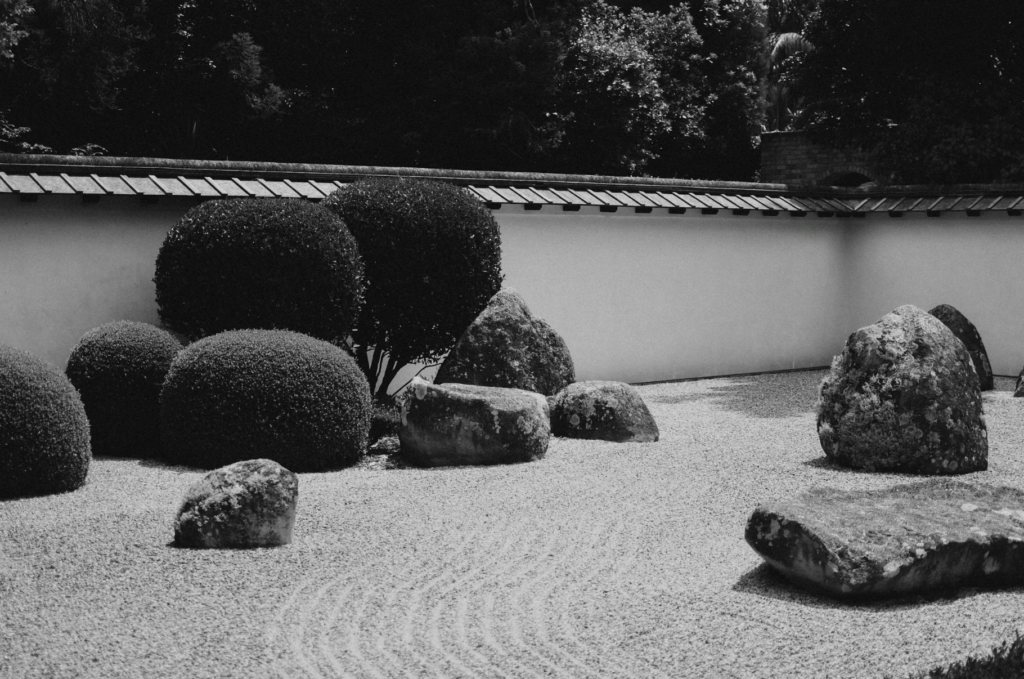
The classic triad arrangement features one tall, dominant vertical stone (representing heaven or a mountain peak) flanked by two smaller, subordinate stones (representing humanity and earth). Bury at least one-third of every stone in the soil. This technique, known as “rooting,” convinces the viewer that the rock is a natural outcropping erupting from the earth, rather than a loose boulder dropped on the surface.
Water Features: From Tsukubai Basins to Shishi-odoshi (Deer Scarers)
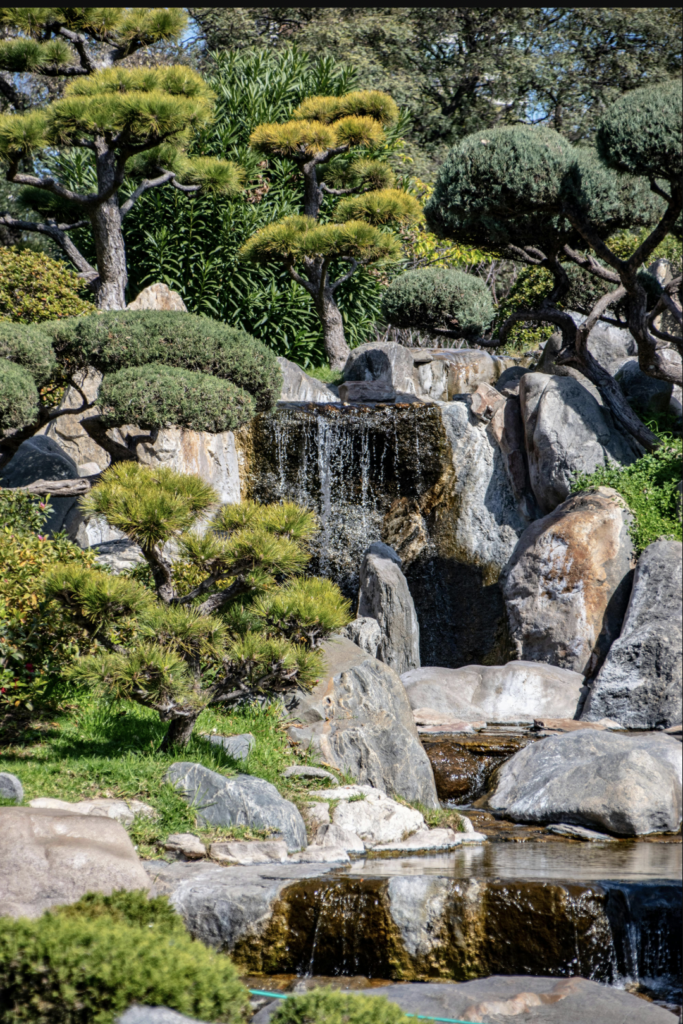
Water introduces sound, movement, and life. Even in small spaces, water plays a critical purifying role. Many gardens feature a Tsukubai, a low stone water basin originally used by guests to wash their hands and mouths before participating in a traditional tea ceremony. You place the basin low to the ground, forcing the visitor to physically bow and humble themselves to use it.
For kinetic energy, nothing beats the iconic Shishi-odoshi (deer scarer). Originally designed by farmers to frighten grazing animals away from crops, this device features a hollow bamboo tube operating on a pivot. Water slowly fills the upper tube. Once the weight tips the balance, the tube drops, spills the water, and the heavy bottom end strikes a stone base with a sharp, rhythmic clack. In modern Zen gardens, this sound marks the passage of time and creates a startling contrast that deepens the surrounding silence.
Architectural Accents: Stone Lanterns, Bridges, and Bamboo Fencing
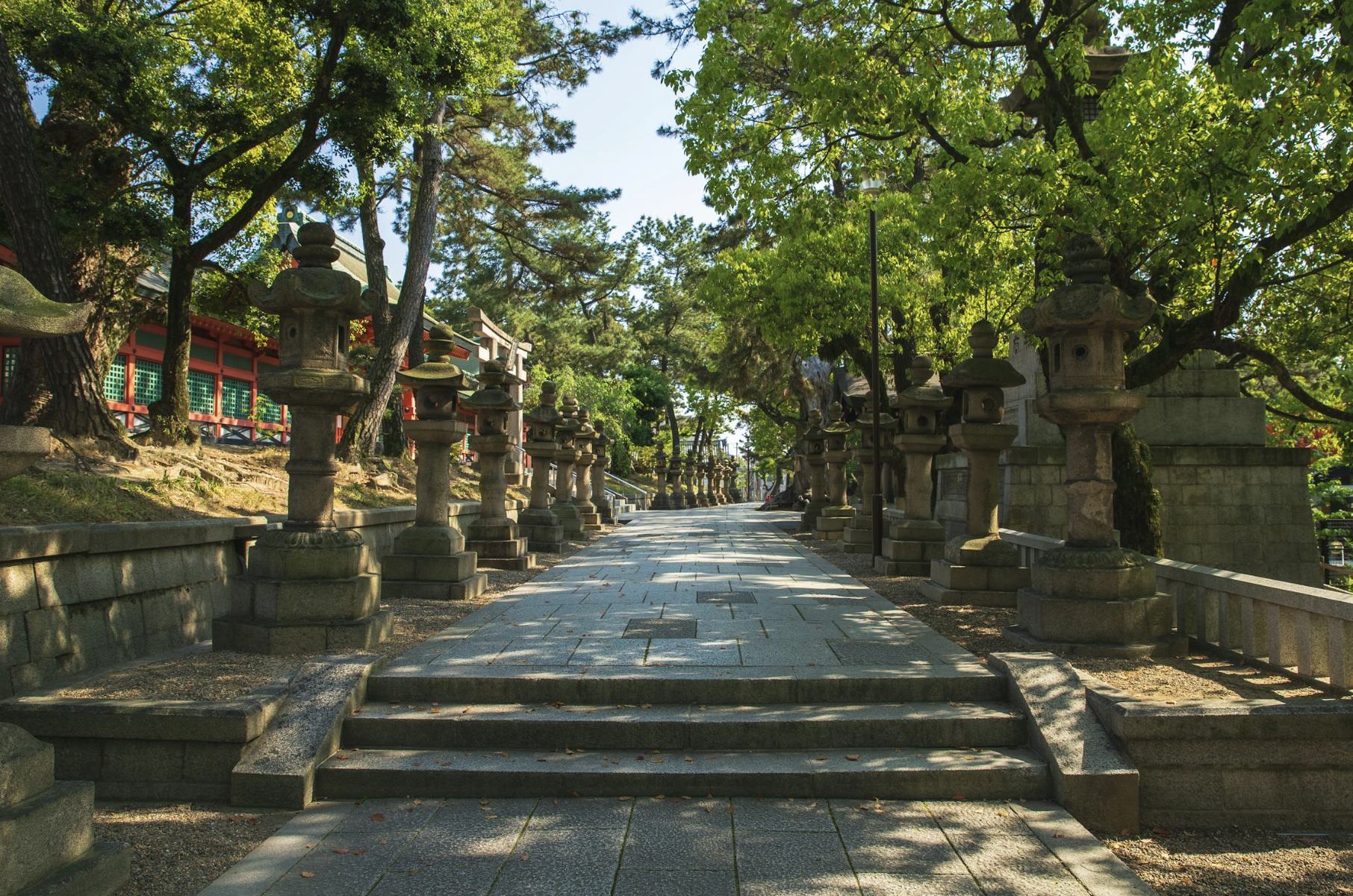
Architectural elements serve as human touches that guide the viewer through the naturalistic landscape. Stone lanterns (Tōrō) originally lined the paths to Buddhist temples to light the way. In a garden setting, you place them strategically near water basins, at path intersections, or partially hidden by foliage to draw the eye deeper into the landscape.
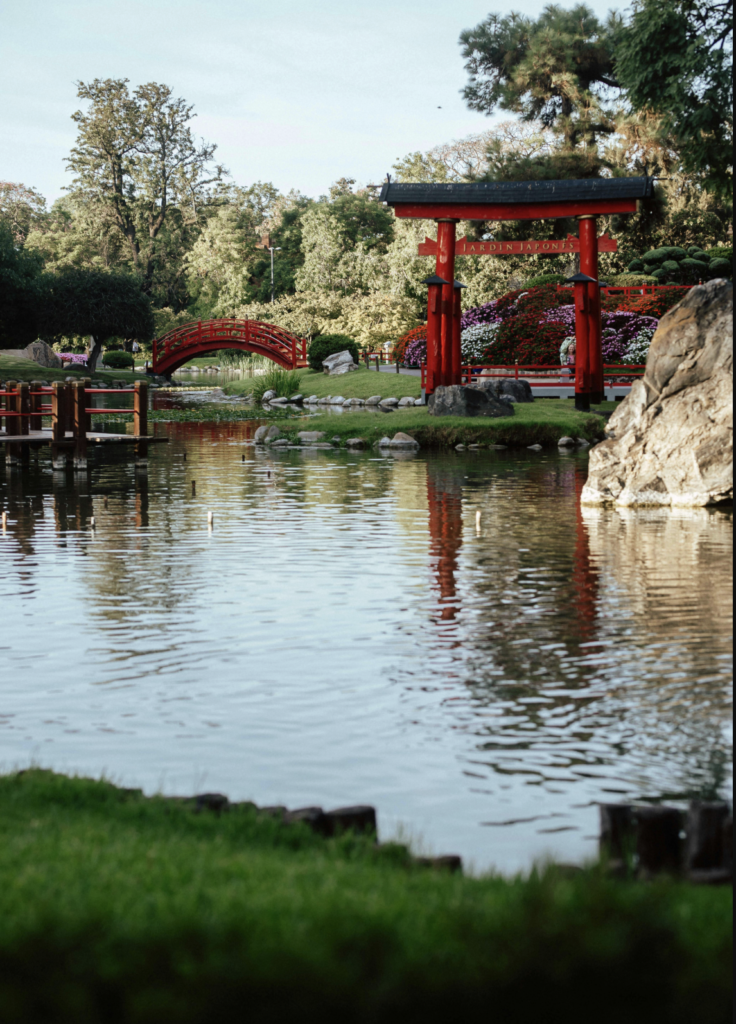
Bridges (Hashi) connect different zones of the garden and force visitors to slow down. An arched bridge requires careful footing, breaking your normal walking rhythm and forcing you to look closely at your surroundings. Finally, you enclose the garden using bamboo fencing (Takegaki). Bamboo provides a natural, visually soft barrier that blocks out the chaotic modern world while maintaining an organic aesthetic that complements the internal plantings.
Selecting Authentic Japanese Garden Plants
While Western gardens celebrate the ephemeral beauty of spring and summer blooms, Japanese gardens prioritize year-round structure. The botanical palette emphasizes varied shades of green, subtle textures, and architectural silhouettes. Restraint dictates your choices; you select Japanese garden plants for their longevity and form rather than a brief explosion of color.
Structural Trees: Japanese Maples (Acer palmatum) and Black Pines
Trees anchor the garden’s visual weight. The Japanese Maple (Acer palmatum) provides delicate, lacy texture and acts as the primary source of seasonal transition. Designers position maples where their spectacular autumn foliage—burning reds, fiery oranges, and deep purples—can reflect in a water feature or contrast sharply against a dark evergreen backdrop.
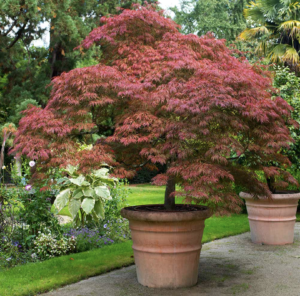
Acer palmatum dissectum ‘Red Dragon’
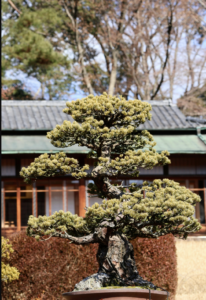
Japanese Black Pines (Pinus thunbergii) represent longevity and endurance. These rugged evergreens withstand harsh coastal winds in nature, and in the garden, they provide masculine, bold energy. You use pines to frame specific views or to serve as a solitary focal point in a dry gravel landscape.
Groundcovers and Textures: Moss Alternatives for Low-Moisture Zones
Moss (Koke) thrives in the humid climate of Kyoto, blanketing the ground in a velvet layer that absorbs sound and softens the hard edges of stone. However, attempting to cultivate traditional moss in arid or heavily sunlit climates often ends in failure.
To achieve that seamless, rolling green aesthetic in low-moisture zones, designers use drought-tolerant moss alternatives. Irish Moss (Sagina subulata), creeping thyme, or dwarf mondo grass (Ophiopogon japonicus ‘Nana’) mimic the visual texture of traditional moss while surviving harsher conditions. These groundcovers tie the disparate elements of the garden together, acting as the green glue that unites stones, trees, and pathways into a single cohesive landscape.
Pruning Styles: The Art of Niwaki (Cloud Pruning)
In a Japanese garden, you do not let trees grow wild; you sculpt them. Niwaki (often translated as “garden tree”) refers to the highly skilled art of shaping trees to emphasize their character and mimic the weathered, dramatic shapes of ancient trees growing in harsh natural conditions.
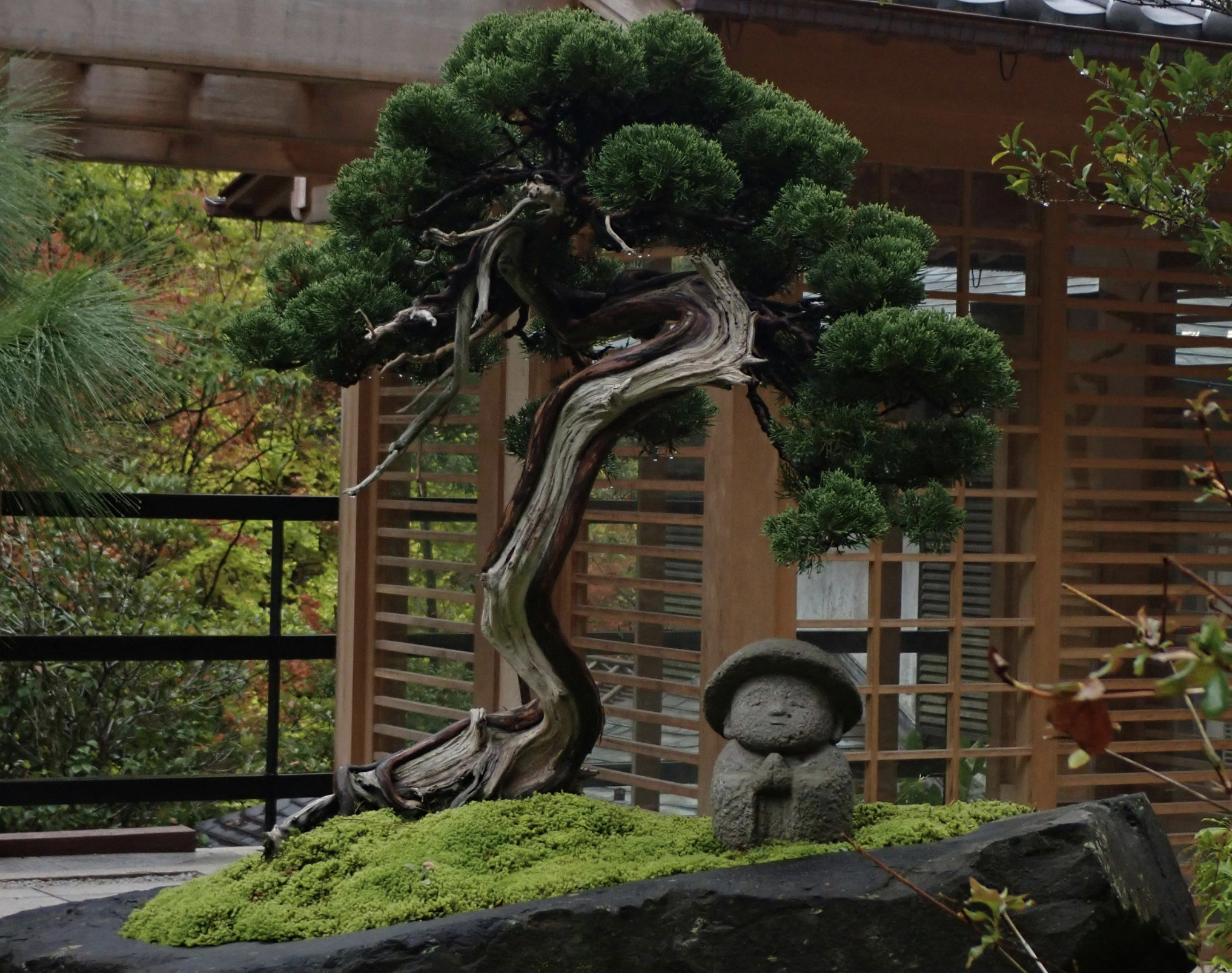
Unlike topiary, which forces plants into unnatural geometric shapes, Niwaki distills the tree’s natural essence. The most famous technique, “cloud pruning,” involves stripping bare the lower branches and tightly clipping the foliage at the branch tips into flat, undulating pads that resemble drifting clouds. This intense, calculated pruning forces forced perspective, making a relatively young tree appear ancient and weathered by centuries of wind and snow.
Designing for Perspective and Borrowed Scenery (Shakkei)
A masterfully designed Japanese garden rarely reveals itself all at once. It unfolds sequentially, inviting exploration and rewarding careful observation. Spatial planning relies heavily on manipulating the viewer’s perspective and blurring the lines between the garden and the world beyond it.
How to Create a Zen Walkway Using Stepping Stones (Tobi-ishi)
Pathways dictate the visitor’s physical and emotional journey. The Tobi-ishi (flying stones) walkway uses flat stepping stones set slightly above the soil or gravel. Tea masters originally developed these paths to keep guests’ kimono hems clean, but they serve a deeper psychological purpose.
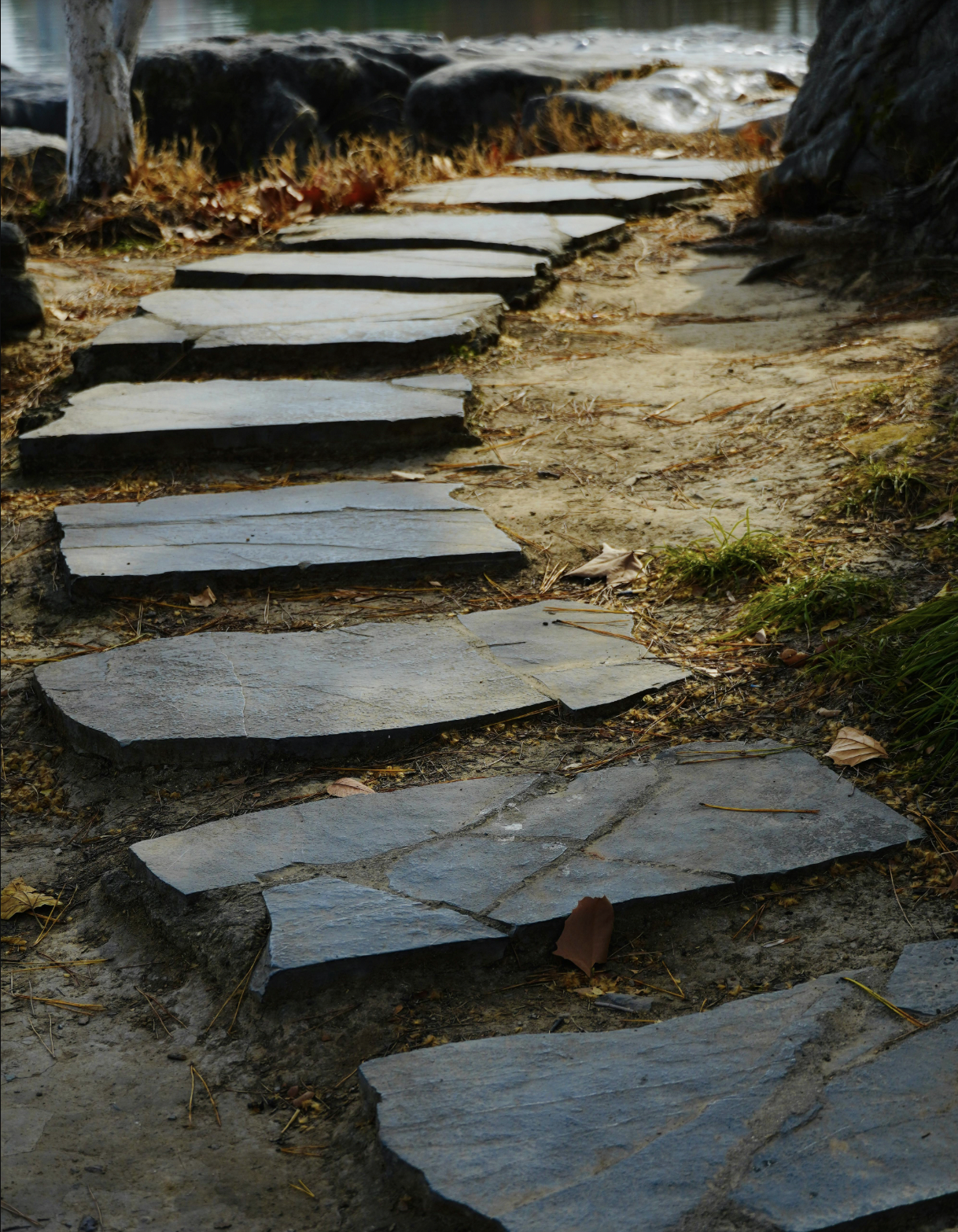
Because the stones are unevenly spaced and require focus to navigate, they force you to look down, effectively bringing you into the present moment. When the designer wants you to stop and admire a specific view—perhaps a carefully framed maple or a stone lantern—they will place a wider, flatter “resting stone.” By controlling your physical cadence, the Tobi-ishi path controls your mental state, transitioning you from the rush of daily life into the tranquility of the garden.
Small Yard Optimization: Creating a Courtyard Garden (Tsuboniwa)
You do not need an expansive estate to implement Japanese garden design ideas. At Eco garden, The Tsuboniwa is a traditional courtyard garden designed for incredibly tight spaces often less than a few square meters between the rooms of a traditional merchant house.
To build a successful Tsuboniwa, you must aggressively edit your elements. Select one focal point—a single, beautifully shaped Niwaki tree, a weathered stone basin, or a solitary lantern. Surround this focal point with shade-tolerant ferns or moss, and lay a bed of dark river stones or white gravel. Because walls enclose the Tsuboniwa on multiple sides, it acts as a private, open-air skylight that draws natural light, rain, and fresh air into the center of the home.
Designing for Perspective and Borrowed Scenery (Shakkei)
When space allows, designers employ the brilliant optical illusion of Shakkei (borrowed scenery). This technique incorporates distant background features—such as a mountain peak, a neighboring forest canopy, or a distant architectural structure—into the composition of the garden itself.
To execute Shakkei, you manipulate the garden’s boundaries. You prune your foreground trees to frame the distant mountain, or you design your boundary wall just low enough to hide the modern road but high enough to seamlessly blend your garden’s foliage with the distant tree line. By capturing the background and pulling it visually into the foreground, Shakkei makes a modest garden feel infinitely expansive, effectively stealing the horizon to serve your design.
How to Model a Japanese Garden Using AI Landscape Tools
Historically, planning a Japanese layout required years of apprenticeship and meticulous hand-drawn elevations. Today, you can leverage advanced AI landscape tools and CAD software to visualize complex concepts before moving a single rock.
Tools like Remodel Ai App with rendering plugins, or specialized AI landscape generators (such as iScape or Midjourney for conceptualization), allow you to mock up stone arrangements and test water feature placements instantly. You can input your yard’s exact dimensions and run sun-path simulations to ensure your Japanese maples receive adequate afternoon shade while your pines get full sun.
More importantly, AI tools help you solve the geometry of Ma. By rendering the space from multiple eye-level perspectives—such as the view from the living room window or the tea house bench—you can adjust the negative space and perfectly align your borrowed scenery (Shakkei) before breaking ground.
Maintenance Reality Check: Keeping Clean Lines Sharp
The ultimate paradox of a Japanese garden is that its natural, effortless appearance requires relentless, artificial control. A Zen landscape is not a low-maintenance install-and-forget project. It demands an ongoing conversation between the gardener and the environment.
Gravel requires weekly raking to maintain the crisp, fluid lines that represent water ripples. Weeds will ruthlessly invade your moss beds or gravel seas, necessitating meticulous hand-pulling—chemical herbicides often ruin the delicate pH balance needed for moss to thrive. Your Niwaki pines and maples demand bi-annual structural pruning to maintain their scale and architectural forms.
However, within the philosophy of Zen, this maintenance is not a chore. The act of raking the gravel, plucking the weeds, and sweeping the fallen leaves becomes an active meditation. The process of maintaining the garden’s clean lines is precisely what sharpens the mind of the gardener.