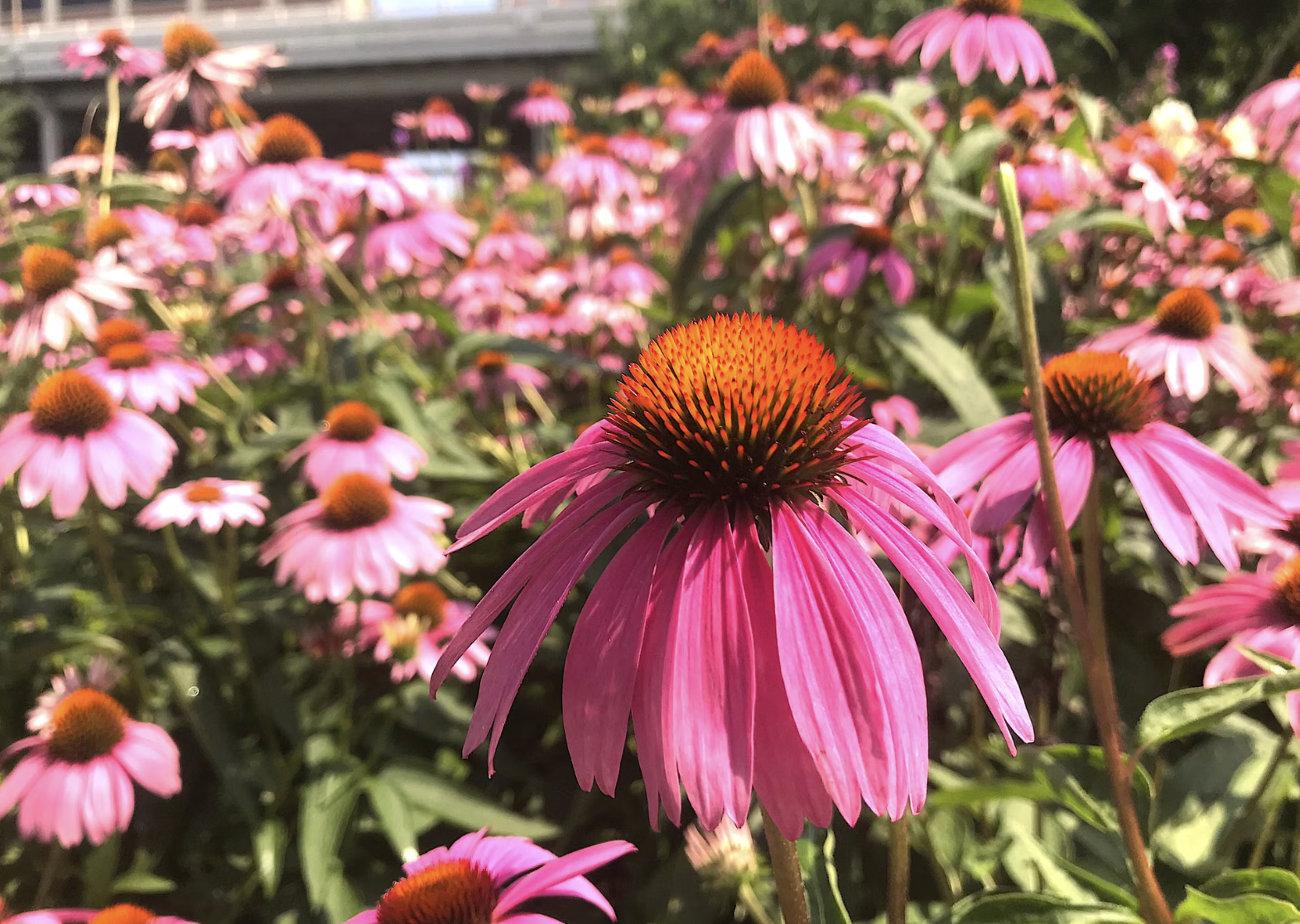
If you want one plant that does almost everything, feeds bees all summer, feeds goldfinches all winter, shrugs off drought, ignores deer, needs no staking, doubles as a medicinal herb, and comes back every year for a decade, it’s hard to beat echinacea. The purple coneflower is a native North American prairie wildflower, and it behaves like one: tough, self-sufficient, and quietly generous.
But two things trip up nearly everyone who tries it. Its seeds often refuse to germinate, and it usually produces no flowers at all in its first year, which sends countless gardeners out to dig up a perfectly healthy plant they think has failed. Learning how to grow echinacea is mostly about understanding those two quirks. Get past them and you’ll have decades of blooms from a single packet of seed.
How Do You Grow Echinacea?
Give echinacea full sun and average, well-drained soil, rich soil actually reduces flowering. Sow seeds after about a month of cold, moist stratification, pressing them onto the surface since they need light to germinate, or start with a nursery plant. Water about an inch a week until established, then let it fend for itself. Expect leafy growth in year one and a full flush of blooms from year two onward.
Two things matter most: cold stratification (or buying plants to skip it) and patience through the first year. After that, echinacea is about as low-maintenance as a garden plant gets.
Meet the Coneflower
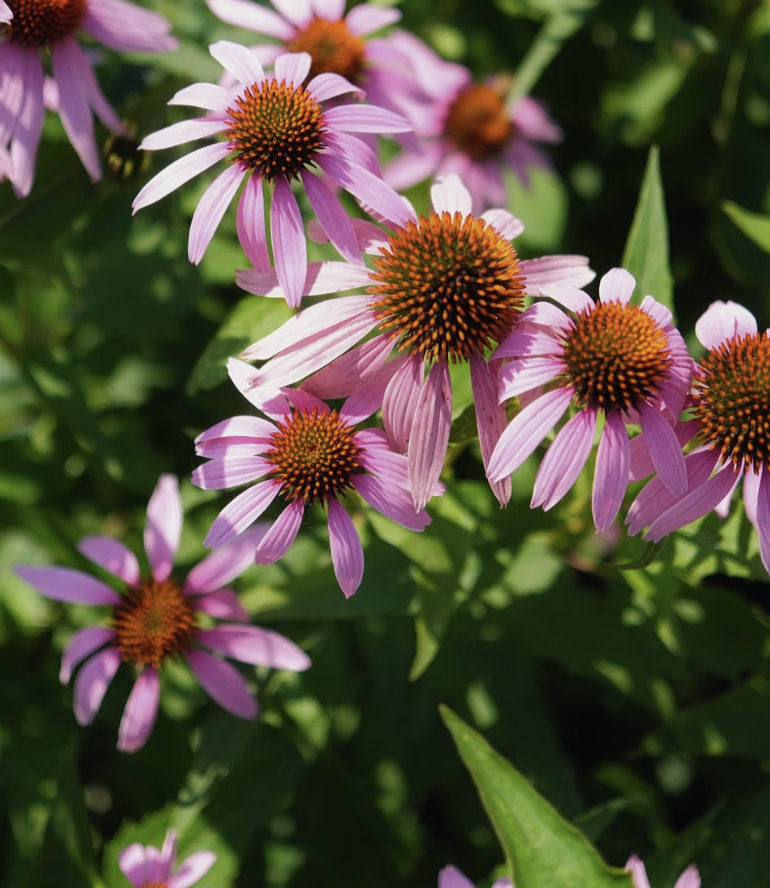
Echinacea is a genus of tough perennials in the daisy family (Asteraceae), hardy in USDA zones 3 to 9 and native to the prairies, meadows, and open woods of the eastern and central United States. Plants stand 2 to 5 feet tall on strong, sturdy stems that need no staking, and bloom from midsummer until frost.
The name is a lovely clue to its character: Echinacea comes from echinus, Latin for hedgehog, a nod to the prickly, cone-shaped center of the flower. That same coarse, bristly texture is why deer and rabbits generally leave it alone.
The species worth knowing:
| Species | Notes |
|---|---|
| Purple coneflower (E. purpurea) | The classic and most popular; 2–3½ ft; the easiest from seed, and the main medicinal species |
| Pale purple coneflower (E. pallida) | Slender, elegant, drooping petals; rarely sold at nurseries — grow it from seed |
| Yellow coneflower (E. paradoxa) | The “paradox”: a purple coneflower with yellow flowers. Very drought-tolerant, hates wet soil |
| Tennessee coneflower (E. tennesseensis) | A conservation success story, once endangered |
Popular cultivars include ‘Magnus’ (rose-pink, reliable from seed), ‘White Swan’ (white, excellent cut flower, also seed-reliable), ‘Ruby Star’ (crimson-rose), and ‘Kim’s Knee High’ (a compact 12–18 inches for small spaces or containers).
An Eco Note: Skip the Double-Petaled Cultivars
Breeders now offer echinacea in every imaginable color and form, including frilly doubles with powder-puff centers. They’re striking, but there’s a genuine trade-off worth knowing.
Double-petaled cultivars make it much harder for pollinators to reach the nectar. All those extra petals crowd out the open, accessible center that bees and butterflies evolved to land on. If you’re growing echinacea partly for wildlife and it’s one of the best pollinator plants there is, stick to single-flowered types with an open cone. The straight species is the most valuable of all.
It’s a small choice with a real impact, and it’s the difference between a flower that merely looks good and one that actually works.
The Seed Problem: Cold Stratification
Here’s why so many people fail at their first attempt. Most echinacea seeds won’t germinate until they’ve experienced a winter. In nature, seeds drop in fall, chill through the cold months, and sprout in spring. Sow them straight into warm soil in April and many simply sit there.
The fix is cold moist stratification, mimicking winter. It sounds technical; it isn’t:
The fridge method: put the seeds in a slightly damp paper towel (or moist sand or vermiculite) inside a sealed bag, and refrigerate at or below 40°F for about a month (some species benefit from 8 to 12 weeks). Then sow.
The lazy method: let nature do it. Sow seeds outdoors in late fall or early winter, after the first hard frost. They’ll chill naturally and sprout in spring. This is genuinely easier and works beautifully.
A useful nuance: Echinacea purpurea, the common purple coneflower is the most forgiving and often germinates without stratification, especially from fresh seed. Other species are much fussier. If you’re new to this, start with purpurea.
After stratification: press seeds onto the surface or barely cover them. they need light to germinate. Keep them at around 65–75°F, and expect sprouts in 10 to 20 days.
The Year-One Truth (Don’t Dig It Up)
This is the single most important thing to know, and most guides bury it in a footnote.
Seed-grown echinacea almost never flowers in its first year. Instead it produces a low, leafy rosette and appears to do nothing all season. This is completely normal. The plant is doing its real work underground, building the deep root system that will carry it for the next ten years. It also needs to pass through a winter, a process called vernalization, before it will flower at all.
So please: do not dig it up thinking it failed. In year two, a stem shoots up, buds form, and you get the full display and every year after that gets better.
Want blooms sooner? Buy a nursery plant or a division, which are already past that stage and will flower the same season. Growing from seed simply costs patience instead of money and gives you many plants for the price of one, plus access to species and colors you’ll never find at a garden center.
In our experience, this is where most echinacea stories quietly go wrong, not from bad care, but from good intentions. A gardener sows seed in spring, sees a modest clump of leaves by August, decides something must be wrong with the soil or the spot, and digs it up to “give it a better home.” The plant that would have delivered ten years of flowers gets composted at exactly the moment it was finishing the hardest part of its work. If you take one thing from this guide, let it be this: a first-year coneflower that looks like it’s doing nothing is a first-year coneflower that’s doing everything. Leave it alone.
How to Plant Echinacea: Step-by-Step
- Step 1: Choose a Permanent, Sunny Spot
Echinacea lives for years and dislikes being disturbed, so choose its home carefully. Give it full sun — it tolerates light shade, which is actually welcome in hot southern climates, but too much shade causes floppy, sparse plants. Because they’re upright and coarse-textured, coneflowers look best massed in drifts, in naturalized plantings, or toward the back of a border.
- Step 2: Prepare Average, Well-Drained Soil
Here’s the counterintuitive part, familiar from lavender: don’t over-enrich the soil. Echinacea wants average, well-drained ground. Soil that’s too rich encourages leafy green growth at the expense of flowers, and makes plants flop. Weed thoroughly, loosen the soil, and work in only a modest amount of compost. Echinacea will not tolerate waterlogged ground, if drainage is poor, add grit or plant in a raised bed.
- Step 3: Sow, Transplant, or Divide
- From seed: sow stratified seed in spring after frost, or unstratified seed outdoors in late fall.
- From nursery plants: plant in spring or fall at the same depth they grew in the pot.
- From division: the fastest way to clone a favorite (more below).
- Step 4: Space and Water In
Space plants according to variety, roughly 18 inches to 2 feet apart for standard types. Water new plants every few days for the first couple of weeks while they settle in.
- Step 5: Mulch and Then Step Back
Apply mulch to suppress weeds, echinacea genuinely dislikes competing with them and conserve moisture. Our types of mulch guide can help. After that, your main job is restraint.
Echinacea Care: Refreshingly Little
- Watering. About an inch per week while establishing. Once mature, echinacea is strongly drought-tolerant, in areas with normal rainfall you may never need to water it at all. Check only if the top two inches are dry. This makes it a natural for a drought-tolerant garden or xeriscape.
- Feeding. Typically none. A light scatter of compost in spring is plenty, and only worth it if flowers are small or poorly developed. Over-feeding gives you foliage instead of blooms.
- Staking. Not needed, the stems are sturdy. If yours are flopping, the cause is too much shade, overly rich soil, or overcrowding, not weak genetics.
- Dividing. Every 3 to 4 years, in early spring as new growth emerges or in early fall, dig up the clump and separate the thick, rhizomatous roots with a sharp spade. It rejuvenates tired plants, improves airflow, controls their size, and gives you free plants to spread around or share. Water thoroughly the day before you divide.
The Deadheading Dilemma (and the Hollow-Stem Secret)
Here’s a genuine choice, and both answers are right, it depends what you want;
- Deadhead (cut spent flowers back to a leaf or new bud) and you’ll get more blooms over a longer season and prevent self-seeding, which is useful if you want tidy control.
- Leave the seed heads and you get something arguably better: goldfinches. Birds work coneflower seed heads for hours through fall and winter, and the standing stems add real structure to a bare garden. You’ll also get free self-sown seedlings everywhere. echinacea seeds itself prolifically, so one plant becomes a drift.
And here’s the detail almost nobody knows. According to North Carolina State Extension, native bees nest inside the hollow stems of coneflowers over winter. So when you cut back, consider leaving 12 to 24 inches of stem standing rather than shearing to the ground. Cut back in late winter instead of fall, and you’ve turned your flower bed into overwintering habitat at zero cost and zero effort.
That single change, waiting until late winter and leaving a foot of stem is one of the easiest, highest-impact things a gardener can do for pollinators. See our guides to designing a pollinator garden and building a native bee house for more.
Echinacea as a Wildlife Plant
Few plants pull this much weight for wildlife:
- Bees and butterflies work the open cones all summer for nectar, echinacea is one of the very best butterfly plants.
- Hummingbirds visit the blooms.
- Goldfinches and songbirds feast on the seed heads well into winter, see native plants that feed birds in winter.
- Native bees overwinter in the hollow stems.
- Beneficial insects shelter here. If wasp-like soldier beetles appear in August, leave them be. they eat pest eggs and larvae and pollinate your plants. Our guide to beneficial insects explains who’s who.
- Deer and rabbits mostly avoid it, thanks to those bristly leaves. a real gift if you battle browsing (see keeping deer out naturally).
As a native plant, echinacea also belongs in any native perennial or native plant landscaping scheme.
The Medicinal Side
Echinacea is one of the few plants that bridges the ornamental border and the medicine cabinet, which is why it appears in both perennial and herb gardens.
Purple coneflower was a principal medicine of Plains Native Americans, who steeped the roots as a remedy for colds, coughs, and flu. Today it remains one of the most popular herbal preparations in the world, taken as a tea, tincture, or supplement for immune support during cold and flu season. Both the roots and the flowers are used; many home herbalists simply dry a portion of the blooms for tea and leave the roots undisturbed.
A responsible note: echinacea is in the daisy family, so people allergic to ragweed or related plants may react to it. Nothing here is medical advice, if you take medication, are pregnant, or have a health condition, speak with a healthcare professional before using any herb medicinally.
Echinacea as a Cut Flower
Coneflowers make excellent cut flowers with a vase life of 5 to 7 days. Cut stems in the morning, just as the petals are expanding and freshly unfurled, not fully open. ‘White Swan’ is a particularly good cutting variety. As a bonus, cutting for the vase doubles as deadheading, prompting more blooms.
Growing Echinacea in Containers
Echinacea isn’t the most obvious container plant, it’s a deep-rooted prairie perennial that would rather be in the ground — but compact cultivars make it work nicely on a patio. Choose a short variety like ‘Kim’s Knee High’ (12–18 inches) or one of the modern dwarf hybrids, and give it a deep pot, since those thick, tuber-like roots need room to go down.
Use a free-draining mix, resist the urge to enrich it, place the pot in full sun, and water when the top couple of inches dry out. The main container-specific risk is winter: potted roots are far more exposed to cold than in-ground ones, so in cold zones move the container against a sheltered wall or sink it into a bed for the winter. Our container gardening guide for beginners covers the essentials.
Common Problems and How to Fix Them
Echinacea is remarkably trouble-free, but a few things crop up.
| Problem | Likely Cause | The Fix |
|---|---|---|
| Seeds never germinated | No cold stratification, or buried too deep | Chill seeds ~1 month at 40°F; surface-sow, as they need light |
| No flowers in the first year | Completely normal — it’s building roots | Be patient; blooms come in year two. Don’t dig it up |
| Lots of leaves, few flowers | Soil too rich, or too much shade | Stop feeding; move to full sun |
| Plants flopping over | Shade, rich soil, or overcrowding | Full sun, lean soil, divide every 3–4 years |
| Raised cone but missing/distorted petals | Eriophyid mites | Cut back infected plants in fall; destroy — don’t compost |
| Petals turning green, plant wilting | Aster yellows (spread by leafhoppers) | Remove and destroy infected plants immediately |
| White dusty coating on leaves | Powdery mildew | Improve airflow; divide crowded clumps |
| Seedlings nibbled | Young plants aren’t yet deer/rabbit-proof | Protect until established; mature plants are left alone |
Is Growing Echinacea Worth It?
Absolutely, it may be the best value perennial you can plant. One packet of seed gives you drifts of flowers that return for a decade, bloom for months, need no watering, no feeding, and no staking, and feed bees, butterflies, and goldfinches through three seasons. It’s beautiful in a vase, medicinal in a teacup, and native to this continent. The only thing it asks is that you wait one year and that you leave a few stems standing for the bees.
Ready to build a garden around it? Echinacea bridges the herb and perennial worlds beautifully. On the herb side, try chamomile for tea, lavender for beginners, or peppermint. On the perennial side, pair it with coneflowers for season-long color, black-eyed Susans, or other low-maintenance perennials for full sun. Explore the full Medicinal Herbs collection, part of the broader EcoGardenHub Plant Library.
Chill a packet of seed in your fridge this winter, sow it in spring, and give it a year of patience. From then on, it’ll take care of itself and quietly take care of everything else in your garden too.
Frequently Asked Questions
- Why won’t my echinacea seeds germinate? They most likely need cold stratification. Most echinacea seeds must experience about a month of cold, moist conditions before they’ll sprout. Chill them in a damp paper towel in the fridge at 40°F, or sow outdoors in late fall and let winter do it. Also make sure you didn’t bury them, they need light to germinate.
- Why doesn’t my echinacea flower in the first year? That’s normal. Seed-grown coneflowers spend their first year building roots and a leafy rosette, and they need to pass through a winter (vernalization) before they’ll bloom. Expect a full display in year two. Buy nursery plants or divisions if you want flowers the same season.
- Does echinacea need fertilizer? Almost never. Rich soil encourages leafy growth at the expense of flowers and causes plants to flop. A light scatter of compost in spring is all it ever needs, and only if blooms are small or poorly developed.
- Should I deadhead coneflowers? It’s a genuine trade-off. Deadheading prolongs blooming and prevents self-seeding, but leaving seed heads feeds goldfinches through winter and gives you free seedlings. Many gardeners deadhead early in the season and then leave the last flush standing.
- When should I cut back echinacea? Wait until late winter rather than fall, and leave 12 to 24 inches of stem standing, native bees nest inside the hollow stems over winter. The seed heads also feed birds and add winter structure to the garden.
- Do coneflowers attract pollinators? Enormously, bees, butterflies, hummingbirds, and songbirds all use them. For maximum benefit, choose single-flowered types with an open cone; double-petaled cultivars make it much harder for pollinators to reach the nectar.
- How often should I divide echinacea? Every 3 to 4 years, in early spring as new growth appears or in early fall when the plant isn’t blooming. Division rejuvenates older clumps, improves airflow and blooming, and gives you free plants.