
The Generative Remodel AI App is completely rewriting the rules of spatial design. Think about how things used to work: homeowners, contractors, and interior designers spent thousands of dollars and weeks of agonizing wait time on manual blueprints, physical mood boards, and slow 3D renderings. Today, Remodel AI software hands you those exact same results in seconds.
What Everyone is Searching For
People are flooding search engines looking for clarity. Search interest for Remodel AI App is skyrocketing, pulling in 6,600 monthly searches with a moderate SEO difficulty score of 40. Everyday users and industry pros alike want real answers to three fundamental questions:
-
What exactly does a remodel AI generator do?
-
How do you actually use AI remodel from photo tools effectively?
-
Can these apps honestly replace a human interior designer?
Your Blueprint to AI Design
We built this guide to cut through the tech jargon and decode exactly what people want from the AI renovation movement. Whether you are a homeowner hunting for a quick ai kitchen remodel free online tool, a contractor sourcing the best remodeling ai software for client presentations, or an enthusiast testing out new remodel ai prompts, this breakdown gives you the ultimate blueprint.
Deconstructing the AI Remodeling Phenomenon: What is Remodel AI?
At its core, Remodel AI ( remodel artificial intelligence) refers to a category of spatial computing software powered by deep learning, computer vision, and diffusion models. Eco Garden Hub Reviews: we go through how these platforms analyse an existing image or scan of a physical space and apply semantic transformations based on natural language prompts or predefined design styles.
How the Technology Operates Under the Hood
Unlike traditional Computer-Aided Design (CAD) or Building Information Modeling (BIM) software that requires manual geometric inputs, AI remodeling engines use a multi-layered neural network framework:
-
Computer Vision & Scene Understanding: When you upload an image via an
ai remodel from photopipeline, the model executes object detection and semantic segmentation. It distinguishes structural boundaries (walls, floors, ceilings) from architectural elements (windows, support beams) and transient furniture. -
ControlNet & Spatial Conditioning: To prevent the AI from hallucinating walls or altering the actual dimensions of a room, a conditioning layer (often based on ControlNet architecture) locks the structural layout. This ensures that a
remodel house using aitransformation modifies textures, colors, and design styles without changing structural realities. -
Generative Inpainting & Outpainting: When executing an
ai renovation generator freeprocess, the software uses generative diffusion to “repaint” specific zones (inpainting) or expand the visual field to create panoramic landscape views (outpainting).
By understanding these mechanics, users can bypass the frustrating trial-and-error phases often reported on remodel ai app reddit forums and achieve photorealistic outputs on their first attempt.
Structural Breakdown by Space: From Kitchens to Exteriors
Topical authority is established by addressing every physical node of a home renovation lifecycle. Below is the semantic mapping of how specific AI applications handle individual architectural zones.
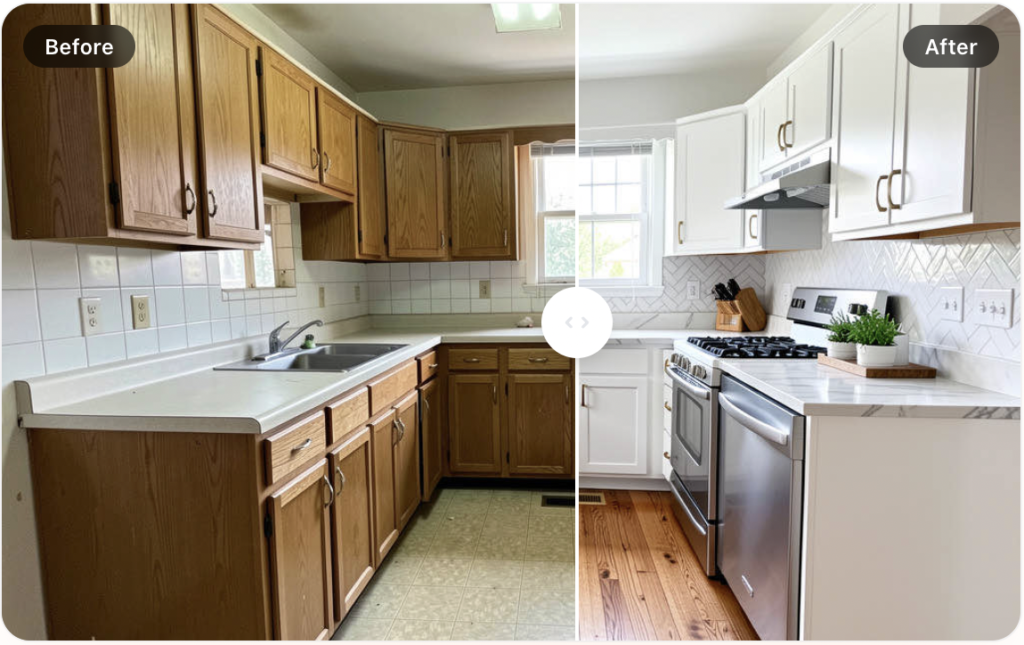
Kitchen Remodeling (ai remodel my kitchen)
The kitchen represents the highest financial investment in residential remodeling, which is reflected in the dense search cluster around ai kitchen remodel ideas and kitchen remodel ai tool free.
-
Cabinetry and Layout Transformation: AI models allow users to swap traditional shaker cabinets for modern minimalist flat panels. By uploading a single photo, tools execute an
ai kitchen remodel from photorender that re-imagines counter materials from laminate to Calacatta marble. -
Visualizing Appliances: High-end models integrate specific product catalogs, allowing users to execute a
kitchen remodel using aithat features professional-grade stainless steel appliances, smart refrigerators, and integrated induction cooktops.
Bathroom Renovation (remodel ai bathroom)
Bathrooms present unique spatial constraints. Queries like ai remodel bathroom free and bathroom remodel using ai focus heavily on material optimization.
-
Tile and Surface Engineering: AI generators can instantly change a bathroom’s visual weight by swapping out subway tile for large-format porcelain slabs or terrazzo.
-
Fixture Optimization: Using localized image inpainting, users can highlight an outdated vanity and prompt a
bathroom remodel ai generatorto replace it with a floating oak vanity with matte black hardware.
Living Rooms, Bedrooms, and Specialized Interiors
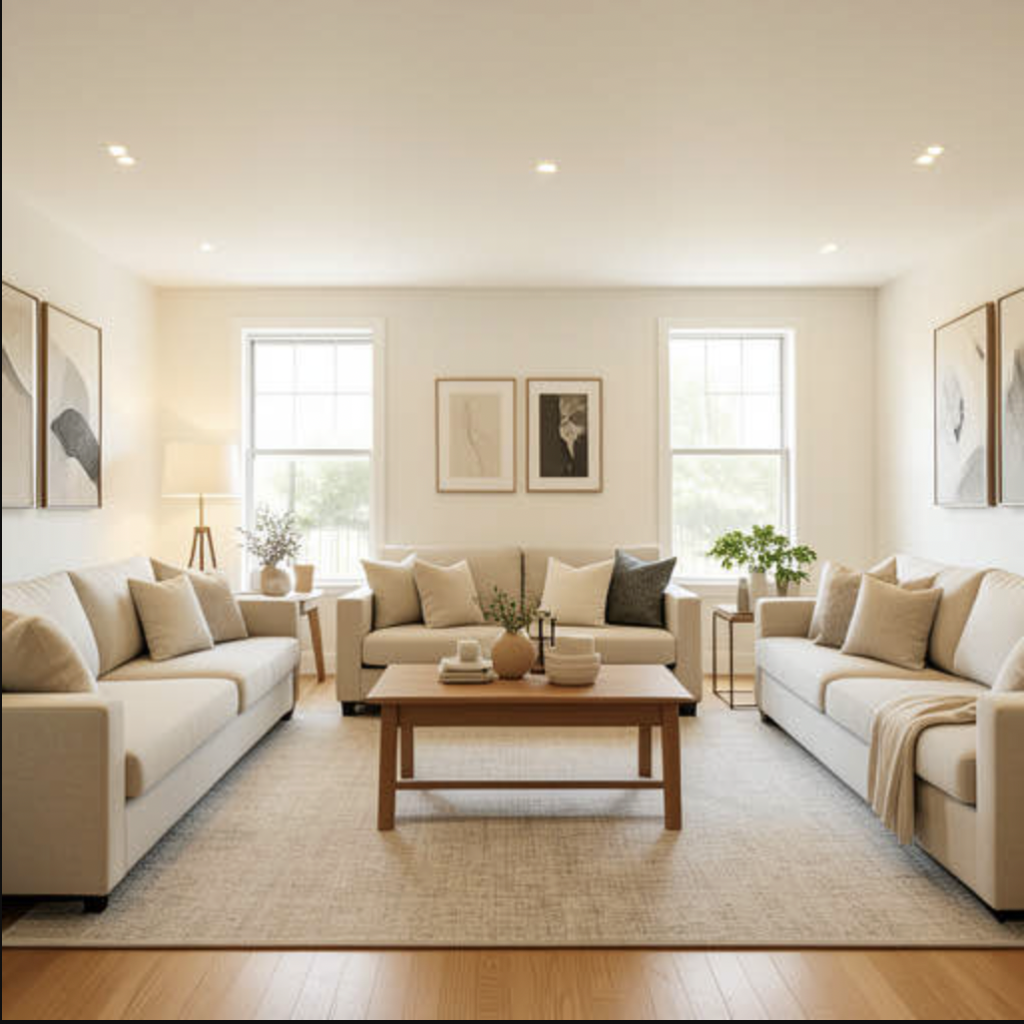
For generalized living spaces (ai remodel room free, remodel room using ai), AI excels at balancing color theory and ambient lighting.
-
Living Rooms (
ai remodel living room): Models dynamically shift furniture layouts, transitioning a room from a mid-century modern aesthetic to Japandi or industrial chic. -
Specialized Spaces (
ai remodel closet,ai remodel basement,ai remodel my office): These tools help users conceptualize underutilized square footage. A dark, unfinished basement can be rendered into a bright home theater or a clean egress suite.
Exterior Architecture and Curb Appeal (ai remodel App house exterior)
While most people think of it strictly as an interior room planner, the real Remodel AI (by ReImage AI) has a dedicated Landscape AI / Garden Design mode.
Instead of building a yard grid from scratch like traditional, complex CAD design software, it works photo-to-photo. You take a picture of your current yard, and the AI overlays completely new garden aesthetics on top of your existing layout.
Here is how its outdoor gardening features work and the specific styles you can play with:
How the Garden Features Work
The app uses two main workflows to transform an outdoor space:
-
Full-Yard Restyling: You upload a photo of your entire backyard or front yard, select a pre-configured theme, and the AI instantly generates a complete overhaul—replacing grass with new pathways, adjusting flower beds, and adding matching plants.
-
The Landscaping Editor (Selective Masking): This is the more precise tool for gardeners. You use a digital brush to “paint over” just the specific areas you want to change (like an overgrown patch of lawn or an empty border). You can then instruct the AI to swap only that masked section with a specific element like a new stone walkway, a specific floral hedge, or a new patio layout while leaving your house, fences, and favorite trees exactly as they are.

Available Garden & Landscape Styles on Remodel AI App
The AI engine is trained on distinct, curated landscaping presets. When you upload your yard, you can choose from themes including:
-
English Cottage Garden: Fills your yard with loose, romantic, informal flower beds, dense perennial borders, and gravel pathways.
-
Japanese Zen Garden: Transforms the space using raked gravel, smooth stepping stones, moss, rock arrangements, and shaped evergreens (cloud pines).
-
Mediterranean Courtyard: Focuses on gravel or terracotta surfaces, olive trees, potted plants, and lavender borders.
-
Modern Minimalist: Features clean geometric lines, concrete pavers, architectural ornamental grasses, and structured layouts.
-
Desert / Xeriscape: Replaces thirsty lawns with water-wise gravel, agave, cacti, and sun-baked, low-maintenance textures.
-
Tropical Resort: Brings in lush, dense greenery, broad-leafed palms, and features like teak loungers or pool mockups.
Important Catch for Enthusiasts
While it is incredible for fast visual inspiration and trying out an entirely new aesthetic before you start digging, keep a couple of functional limits in mind:
-
No Specific Plant Database: The AI designs based on “vibe” and general plant categories (e.g., it knows what a generic palm tree, fern, or cactus looks like). You cannot type in a highly specific botanical variety and expect a perfect, botanically accurate specimen.
-
Climate Agnosticism: The AI focuses on aesthetics rather than horticultural reality. It won’t warn you if you mistakenly try to render a lush tropical resort theme on a yard photo taken in a freezing climate zone.
.
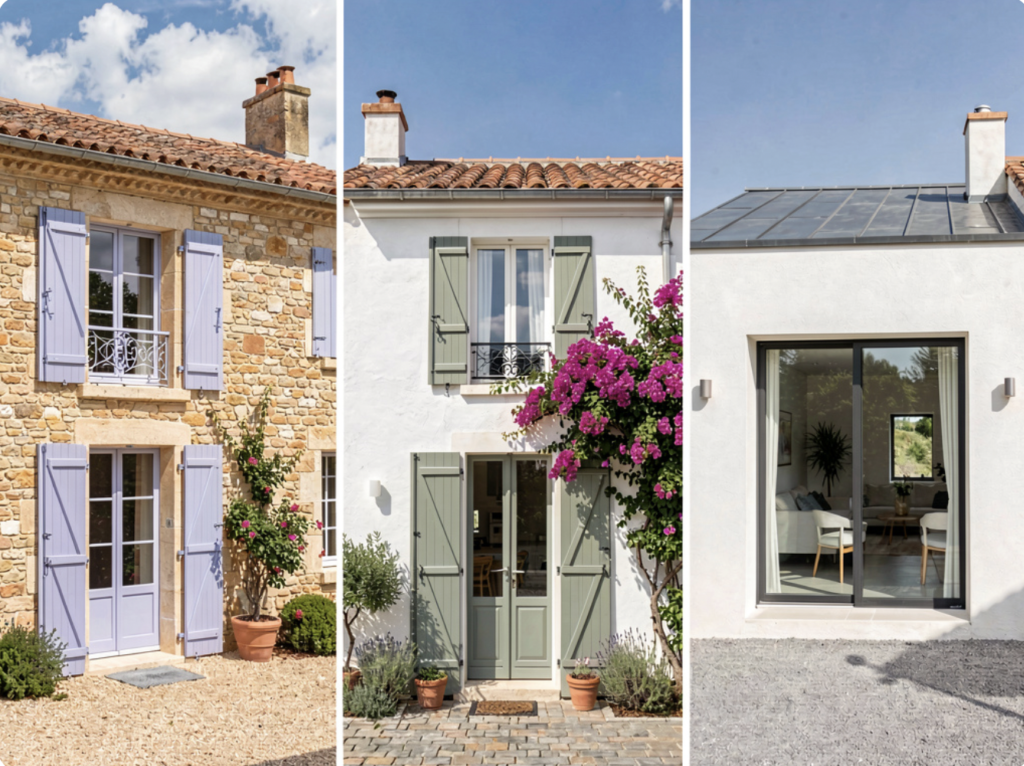
Landscaping and Hardscaping (renovate ai landscape design)
Curb appeal does not stop at the front door. The keyword ecosystem shows a dedicated cluster for outdoor spaces, led by renovate ai landscape design and ai remodel my backyard.
-
Hardscape Planning: Users map out paver patios, swimming pools, walkways, and retaining walls using
ai remodel my deckpipelines. -
Softscape Botanical Generation: Advanced engines like
remodel ai gardenorrenovate landscape airecognize agricultural hardiness zones to populate renders with relevant flora—such as ornamental grasses, perennials, or drought-tolerant succulents—rather than random AI-generated tropical plants.
The Remodel AI Platform Matrix: Comparing the Elite Tools
To provide genuine information gain, we must move past generic lists and review the explicit software ecosystems occupying the SERPs. The primary players include dedicated mobile applications and web-based platforms such as Remodel AI, Remodeled.ai, Renovate AI, RoomGPT, and Reimagine Home.
Financial Architecture: Free vs. Paid Subscriptions
A massive volume of search intent focuses on the cost of these tools. Users frequently query phrases like remodel ai app cost, remodel ai free trial, renovate ai credits, and remodel ai subscription.
Most platforms employ a Freemium Credit Model:
-
The Free Version (
remodel ai free version,remodel ai is it free): Typically grants a restricted number of tokens (e.g., $3$ to $5$ free generations upon signup). Renders are often watermarked, restricted to lower resolutions, and capped to basic style options. Users searching forremodel ai mod apk latest versionare actively attempting to bypass these token limitations on mobile devices a practice that carries substantial cybersecurity risks and lacks data privacy compliance. -
The Subscription Model (
remodel ai app cost per month): Paid tiers generally range from $10 to $49 per month. This unlocks unlimited processing speeds, commercial usage rights, ultra-high-definition 4K scaling, and advanced manual masking layers. -
Promo and Referral Systems (Remodel AI App
promo code,renovate ai discount code): SaaS companies in this space utilize promotional cycles to capture market share, offering temporary discounts for annual commitments.
Step-by-Step Architecture: How to Use Remodel AI Like a Pro
To maximize visual accuracy and prevent the software from generating unusable designs, users must approach the rendering engine systematically. This workflow addresses the underlying intent of renovate ai tutorial and remodel ai how to use.
Step 1: Image Capture Strategy
The output of a remodel using ai pipeline is highly dependent on the input image quality.
-
Lighting: Ensure the room is evenly lit. Avoid shooting directly into harsh sunlight windows, which blinds the semantic segmentation layer.
-
Angles: Shoot from a corner or an elevated perspective that clearly exposes the intersection of at least two walls, the ceiling, and the floor. This provides clear $3\text{D}$ spatial anchor points.
Step 2: Selecting the Core Engine Style (remodel ai styles)
Most platforms offer preset architectural profiles:
-
Contemporary: Focuses on clean lines, neutral tones, and organic materials.
-
Scandinavian: Emphasizes high functionality, light wood tones, and maximized natural light.
-
Modern Farmhouse: Integrates exposed beams, shiplap, and industrial fixtures.
-
Select the preset closest to your target structural aesthetic to prime the diffusion model’s latent space.
Step 3: Mastering Prompt Engineering (remodel ai prompts)
If using an advanced platform that allows raw textual inputs alongside an image, your prompts must be descriptive and structured. Avoid vague terms like “beautiful modern kitchen.” Instead, use semantic structural tokens:
-
Positive Prompt Structure:
"Minimalist kitchen, flat-panel white oak cabinetry, seamless quartz countertops, integrated under-cabinet LED lighting, matte black fixtures, polished concrete flooring, photorealistic, 8k resolution, architectural digest style." -
Advanced Video Renders (
ai renovation video prompt): For engines that support video pan-throughs (renovation ai video), frame the prompt dynamically:"Slow cinematic panning shot across a modern living room, transitioning from exposed brick walls to smooth Venetian plaster, sunlight shifting through the window."
Step 4: Selective Inpainting and Masking
If you do not want to alter the entire room, utilize the brush or masking tool (renovate ai edit). Mask out only the old couch or outdated kitchen island. This tells the home remodel ai tool to lock everything else down and apply generative power exclusively to the masked selection.
Overcoming Operational Friction: Troubleshooting Common Errors
AI tools are not without technical vulnerabilities. When users search for remodel ai not working or renovate ai not working, they are generally encountering specific technological bottlenecks. Here is how to diagnose and fix them:
Challenge 1: Halting or Freezing During Render
-
Cause: Server capacity overload or unoptimized image resolution. High-resolution photos from modern smartphones can overwhelm server-side processing limits during peak hours.
-
Solution: Compress the image to standard $1080\text{p}$ before uploading, or switch from a mobile app build to a stable web browser environment (
remodel ai web).
Challenge 2: Geometric Distortion and Hallucinations
-
Cause: The spatial structure of the input photo was too cluttered, causing the computer vision layer to misinterpret an item of furniture as a permanent wall structure.
-
Solution: Clear out small clutter before taking the photo. If distortion persists, utilize an alternative platform engine (
remodel ai alternativelike RoomGPT or Reimagine Home) that may feature a stricter spatial conditioning algorithm.
Challenge 3: Subscription and Account Management
Issues surrounding renovate ai cancel subscription or searching for a renovate ai customer service number highlights friction points in user experience. Most of these platforms operate via automated digital billing setups. To cancel or adjust credits without issue, users should navigate directly to their account portal rather than searching for third-party support numbers, which are rarely provided by small indie-SaaS platforms.
Strategic Evaluation: AI vs. Traditional Interior Designers
The question echoed across commercial and informational search intent (remodeled ai is your an interior designer, renovate ai worth it) centers on structural utility: Can an AI application truly replace human expertise?
The Strengths of AI
-
Unrivaled Velocity: Iterating through $20$ completely different design styles takes less than five minutes. A human designer would require weeks to deliver similar visual mood boards.
-
Extreme Cost Mitigation: For the price of a single month’s subscription (approx. $20), an individual can generate thousands of ideas, whereas a professional interior designer or architect charges an average hourly rate of $150$ to $350.
-
Low-Friction Ideation: It acts as a powerful bridge between a client and a contractor, solving the communication barrier of trying to describe a vision verbally.
The Critical Limitations (Why Human Expertise Remains Vital)
While an ai remodel rendering looks visually stunning, it lacks real-world physical and architectural compliance:
-
Load-Bearing Awareness: An AI engine does not understand physics. It will happily remove a structural load-bearing pillar to create a beautiful open-concept living space, which would cause structural failure in real life.
-
Scale and Dimension Failures: AI works in pixels, not inches. It can render a gorgeous double-vanity bathroom layout that looks perfectly scaled in a picture but is physically impossible to construct given the actual spatial dimensions and plumbing access points.
-
Material Sourcing Blindspots: A generative model can create an exotic marble texture with a unique iridescent blue vein pattern that does not actually exist in nature or any retail stone yard.
The Verdict: The Collaborative Framework
The most successful deployment of AI is not as a replacement for architects and designers, but as a co-pilot. Savvy design firms use remodel ai api integrations to power rapid prototyping phases, allowing clients to establish direction before transitioning to precise CAD/BIM modeling and real-world material procurement.
Frequently Asked Questions (FAQs)
1. Is there a completely free Remodel AI tool available?
While many applications market themselves as free (ai remodel generator free, renovation ai tool free), almost all operate on a freemium model. They offer a baseline of $3 to $5 free credits with limited functionality or watermarks. For sustained, high-quality, unwatermarked rendering, a premium web or app subscription is required.
2. How does the “AI remodel from photo” feature work?
The process uses an advanced form of machine learning called stable diffusion coupled with a spatial conditioning layer. When you upload a photo, the software maps out the fixed coordinates of the walls, ceiling, and floors, then replaces the textures, furniture, and color choices based on your chosen design style while preserving the room’s structural layout.
3. Can Remodel AI design the exterior and landscaping of a house?
Yes. Platforms with dedicated landscape modules (renovate ai landscape design, remodel ai exterior house) can re-imagine siding textures, roofing colors, concrete walkways, and populate lawns with localized botanical elements suited to the exterior structure.
4. What is the best alternative if a Remodel AI application is not working?
If you encounter errors like remodel ai not working, the top alternatives include RoomGPT, Reimagine Home, Renovate AI, and Midjourney (for advanced users comfortable with raw prompt engineering).
5. Can I use these AI tools to generate accurate floor plans?
Some advanced applications offer an ai remodel floor plan feature that attempts to extrapolate a blueprint from a photo scan. However, these plans should only be used as rough estimates. For actual construction purposes, precise physical measurements must be taken manually or with laser tools.
6. Are my uploaded home photos safe and private?
Security policies vary across applications (remodel ai safe). Reputable platforms operating through standard iOS and Android app stores adhere to modern data privacy laws. However, always review the privacy policy of the specific software to ensure your personal interior property photos are not being utilized to train public AI datasets.
7. How do you cancel a Remodel AI App subscription?
To avoid billing issues (renovate ai cancel subscription), do not simply delete the app from your phone. You must navigate to your account settings within the platform website or access your Apple App Store / Google Play Store subscription management dashboard to formally terminate the auto-renewal.
8. What are “Remodel AI prompts” and how do I write them?
Prompts are natural language text strings used to guide the generative process. To write an effective prompt, list concrete materials, finishes, design movements, and lighting profiles (e.g., “Modern minimalist bathroom, walnut floating vanity, brushed brass fixtures, matte gray tiles”).
9. Can contractors use Remodel AI for official commercial bids?
Contractors use these tools as a visualization aid (home remodel ai tool) during client onboarding to align expectations. However, because AI cannot verify building codes, load-bearing limitations, or accurate spatial metrics, it should never be included as part of an official construction contract or structural engineering bid.
10. Does Remodel AI App support PC or Mac desktop platforms?
Yes. While many casual users prefer mobile apps, professional workflows leverage remodel ai app desktop or web browser versions (remodel ai web app). Desktop use allows for precise control when masking specific areas of a room using a mouse or drawing tablet.
Summary Checklist for Navigating the AI Renovation Market
To get the most out of your structural and spatial experimentation, keep this tactical checklist close:
-
Establish Intent: Determine if you need a quick mobile option for instant ideation (
remodel ai iphone) or a desktop workstation (remodel ai pc) for precise structural masking. -
Optimize Input Data: Photograph your room from clean angles with bright, balanced ambient lighting. Clear out loose trash and transient clutter to prevent geometric hallucinations.
-
Anchor Structure First: Select a tool or an adjustment mode that locks your room’s physical dimensions (ControlNet layers) so the engine focuses on cosmetic surfaces rather than shifting real structural walls.
-
Iterate Freely, Plan Strictly: Use the AI engine to test hundreds of creative aesthetic concepts, but hand the final design vision to a human architect or certified contractor to verify real-world physics, dimensions, and building safety codes.