In the world of landscaping, AI technology has heralded a new era of efficiency and creativity. By 2026, these tools have not only enhanced garden design but also transformed how professionals manage and maintain gardens, ultimately optimizing the core processes of landscape management.
What Are the Best Landscape Design Apps of 2026?
The best landscape design apps of 2026 incorporate advanced AI technologies, photorealistic 3D garden renders, and climate-aware plant selection to offer unmatched precision and efficiency. These apps help design, plan, and visualize gardens in ways previously unimaginable. Integrated AI tools provide real-time feedback and suggestions, reducing design errors significantly.
Photorealistic 3D garden renders allow designers to visualize the final look seamlessly before starting the actual work. AI hardscape planning tools facilitate the optimal arrangement of elements like paths, walls, and water features, ensuring both aesthetics and functionality are optimized.
-
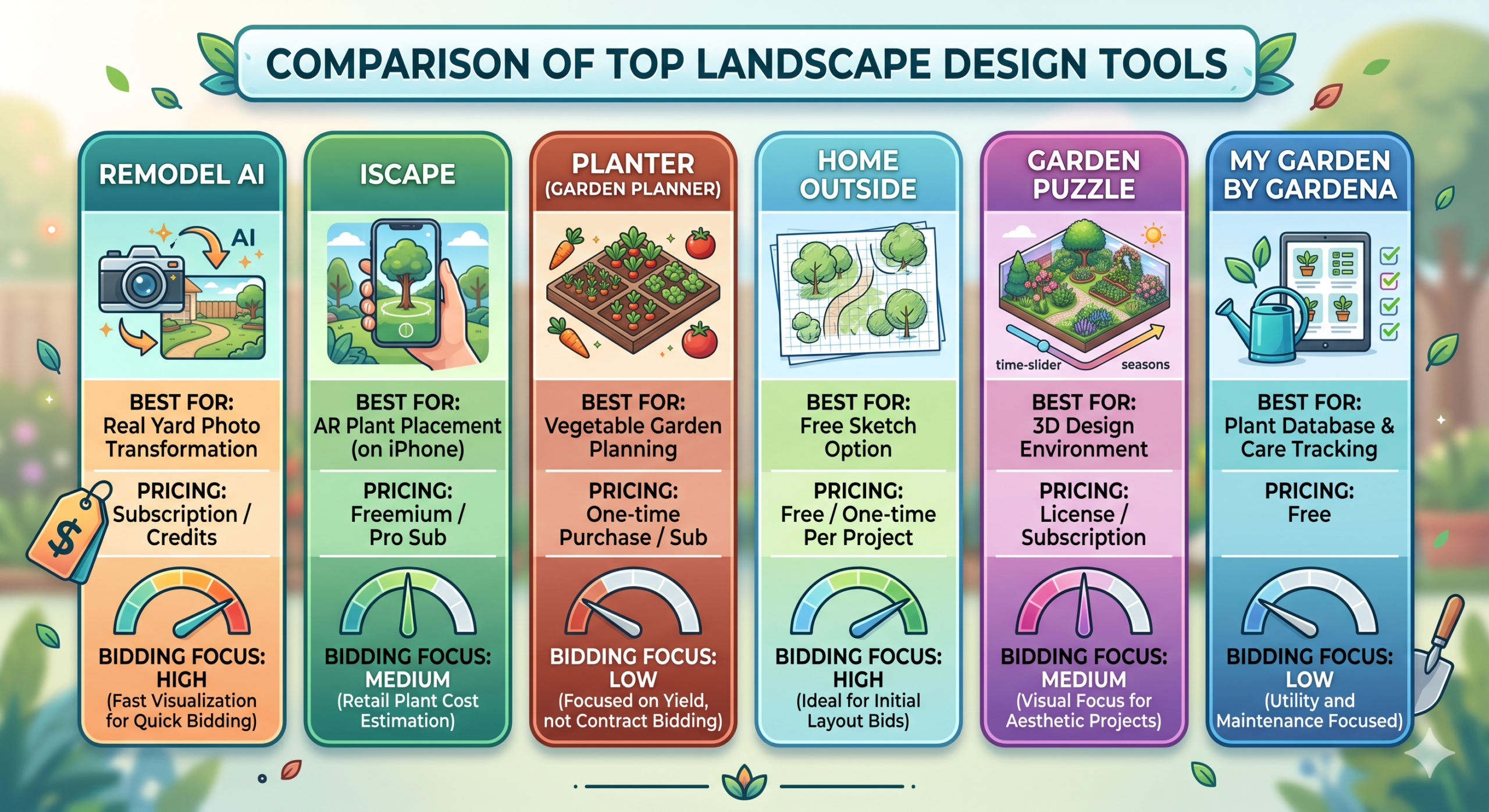
Remodel AI
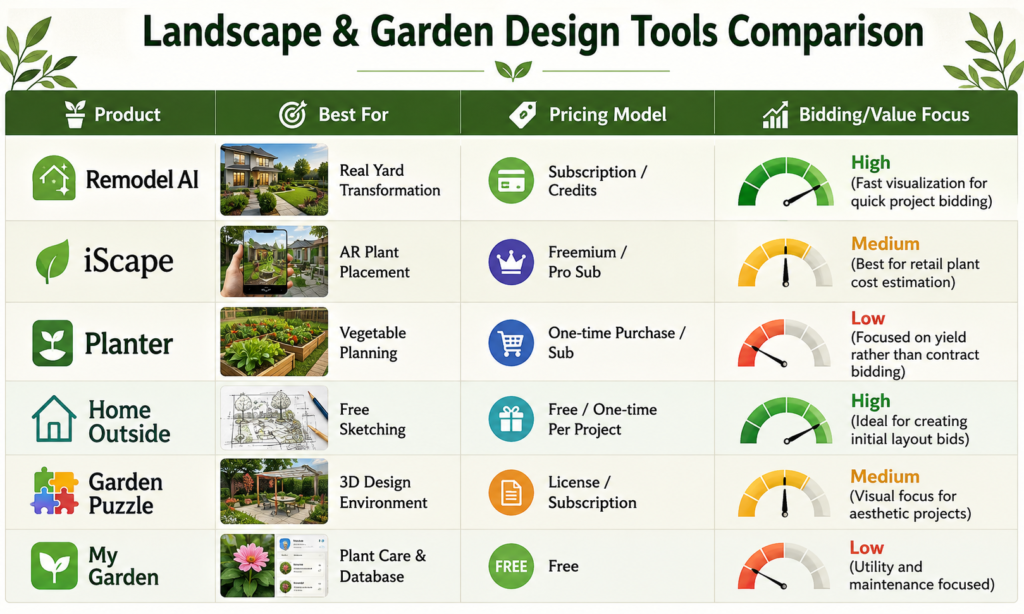
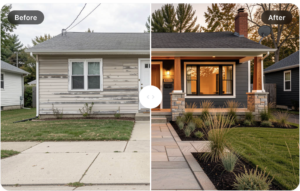
Remodel AI is a powerful tool designed for homeowners who want to see the immediate potential of their outdoor space through high-fidelity photo transformation. By utilizing advanced artificial intelligence, the app allows users to upload a clear photo of their existing yard and apply various architectural and landscaping styles to see a photorealistic reimagining of the property. It excels at maintaining the structural integrity of your home while intelligently swapping out old grass, dated pavers, or overgrown shrubbery for modern alternatives. This makes it an essential choice for those who struggle to visualize professional blueprints and prefer a “before and after” experience that feels tangible and immediate.
-
iScape
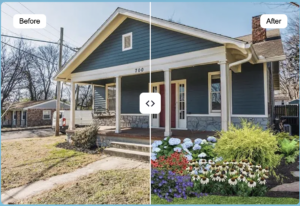
Designed specifically for the mobile user, iScape is the industry leader for augmented reality (AR) landscaping, offering a seamless way to “try before you buy.” The app utilizes the iPhone’s sophisticated camera sensors to overlay 2D and 3D plant models, hardscapes, and outdoor furniture onto your actual environment in real-time. This spatial awareness allows you to walk around your yard and see exactly how a Japanese Maple or a new stone walkway would fit within the existing dimensions of your lawn. It is particularly effective for DIY enthusiasts who want to avoid the costly mistake of purchasing plants that are either too large for their designated space or visually clashing with the home’s exterior.
-
Planter Garden Planner
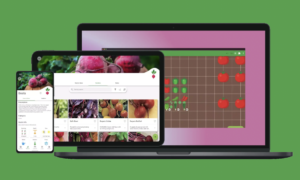
Planter Garden Planner is a specialized utility tailored for the edible gardener, focusing on the logistical and biological needs of a productive vegetable patch. Unlike general aesthetic tools, this app provides a grid-based layout system that integrates deep horticultural knowledge, such as companion planting data and frost date calculations. Users can drag and drop specific vegetables into their virtual beds, and the app will automatically notify them if certain plants should not be placed next to each other or if they require more spacing. It is the gold standard for those looking to maximize their harvest and manage a complex rotation of crops throughout the growing season.
-
Home Outside
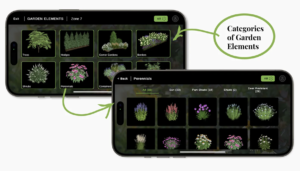
Home Outside offers a professional-grade design experience through a simplified, user-friendly interface that excels in digital sketching. Created by landscape architects, the app provides a massive library of hand-drawn elements—including trees, patios, and fire pits—that allow users to create stylized, “top-down” bird’s-eye view plans of their entire property. While it offers premium tiers, the free sketch options are remarkably robust, giving users the ability to draft clean, artistic layouts that can be shared with contractors or used as a foundational roadmap for long-term projects. It bridges the gap between a rough pencil drawing and a complex CAD file.
-
Garden Puzzle
Garden Puzzle provides a comprehensive 3D design environment that focuses on the visual composition and layering of a landscape. The software allows users to work with high-resolution graphics to build a virtual garden from the ground up, emphasizing how different textures, colors, and plant heights interact across the four seasons. It features a sophisticated “time-slider” tool that lets you see how your garden will look in spring versus winter, or how a young sapling will eventually fill out the space over several years. This makes it a premier choice for hobbyists who are focused on the long-term aesthetic harmony and structural balance of their outdoor “rooms.”

-
My Garden by Gardena
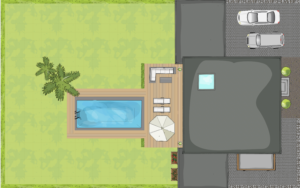
My Garden by Gardena is a web-based planning tool that shines through its integration with a massive plant database and automated care tracking systems. The platform allows you to draw out your garden area and then populates it with specific species, providing detailed maintenance requirements for every item in your design. Because it is backed by one of the world’s leading garden equipment manufacturers, the tool is exceptionally precise regarding irrigation needs, often suggesting optimal sprinkler placements. It is the ideal solution for the data-driven gardener who wants a beautiful design backed by a rigorous schedule for watering, pruning, and long-term plant health.
How Do AI Tools Enhance Landscape Bidding Efficiency?
AI tools for professional landscapers are game-changers in reducing landscape bidding time. Features like computer vision for site takeoffs and estimating software provide accurate and swift property assessments, letting professionals make informed decisions faster. This advancement streamlines the bidding process, leading to more competitive and precise job quotes.
Adopting these tools drastically minimizes human error, ensuring that bids are based on the most current and accurate data, ultimately benefiting both service providers and clients. The use of Sitemap satellite tracing further improves the precision of digital site models.
How Is Smart Irrigation Telemetry Revolutionizing Garden Maintenance?
Smart irrigation telemetry is revolutionizing garden maintenance by offering real-time data and management insights that optimize water usage. This technological advancement supports environmental sustainability while ensuring that plants receive precise water levels necessary for their growth. By integrating AI, systems can adjust irrigation schedules based on weather data and soil moisture levels.
Such systems are crucial in climate-aware plant selection, guiding gardeners on which plants are best suited for specific climates, thereby ensuring sustainable gardening practices. The inclusion of hardiness zone-specific AI enhances localized plant care routines.
What Are Digital Twins for Outdoor Spaces?
Digital twins for outdoor spaces are digital replicas of physical gardens used to simulate and test various landscaping ideas before physical implementation. This concept allows for experimentation with a virtual yard makeover AI, predicting outcomes of design changes without risking real-world assets. These digital models give accurate foresight and enable smarter planning.
This approach minimizes unforeseen issues and enhances the decision-making process by providing clear visual representations of proposed changes. It is beneficial for both small residential gardens and large commercial landscapes.
What Role Does AI Play in Hardiness Zone-Specific Landscaping?
AI plays a crucial role in hardiness zone-specific landscaping by processing large datasets to offer tailored plant selection advice. This ensures plants thrive in their respective zones, reducing the risk of mismatched plantings. AI-driven insights ensure optimal growth environments, significantly improving plant health and garden sustainability.
By leveraging AI, landscapers and gardeners can make informed decisions based on local climate conditions, enhancing both the beauty and resilience of their gardens.
How Does AI Impact Smart Yard ROI by 2026?
Smart yard ROI by 2026 is greatly enhanced by AI through improved resource allocation, maintenance efficiency, and landscape design precision. AI tools optimize resource usage, reducing costs and waste. Automated systems enhance garden maintenance while data analytics ensure continuous improvement of yard management strategies.
Such advancements ensure that both amateur gardeners and professional landscapers achieve more with less, transforming efforts into tangible, cost-effective results over time.
What Are AI’s Applications in Professional Landscaping?
AI applications in professional landscaping include AI tools for design, maintenance, estimating, and sustainability management. These technologies allow for more accurate designs, smarter irrigation management, and improved sustainability practices, all while reducing the time and cost of project bidding and implementation.
AI also assists in analyzing large volumes of data to optimize garden aesthetics and functions, making AI an indispensable tool for forward-thinking landscape professionals.
Why Is Computer Vision Important in Site Takeoffs?
Computer vision for site takeoffs is important because it reduces the human error often associated with manual measurements. By automating data gathering and analysis, computers can provide more accurate and detailed site assessments crucial for effective planning and execution. This innovation increases efficiency and accuracy, ultimately refining the design and installation process.
These advancements not only save time but also significantly decrease the chances of costly errors, further benefiting professionals in the landscaping industry.

What Are the Most Prominent Benefits of Virtual Yard Makeover AI?
Virtual yard makeover AI allows users to explore various design possibilities through immersive simulations before committing to physical changes. This capability saves time and resources by forecasting potential issues and identifying optimal design solutions. The ability to visualize changes instantly streamlines decision-making and enhances creative freedom.
As a result, the planning phase becomes more dynamic and informed, providing end-users with a higher degree of satisfaction with their landscaping projects.
Some FAQ about common AI Tools
1. Can AI actually measure my yard accurately from a photo?
Yes, but with a caveat. In 2026, AI tools like SiteRecon and QuoteIQ use high-resolution satellite data and “computer vision” to measure areas with up to 98% accuracy. However, for precise construction (like building a retaining wall), pros still rely on LiDAR scans from an iPad or drone to account for slopes and elevation changes that flat photos can’t see.
2. Will an AI-designed garden actually survive in my local climate?
Early AI tools often suggested “hallucinated” plants that looked pretty but wouldn’t grow in your zone. Modern 2026 tools now feature “Location-Aware Steering.” By inputting your ZIP code, the AI cross-references local hardiness zones and soil data to ensure the plants suggested are actually available at your local nursery and suited for your weather.
3. Can AI help me solve drainage and slope issues?
AI is excellent at identifying potential problem areas through topographic mapping, but it cannot replace a drainage engineer. It can suggest where a French drain or permeable pavers might go, but it can’t “feel” soil compaction or detect underground utility lines. Use AI for the concept, but always have a human verify the physics.
4. How much time does AI actually save a professional contractor?
On average, landscaping businesses using AI for quoting and routing report saving 15 to 20 hours per week on administrative tasks. What used to take 3 days (visiting a site, measuring, and emailing a quote) can now be done in under 15 minutes using automated satellite takeoffs.
5. Is there a free AI tool for DIY yard design?
Tools like Neighborbrite or Microsoft Copilot offer free versions that allow you to upload a photo and “reskin” your yard with different styles (e.g., Modern, Tropical, or Xeriscape). They are perfect for brainstorming, though they lack the technical “blueprints” found in paid professional software.
6. Can AI tell me how my garden will look in 5 or 10 years?
Yes. One of the best features of 2026 design AI is “Growth Simulation.” You can toggle a slider to see how a small sapling will look as a mature tree, ensuring you don’t over-plant or block your windows’ sunlight a few years down the line.
7. Does AI take “Smart Home” integration into account?
Absolutely. Many tools now design with “Smart Irrigation” and “Robotic Mowing” in mind. The AI can map out the best zones for subterranean sensors and ensure your hardscape layout is “robot-friendly” with no trapped corners or inaccessible grass strips.
8. Can AI generate a full “Bill of Materials” (BOM)?
Professional-grade AI tools now convert a 3D render into a shopping list. It can calculate exactly how many pallets of pavers, cubic yards of mulch, and specific plant counts you need, significantly reducing material waste and over-ordering.
9. How does AI help with “Sustainable” or “Eco-friendly” landscaping?
AI algorithms can now optimize for “Microclimate Performance.” The software analyzes sun patterns and wind to suggest “Natural Cooling” (placing trees to shade the house) or “Pollinator Corridors” (grouping native plants that support local bees and birds).
10. Will AI replace landscape architects?
The consensus in 2026 is no. AI is a “planning accelerator,” not a replacement for human creativity and site-specific intuition. AI can draw a thousand patios in a minute, but a human architect understands the emotional flow of a space and the complex legal requirements for local building permits.